
Plumbing Service
Slab Leak Repair
A slab leak hides beneath your foundation, where it can cause serious damage before you notice. Plumbing Advisors helps you recognize the signs and connect with slab leak help.
Plumbing Advisors provides guidance and connection assistance. Independent providers perform the plumbing work and confirm availability, pricing, timing, and credentials.
On this pageOverview
 Plumbing Advisors Editorial TeamEditorial StandardsSource-Checked
Quick summary
- For leaks in pipes beneath a concrete slab
- Signs include warm spots, high bills, and damp floors
- Detection requires specialized equipment
- Call promptly; slab leaks can damage the foundation
About slab leak repair
A slab leak is a leak in a water line that runs beneath the concrete foundation of a home. Because it is hidden under the slab, it can go on for a long time before anything obvious appears, quietly raising your water bill and working moisture into the foundation and flooring. The signs are often subtle at first: a warm spot on the floor from a hot-water line, a patch of carpet or tile that stays damp, or the faint sound of water running when every fixture is off.
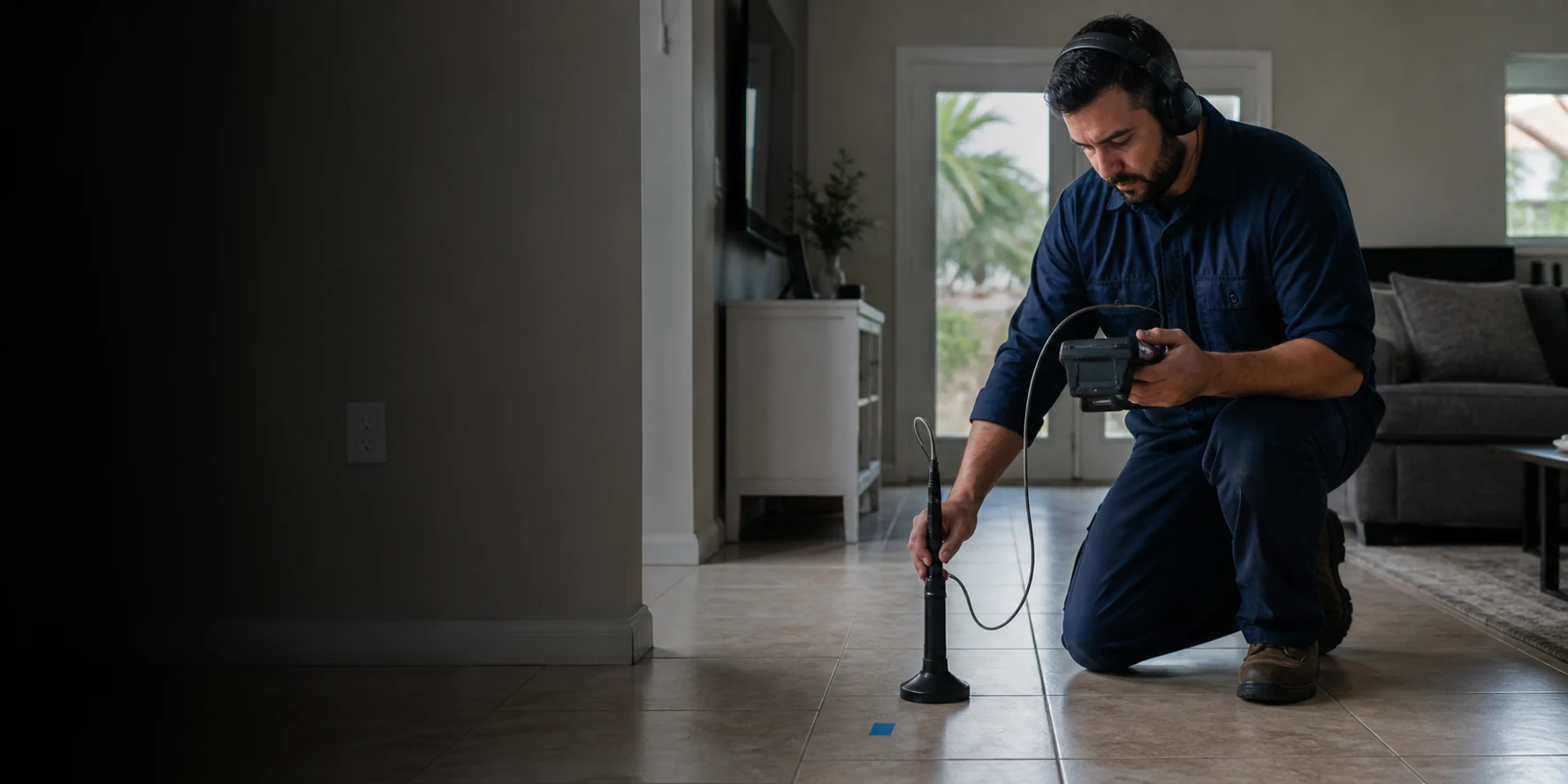
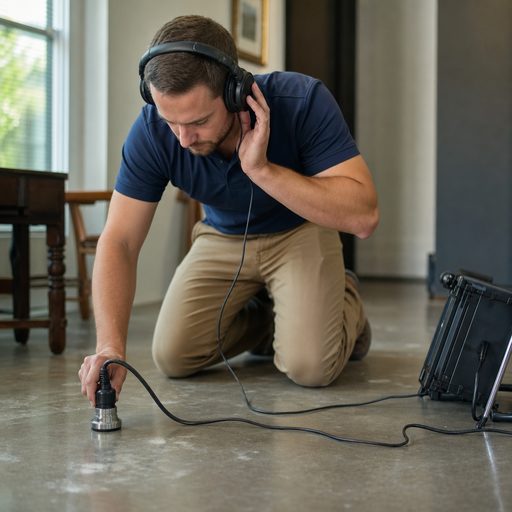
Slab leaks call for specialized detection equipment to pinpoint the leak without guesswork, which is why this is firmly professional territory. It is important not to break into the slab yourself trying to find or reach the pipe. Cutting into a foundation is dangerous, can affect the structure, and almost always makes the repair harder and more expensive. The safer path is to document the signs, shut off water if you find an accessible leak, and let a professional locate the problem and walk you through the repair options that fit your home.
Signs you may have a slab leak
A warm spot on the floor
A patch of floor that feels warmer than the area around it can mean a hot-water line is leaking beneath the slab. This is one of the more recognizable early signs of a slab leak.
An unexplained rise in your water bill
A bill that climbs without any change in how you use water often means water is escaping somewhere unseen. A line leaking under the foundation is a common culprit worth ruling out.
Damp, warped, or cracking flooring
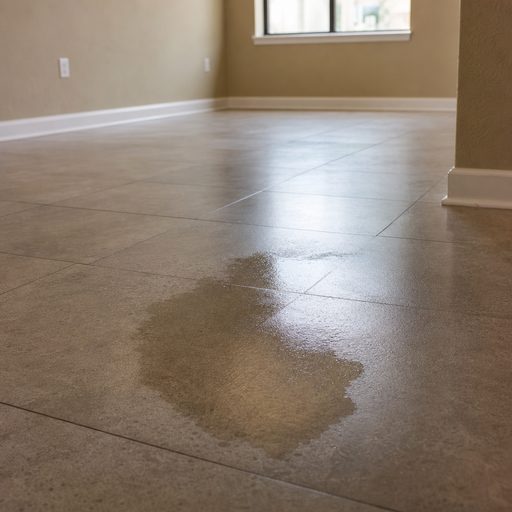
Moisture pushing up through the slab can warp wood, lift tile, or leave carpet damp with no spill to explain it. Cracks appearing in flooring can point to the same hidden source.
The sound of running water with everything off
If you hear water moving when no fixture is in use, a pipe may be leaking below the floor. It is a quiet sign that is easy to miss but worth taking seriously.
The water meter moves with all water off
With every fixture and appliance off, a meter that keeps creeping forward indicates water is still flowing somewhere. Under a slab is one place that flow can hide.
A musty smell or unexplained moisture
Persistent dampness or a musty odor near the floor, with no visible leak above, can signal water collecting beneath the slab. It often accompanies the other signs rather than appearing alone.
What to know
When you need it
- You feel a warm spot on the floor
- Your water bill rose with no clear reason
- Flooring is damp, warped, or cracking
- You hear water running under the floor
Common causes
- Corrosion in pipes beneath the slab
- Abrasion from pipes rubbing against concrete
- Shifting soil stressing the lines
- Poor installation or pipe materials
- High water pressure over time
What to check first
- Check your water meter with all water off
- Note any warm spots or damp areas on the floor
- Listen for running water with fixtures off
- Do not break into the slab yourself
When to call a pro
- You suspect a leak under the foundation
- There are warm spots or unexplained moisture
- Your meter shows use with everything off
- Flooring is warping or cracking
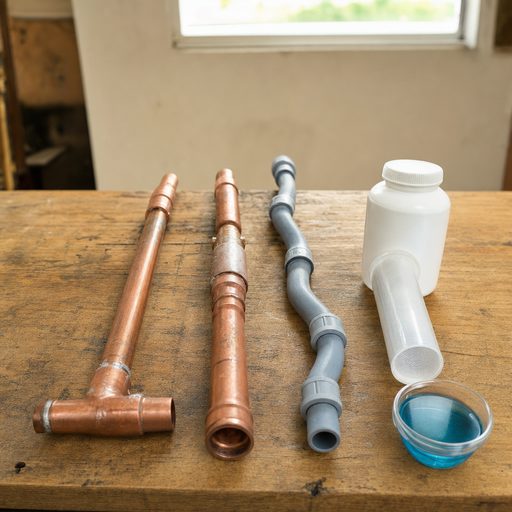
Repair options: spot repair vs. reroute vs. epoxy pipe lining
Once a slab leak is located, there is usually more than one way to fix it. The right approach depends on where the leak is, the condition of the surrounding pipe, and how disruptive each option would be to your home. A professional recommends the method after detection; this is the kind of decision to make with their input rather than alone.
Spot repair
This targets the single leaking section once it has been pinpointed. It can be a good fit when the rest of the line is in sound condition and the leak is accessible. A professional handles accessing the pipe, so there is no need to disturb the slab yourself.
Reroute the line
Instead of working under the slab, the affected line is rerouted, often through walls or the ceiling, bypassing the failed run entirely. This can make sense when the buried pipe is in poor shape or when reaching the leak directly would be especially disruptive.
Epoxy pipe lining
In some cases the existing pipe can be relined from the inside with an epoxy coating that seals the leak without replacing the whole run. Whether this is an option depends on the pipe's condition and layout, which is why detection comes first and the recommendation comes from the pro.
What a typical slab leak repair visit includes
- Reviewing the warning signs and confirming a slab leak is likely
- Locating the leak with specialized detection equipment
- Shutting off water to the affected line when needed
- Recommending a repair method suited to the leak and pipe condition
- Carrying out the chosen repair, whether spot fix, reroute, or lining
- Testing to confirm the leak is resolved
- Addressing remaining moisture and restoring water service
What slab leak repair costs
A slab leak repair quote should be based on the inspected scope, access, parts or equipment, permits, restoration, and urgency. Compare written quotes that describe the same work.
Typical slab leak repair costs
| Project | Typical cost range |
|---|---|
| Leak detection | $200–$800 |
| Epoxy pipe lining (trenchless) | $2,000–$10,000 |
| Breaking through the concrete slab | $600–$3,100 |
| Subfloor or flooring repair | $500–$4,500 |
Cost ranges are estimates developed from standardized project scopes and reviewed pricing inputs. Government labor and regional cost data are used where applicable. See our Pricing Methodology for the exact sources, calculations, and review date. Actual prices vary by property, scope, materials or equipment, location, and provider.
What affects the cost
- The repair method chosen, such as spot repair, rerouting, or epoxy lining
- Location of the leak and how accessible the affected line is
- The condition and length of the pipe involved
- Detection work needed to pinpoint the leak before any repair
- Whether the slab must be opened and later restored to reach the pipe
- Moisture or flooring damage that must be addressed alongside the repair
- Permits, where local code requires them for foundation-related work, and regional labor rates
Typical service process
- 1Document the warning signs you have noticed
- 2Shut off water if an accessible leak is found
- 3Connect with a plumbing professional that services your area
- 4Have the slab leak located with specialized equipment
- 5Review repair options such as rerouting or spot repair
- 6Confirm the leak is resolved and moisture is addressed
How to choose the right pro
- Choose a professional with the detection equipment to locate the leak without guesswork
- Confirm they are licensed and insured where your area requires it
- Ask for a written estimate after detection, with the repair options explained
- Look for an itemized scope comparing spot repair, reroute, and lining where each applies
- Ask whether the repair carries a warranty and what it covers
- Check reviews and references for slab leak or foundation-area plumbing work
How Plumbing Advisors helps
Plumbing Advisors helps you recognize the signs of a slab leak and connects you with plumbing professionals that service your area and have the right detection tools. Because slab leaks can affect the foundation, acting on the signs early is important. Repair methods, availability, and pricing vary by location and provider.
Frequently asked questions
What are the signs of a slab leak?
Warm spots on the floor, an unexplained rise in your water bill, damp or warped flooring, and the sound of running water with everything off are common signs. Our slab leak guide covers them in detail.
How is a slab leak repaired?
After locating the leak, options can include rerouting the line, a spot repair, or relining, depending on the situation. A professional will recommend the best approach after detection.
Why are slab leaks a big deal?
Because the leak is under the foundation, it can cause structural and moisture damage that is costly to repair if ignored. Addressing it early usually limits the damage.
Sources and further reading
These references support the safety and technical guidance on this page.
Slab Leak Repair guides
Learn before your slab leak repair.
Free guides on cost, common problems, repairs, and what to expect — written to help you make the call with confidence.
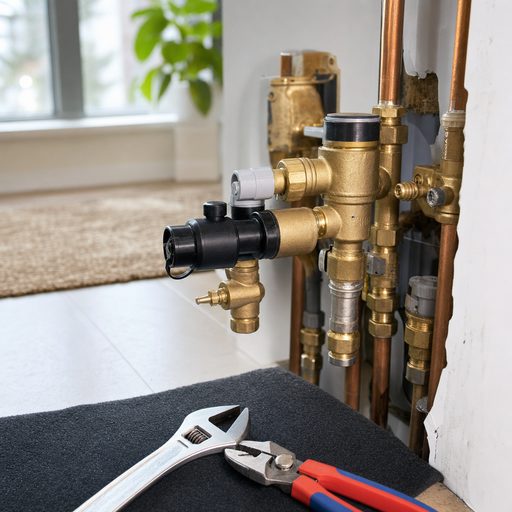
Does Homeowners Insurance Cover Slab Leak Repair?
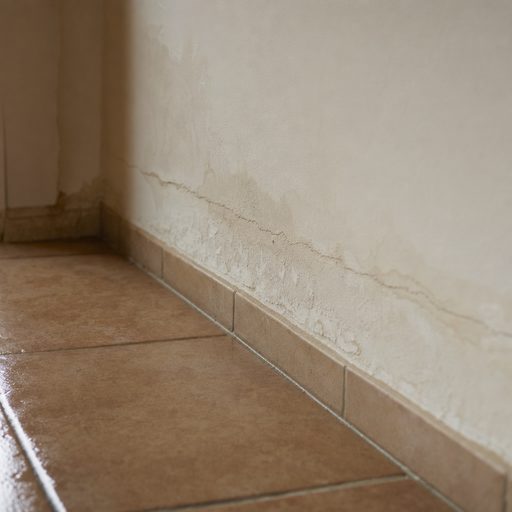
Why a Slab Leak Is an Emergency and the Risk of Waiting
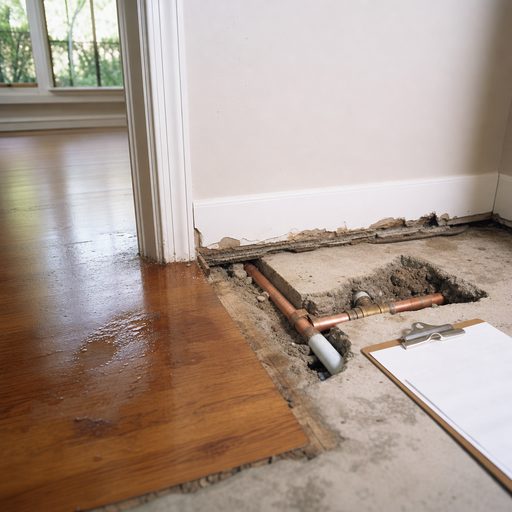
What Happens After a Leak Is Found
Slab Leak Repair Options: Spot Repair, Reroute, or Lining
Supply-Line Leak vs. Drain Leak vs. Slab Leak
How Plumbers Locate a Slab Leak Before Digging
Signs You May Have a Slab Leak
Why Your Water Bill Suddenly Increased
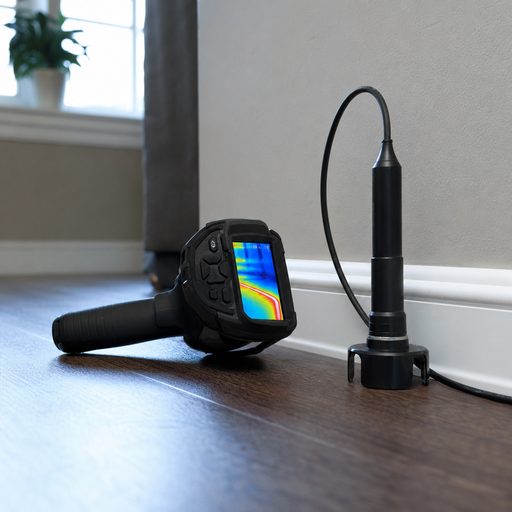
How Professional Leak Detection Works
Start with the symptom
Common problems related to this service
Choose your area
Slab Leak Repair near you
Find slab leak repair in your state or city. Availability varies by location and provider.
Slab Leak Repair by state
ArizonaAZ8 cities
CaliforniaCA9 cities
ColoradoCO8 cities
ConnecticutCT6 cities
DelawareDE5 cities
FloridaFL8 cities
GeorgiaGA8 cities
IllinoisIL9 cities
IndianaIN8 cities
KentuckyKY6 cities
LouisianaLA6 cities
MarylandMD7 cities
MassachusettsMA8 cities
MichiganMI9 cities
MinnesotaMN7 cities
MississippiMS5 cities
MissouriMO8 cities
MontanaMT5 cities
NebraskaNE5 cities
New HampshireNH5 cities
New JerseyNJ8 cities
New MexicoNM5 cities
New YorkNY10 cities
North CarolinaNC8 cities
North DakotaND5 cities
OhioOH9 cities
OklahomaOK5 cities
PennsylvaniaPA9 cities
Rhode IslandRI5 cities
South CarolinaSC6 cities
South DakotaSD5 cities
TennesseeTN7 cities
TexasTX10 cities
VirginiaVA8 cities
WashingtonWA8 cities
West VirginiaWV5 cities
WisconsinWI7 cities
Need Plumbing Help Now?
Call Plumbing Advisors to connect with help for leaks, drains, water heaters, sewer lines, burst pipes, toilets, faucets, and more.
No-obligation request · Availability varies by location and provider