
Plumbing Service
Sump Pump Repair
A failing sump pump can leave your basement exposed right when you need protection most. Plumbing Advisors helps you spot the warning signs and connect with sump pump repair help.
Plumbing Advisors provides guidance and connection assistance. Independent providers perform the plumbing work and confirm availability, pricing, timing, and credentials.
On this pageOverview
 Plumbing Advisors Editorial TeamEditorial StandardsSource-Checked
Quick summary
- For sump pumps that fail, run constantly, or are noisy
- Best addressed before heavy rain, not during
- A backup pump adds protection during outages
- Call to describe the issue and get connected
About sump pump repair
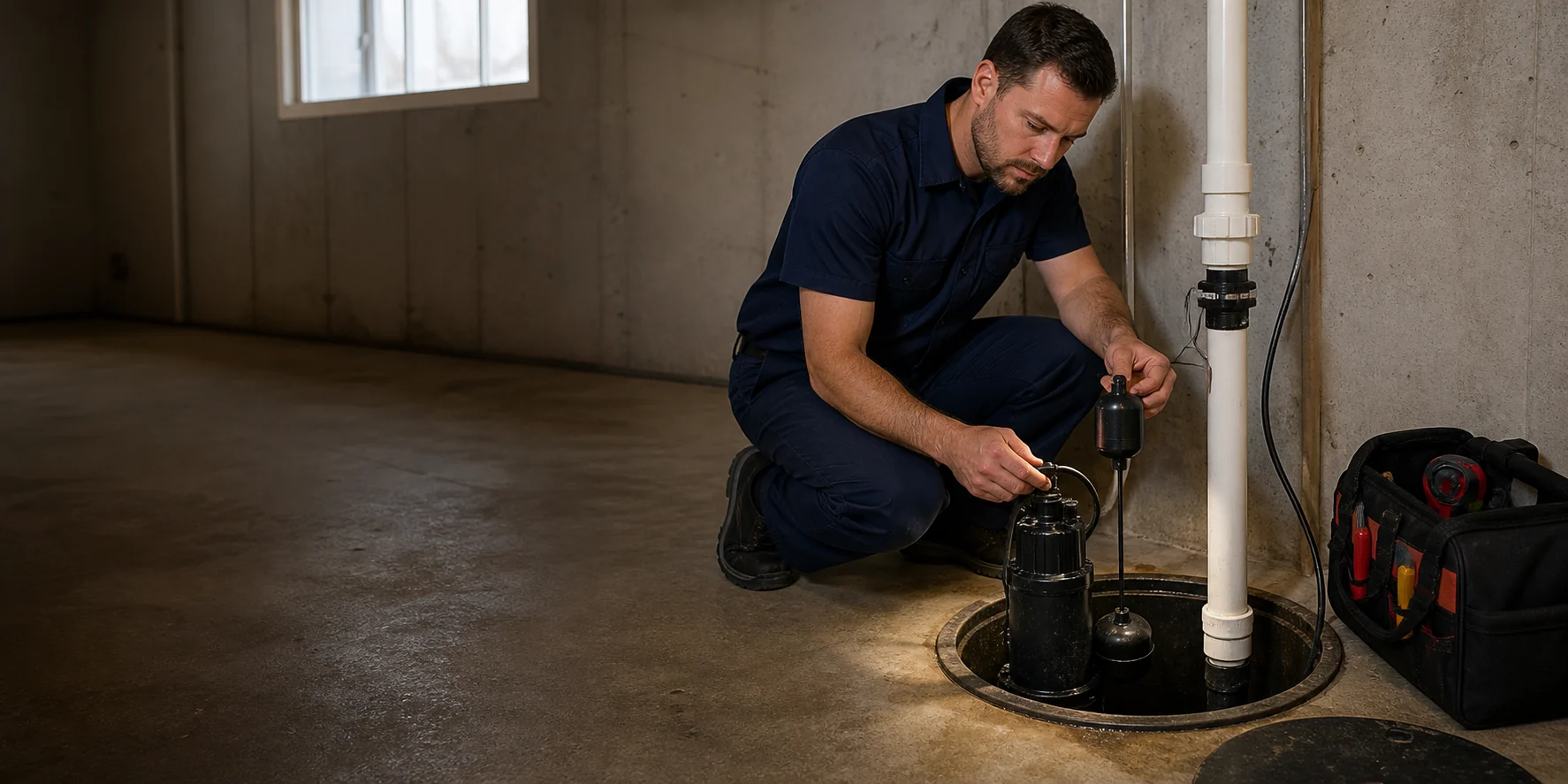
Sump pump repair keeps the pump in your basement or crawlspace pit working so it can move groundwater away from your foundation before it floods the floor. The pump sits in a pit, a float switch tells it when the water has risen, and a discharge line carries the water outside. When any of those parts fail, the pump may not turn on when the pit fills, run constantly without keeping up, make unusual noises, or move no water at all. Problems often surface at the worst possible time, during the heavy rain the pump is supposed to handle.
Because a sump pit holds standing water and the pump runs on electricity, treat the area with care. Standing water around an electrical device is a real hazard, so avoid reaching into the pit or touching the pump and its cord when there is water present, and leave anything involving the wiring or outlet to a professional. The strongest move is to address pump issues before a storm rather than during one. Plumbing Advisors is a national service that helps you understand whether your pump needs a repair, a replacement, or a battery backup, and connects you with plumbing professionals who work in your area.
Signs you may need sump pump repair
The pump does not turn on
If the pit fills and the pump stays silent, the float switch may be stuck, the pump may have lost power, or the motor may have failed. This is the most urgent sign, since the basement is unprotected until it is fixed.
It runs but moves no water
A pump that hums or runs without lowering the water level often has a clogged intake, a blocked or frozen discharge line, or a worn impeller. The water keeps rising even though the pump is working.
The pump runs constantly
Nonstop cycling can mean a stuck float, a high water table, a discharge problem, or a pump that is undersized for the volume. It wears the motor out faster, so it is worth having inspected before it quits.
Unusual noises or vibration
Grinding, rattling, or loud humming can point to a failing motor, a jammed impeller, or debris in the pit. A healthy pump runs relatively quietly.
Water in the basement or pit history
Dampness on the floor, water marks, or a basement with a flooding history all suggest the pump is struggling or undersized. A unit that has been in place for years is also more likely to fail.
No backup during outages
If your only pump runs on household power, an outage during a storm leaves the basement exposed at the moment flooding is most likely. Many homeowners address this with a battery backup pump.
What to know
When you need it
- The pump does not turn on when the pit fills
- The pump runs constantly or cycles oddly
- You hear unusual noises from the unit
- Your basement has water or a flooding history
Common causes
- A stuck or failed float switch
- A clogged pit, intake, or discharge line
- A worn-out pump motor
- Power loss without a battery backup
- An undersized pump for the water volume
What to check first
- Confirm the pump has power and is plugged in
- Check that the float can move freely
- Look for debris in the pit
- Avoid reaching into water near electrical connections
When to call a pro
- The pump will not run when the pit fills
- The pump runs but does not move water
- You want a backup pump installed
- Your basement is at active risk of flooding
Repair vs. replace (and adding a battery backup)
With a sump pump, you are usually weighing a targeted repair against a new pump, and separately whether to add a backup. A professional can help you decide based on the pump's age and your flood risk.
Repair it
A repair is reasonable when the pump is relatively new and the problem is a stuck float, a clogged intake, or a blocked discharge line. These are fixable without replacing the whole unit. If the motor is still sound and the pump has been reliable, restoring it is often the practical choice.
Replace it
Replacement makes more sense when the motor has failed, the pump is near the end of its typical lifespan, or it is undersized for the water you get. A new pump sized to your pit resets reliability ahead of the next storm. If the current unit has failed more than once, replacing it is usually the safer bet.
Add a battery backup
A battery backup pump is worth considering on top of either path, because the storms that cause flooding are also the ones that knock out power. It keeps the pit pumping when the main unit cannot run. Whether you need one depends on your flood risk and how much the basement matters to you.
What a typical sump pump repair visit includes
- Reviewing the symptom, the pump's age, and any flooding history
- Inspecting the pump, float switch, pit, and discharge line
- Confirming power safely, without reaching into standing water
- Clearing debris from the pit or a blockage in the discharge line
- Repairing or replacing the float switch or worn components
- Replacing the pump, or adding a battery backup, when that is the better option
- Testing the pump and confirming it discharges water properly
What sump pump repair costs
A sump pump repair quote should be based on the inspected scope, access, parts or equipment, permits, restoration, and urgency. Compare written quotes that describe the same work.
Typical sump pump repair costs
| Project | Typical cost range |
|---|---|
| Float switch replacement | $140–$400 |
| Check valve replacement | $120–$350 |
| Motor or impeller repair | $190–$580 |
| Pump replacement (in existing pit) | $400–$1,100 |
| Battery backup system, installed | $630–$1,750 |
Service-call fees
| Service | Typical cost range |
|---|---|
| Repair visit | $165–$510 per visit |
Additional per-item costs
| Additional item | Typical cost range |
|---|---|
| Submersible pump (unit only) | $105–$380 per unit |
Cost ranges are estimates developed from standardized project scopes and reviewed pricing inputs. Government labor and regional cost data are used where applicable. See our Pricing Methodology for the exact sources, calculations, and review date. Actual prices vary by property, scope, materials or equipment, location, and provider.
What affects the cost
- Whether it is a single part (float switch, check valve) or a full pump replacement
- Pump type and horsepower (pedestal vs. submersible, sized to the water volume)
- Whether the existing pit, discharge line, and wiring can be reused
- Adding protection such as a battery backup or a high-water alarm
Typical service process
- 1Note the symptom and any flooding history
- 2Confirm power and check the float and pit safely
- 3Connect with a plumbing professional that services your area
- 4Have the pump, float, and discharge line inspected
- 5Repair or replace the pump, or add a backup
- 6Test the pump and confirm proper discharge
How to choose the right pro
- Confirm the professional is licensed and insured where your state requires it
- Ask for a written estimate before work begins
- Get the scope itemized, including the pump and any backup separately
- Ask whether they recommend repair, replacement, or a backup and why
- Check that the pump and installation carry a warranty
- Read recent reviews and look for clear communication about your flood risk
How Plumbing Advisors helps
Plumbing Advisors helps you understand whether a sump pump needs a repair, a replacement, or a backup system, then connects you with plumbing professionals that service your area. Because timing matters, it is best to address pump issues before a storm. Availability and pricing vary by location and provider.
Frequently asked questions
How do I test my sump pump?
With the unit powered and the float able to move, slowly pouring water into the pit should trigger the pump to turn on and discharge. If it does not, it needs attention before the next heavy rain.
Do I need a backup sump pump?
A battery backup pump can keep your basement protected during power outages, which often happen during the storms that cause flooding. Whether you need one depends on your flood risk and how critical the basement is.
Why does my sump pump run constantly?
Constant running can mean a stuck float, a high water table, a discharge problem, or an undersized pump. It wears the pump out faster, so it is worth having inspected.
Sources and further reading
These references support the safety and technical guidance on this page.
Sump Pump Repair guides
Learn before your sump pump repair.
Free guides on cost, common problems, repairs, and what to expect — written to help you make the call with confidence.
What Does a Sewer Ejector Pump Do (and When Do You Need One)?
Why Is My Sump Pump Running When It's Not Raining?
Do I Need a Battery Backup Sump Pump?
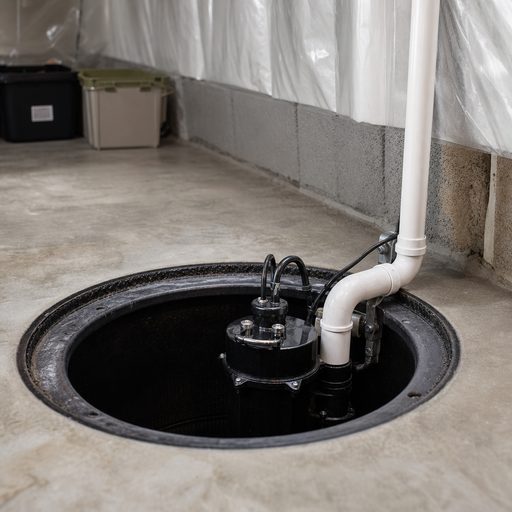
How Long Do Sump Pumps Last?
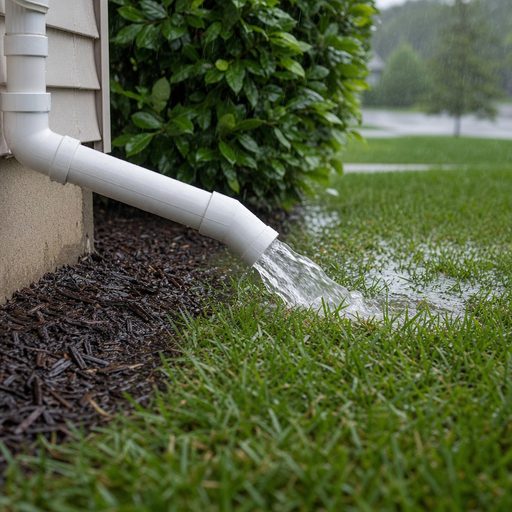
Getting Your Sump Pump Ready for Storm Season
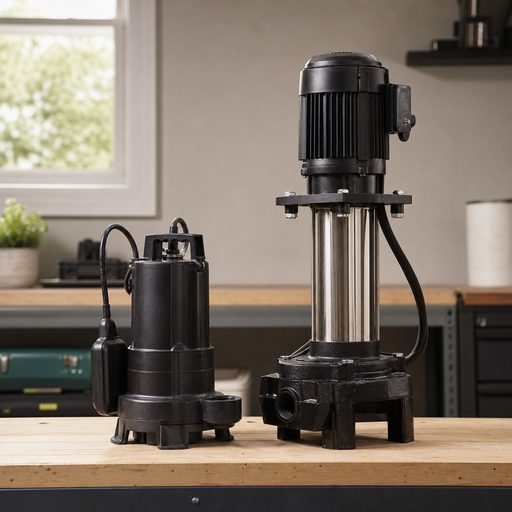
Submersible vs. Pedestal Sump Pumps
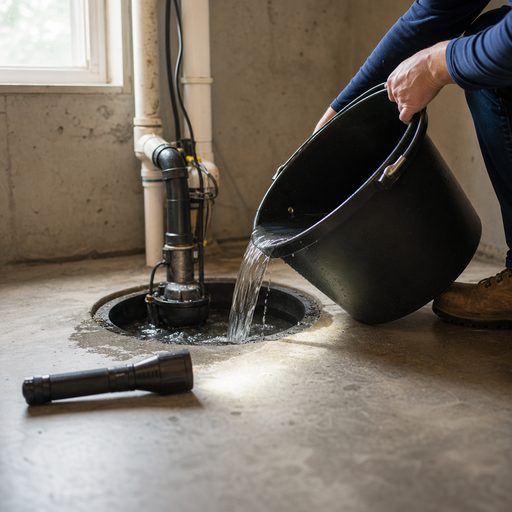
Sump Pump Maintenance Checklist
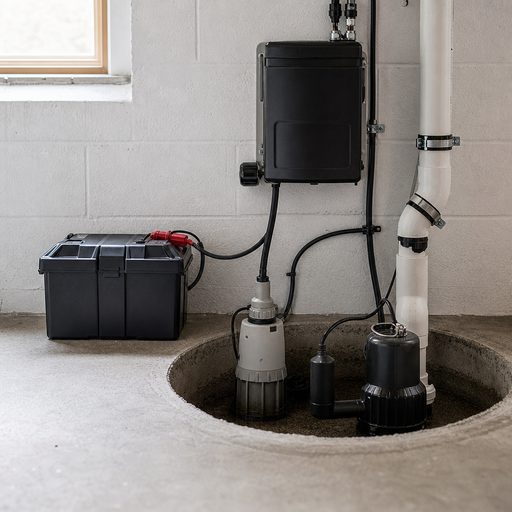
Should You Add a Battery Backup Sump Pump?
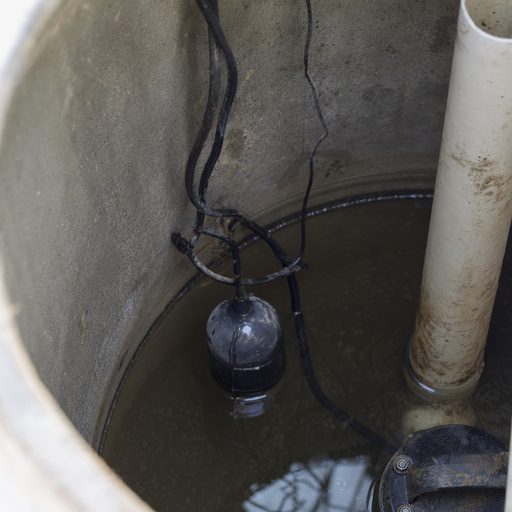
Why Do Sump Pumps Fail?
Start with the symptom
Common problems related to this service
Choose your area
Sump Pump Repair near you
Find sump pump repair in your state or city. Availability varies by location and provider.
Sump Pump Repair by state
ArizonaAZ8 cities
CaliforniaCA9 cities
ColoradoCO8 cities
ConnecticutCT6 cities
DelawareDE5 cities
FloridaFL8 cities
GeorgiaGA8 cities
IllinoisIL9 cities
IndianaIN8 cities
KentuckyKY6 cities
LouisianaLA6 cities
MarylandMD7 cities
MassachusettsMA8 cities
MichiganMI9 cities
MinnesotaMN7 cities
MississippiMS5 cities
MissouriMO8 cities
MontanaMT5 cities
NebraskaNE5 cities
New HampshireNH5 cities
New JerseyNJ8 cities
New MexicoNM5 cities
New YorkNY10 cities
North CarolinaNC8 cities
North DakotaND5 cities
OhioOH9 cities
OklahomaOK5 cities
PennsylvaniaPA9 cities
Rhode IslandRI5 cities
South CarolinaSC6 cities
South DakotaSD5 cities
TennesseeTN7 cities
TexasTX10 cities
VirginiaVA8 cities
WashingtonWA8 cities
West VirginiaWV5 cities
WisconsinWI7 cities
Need Plumbing Help Now?
Call Plumbing Advisors to connect with help for leaks, drains, water heaters, sewer lines, burst pipes, toilets, faucets, and more.
No-obligation request · Availability varies by location and provider