 Plumbing Advisors Editorial TeamEditorial StandardsUpdated July 5, 2026Source-Checked
A sewage ejector pump is a sealed waste pump that lifts wastewater and solids from fixtures below the main sewer line, such as a basement bathroom or laundry, up to the home’s drain line. You need one when gravity alone cannot move that waste to the sewer or septic connection.
What does a sewer ejector pump actually do?
In most homes, drains work by gravity: water and waste flow downhill through branch drains into the main building drain and out to the sewer or septic system. But when a toilet, shower, sink, or washing machine sits below that main drain level, gravity cannot carry the discharge high enough to reach it. That is where a sewage ejector pump comes in.
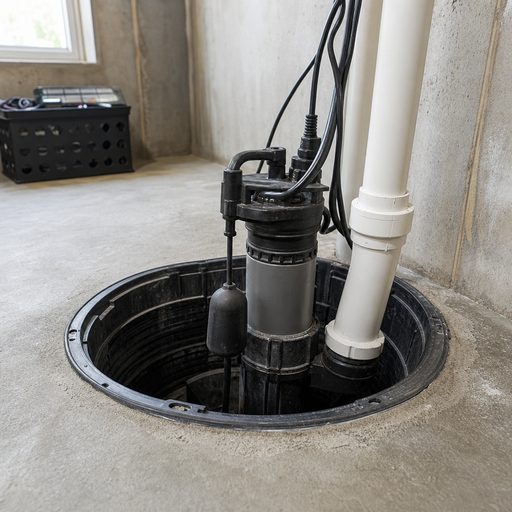
The pump sits in a sealed basin, sometimes called an ejector pit, buried in or below the basement floor. Wastewater flows into the basin first. When the liquid level rises, a float switch turns the pump on and it pushes the contents through a discharge pipe up to the home’s drain line. Because it handles blackwater and solids, the basin is sealed and vented, and the discharge line uses a check valve to prevent waste from flowing back into the pit.
When do you need a sewage ejector pump?
You typically need a sewage ejector pump when you add plumbing fixtures below the elevation of the home’s sewer line. Common examples include a basement bathroom, a basement laundry room, or a lower-level sink and shower in a finished basement. If those fixtures sit lower than the point where the home’s main drain exits the foundation, waste cannot leave by gravity alone.
Not every below-grade fixture uses the same setup, so the right solution depends on the drain layout and what the fixture discharges. A sink with gray water may be handled differently from a full bathroom with a toilet. If you are planning a remodel, a plumber can determine whether you need a sewage ejector system, a different lift arrangement, or changes to the drain and vent piping. If the issue ties into the main building drain outside the home, that can overlap with Sewer Line Repair and with the warning signs covered in Signs of a Sewer Line Problem.
How is a sewage ejector pump different from a sump pump?
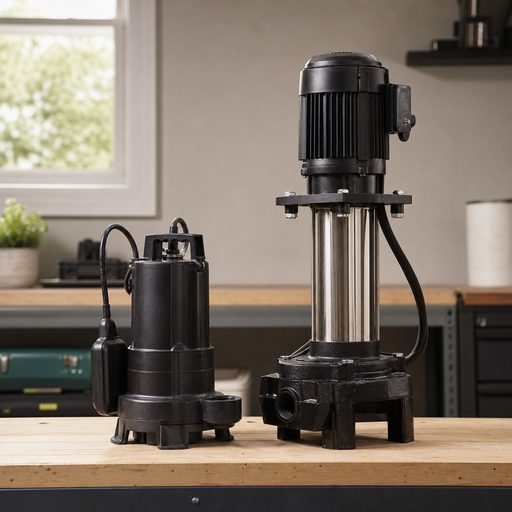
Homeowners often confuse these two pumps because both can sit in a pit in the basement. A sump pump removes relatively clean groundwater that collects around the foundation, helping prevent basement flooding. A sewage ejector pump moves wastewater from plumbing fixtures, including toilet waste, to the drain system. They are not interchangeable, and the components around them are different for that reason.
- A sewage ejector pump handles wastewater and solids; a sump pump handles groundwater only.
- A sewage ejector basin is sealed and vented; a sump pit is usually not sealed the same way.
- A sewage ejector discharge line includes a check valve to stop backflow after each pump cycle.
- An ejector system connects to fixture drains like toilets and showers; a sump system connects to foundation drainage or groundwater collection.
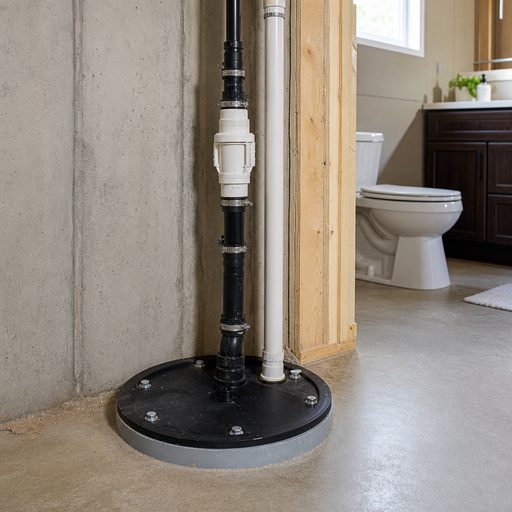
If you are trying to identify which pump you have, compare the pit cover, the pipe connections, and what drains into it. A sealed basin with a toilet line is a strong clue that it is an ejector system, not a sump setup. For groundwater-related issues, see Sump Pump Failure: Signs and What to Do, and if you are comparing basement water-removal equipment generally, Submersible vs. Pedestal Sump Pumps helps explain a separate category of pump entirely. If your actual foundation pump is acting up, the related service is Sump Pump Repair.
What parts make up a typical ejector system?
A standard residential sewage ejector system includes a sealed basin, a sewage ejector pump, a float switch, a discharge pipe, a check valve, and a vent connection. The basin collects discharge from the below-grade fixtures. The float switch senses when the level in the pit rises and activates the pump. The pump then pushes waste through the discharge line until the level drops and the switch turns it off.
The vent is important because the basin must release air pressure and allow the drain system to function properly without sewer gas entering the home. The check valve is equally important because it prevents the pumped wastewater in the vertical discharge line from falling back into the pit after the pump shuts off. Depending on the setup, there may also be a shutoff valve on the discharge piping for service, along with a dedicated electrical receptacle and an alarm on some systems.
Sewage pump problems are not a DIY repair
If a sewage ejector pump fails, avoid opening the basin or handling contaminated water yourself. Sewage exposure is a health risk, and diagnosis often involves electrical components, check valves, venting, and drain connections that should be handled by a licensed plumber.
What are the signs a sewage ejector pump may be failing?
A failing sewage ejector pump often gives warning signs before it stops completely. You might notice slow draining or backup at basement fixtures, especially a toilet or shower that serves the lower level. The pump may run but sound unusually loud, short-cycle on and off, or hum without moving waste. Some homeowners first notice a sewage odor near the basin cover, which can point to a sealing, venting, or backup problem.
Standing water around the basin, repeated trips of the pump’s circuit, or wastewater returning to a basement fixture after use are all reasons to call a plumber promptly. These symptoms can come from a bad float switch, a worn pump, a stuck check valve, a blocked discharge line, or a larger drainage problem farther downstream. If the issue turns out to involve the building drain or main line, Sewer Line Repair may be part of the solution. Many of the broader red flags are also covered in Signs of a Sewer Line Problem.
How long does a sewage ejector pump usually last?
Service life depends on usage, pump quality, and what enters the system. In a typical home, many ejector pumps last for years when they are correctly sized and installed in a proper sealed basin. Heavy use, wipes, grease, or repeated cycling can shorten life. A plumber can evaluate wear before a full failure causes a basement backup.
Can a sewage ejector pump handle toilet paper and solids?
Yes. A true sewage ejector pump is built to move wastewater with solids from fixtures such as a basement toilet. That does not mean it should receive wipes, paper towels, hygiene products, grease, or other items that do not belong in the drain system. Those materials can jam the pump, interfere with the float, or clog the discharge piping.
Does every basement bathroom need a sewage ejector pump?
No. It depends on the elevation of the fixtures relative to the home’s main drain and how the plumbing is laid out. If the basement bathroom can drain to the sewer or septic connection by gravity, an ejector pump may not be necessary. When the fixtures are below that level, some type of lifting system is usually required.
What should I do if my basement toilet backs up and I have an ejector pump?
Stop using the basement fixtures right away, especially toilets, showers, and sinks that feed that basin. Continued use can overfill the pit or worsen a backup. If there is any wastewater on the floor, keep people and pets away from the area. Then contact a licensed plumber to inspect the pump, float switch, check valve, and downstream drain line.
Sources and further reading
These references support material safety, technical, consumer, or planning guidance in this article. Confirm property-specific requirements with the applicable authority and professional.