 Plumbing Advisors Editorial TeamEditorial StandardsUpdated July 5, 2026Source-Checked
What is the typical lifespan of PEX plumbing?
For most homeowners, PEX is considered a long-lasting plumbing material. A common expectation is around 40 to 50 years when the tubing is installed indoors, protected from sunlight, and used within its temperature and pressure limits. That makes it a standard option for supply lines in newer homes and for Repiping projects where older galvanized or aging copper lines are being replaced.
That said, no plumbing material lasts forever, and no material is freeze-proof. PEX is flexible, which helps it tolerate some movement and brief freezing conditions better than rigid pipe, but repeated freeze events can still split tubing, damage fittings, or create hidden leaks. In practice, the connection points often determine whether a PEX system ages well, not just the tubing itself.
What shortens the life of PEX?
The biggest enemies of PEX are ultraviolet light, rodent damage, and poor installation. PEX should not sit exposed to direct sunlight for long periods because UV breaks down the material over time. That is why indoor storage and protected routing matter. Rodents can also chew PEX tubing, especially in attics, crawl spaces, and wall cavities, turning an otherwise durable pipe into a sudden leak risk.
- Long-term UV exposure from direct sunlight or uncovered windows
- Rodent chewing in attics, basements, crawl spaces, or wall cavities
- Poorly made crimp, clamp, or expansion connections
- Repeated freezing and thawing cycles
- Very hot recirculating water and aggressive water chemistry
- Abrasion where tubing rubs against framing or sharp edges
Do PEX fittings fail before the tubing?
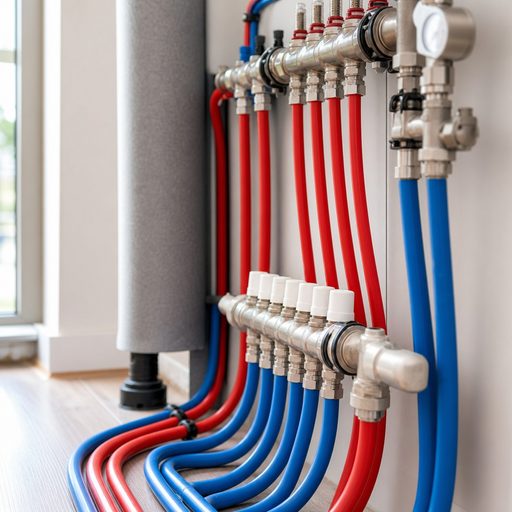
Often, yes. In many PEX systems, fittings and connections are the weak points. The tubing itself can stay in good shape for decades, while problems show up first at manifolds, elbows, tees, shutoff connections, or transitions to copper and other materials. A poor crimp ring, the wrong fitting for the tubing type, or an unsupported run that puts stress on a joint can lead to early leaks.
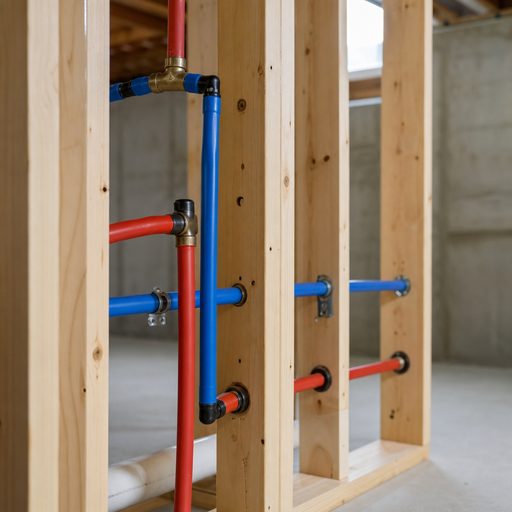
That is why installation quality matters so much. A well-designed system uses compatible tubing and fittings, proper support, protective sleeves where needed, and clean routing that avoids unnecessary strain. If you are comparing replacement options, PEX vs. Copper for a Repipe: How to Choose can help you weigh durability, water quality concerns, and installation differences in a practical way.
Think beyond the pipe itself
If you are evaluating an older PEX system, ask about the condition of fittings, manifolds, and shutoffs, not just the tubing. A few isolated leaks may call for Pipe Repair, while widespread connection issues may point toward a larger replacement plan.
How can you tell whether aging PEX is becoming a problem?
PEX usually does not give the same warning signs as rusting galvanized pipe, but there are still clues. Watch for recurring leaks at the same style of fittings, damp drywall, musty odors, unexplained water stains, reduced pressure at one branch line, or visible kinks and abrasion on exposed tubing. If a leak appears where a line passes through framing, movement or rubbing may be part of the issue.
It also helps to think about the age and pattern of repairs. One isolated leak does not automatically mean the whole system is failing. But if a home has repeated repairs in several areas, it may be time to read Signs You May Need to Repipe Your Home and have the system evaluated as a whole. For homeowners already budgeting ahead, How Much Does Whole-House Repiping Cost? explains the factors that tend to affect project scope.
Should you repair PEX or replace it?
That depends on why the problem happened and how widespread it is. A single damaged section caused by a nail, abrasion, or a local freeze event can often be addressed with targeted Pipe Repair. Localized work may also make sense when the tubing is otherwise in good condition and the issue is limited to one accessible area.
Replacement becomes more likely when leaks are happening at multiple fittings, when the same material or connection type is failing repeatedly, or when the system has broader design problems. In those cases, partial or full Repiping may be more sensible than continuing to patch weak points. A plumber can help determine whether the concern is isolated damage, poor original workmanship, or age-related wear affecting larger portions of the system.
Is PEX more durable than copper?
They fail in different ways. PEX resists corrosion and handles some movement better, while copper is rigid and not vulnerable to rodent chewing or UV damage in the same way. The better choice depends on local water conditions, exposure risks, and installation quality more than a simple one-material-is-better rule.
Does frozen PEX always burst?
No, but it can still be damaged. PEX is more flexible than rigid pipe, so it may tolerate some expansion during a freeze better than copper or CPVC. Even so, fittings can crack, connections can loosen, and repeated freeze-thaw cycles can shorten system life. It should never be treated as freeze-proof.
Can exposed PEX be left in sunlight?
Not for long-term use unless it is specifically protected from UV exposure. Sunlight degrades standard PEX tubing over time, which can make it brittle or weaker. Indoor routing, covered storage before installation, and avoiding exposed outdoor runs are important parts of helping the material reach its expected service life.
Sources and further reading
These references support material safety, technical, consumer, or planning guidance in this article. Confirm property-specific requirements with the applicable authority and professional.