
Plumbing Service
Faucet Installation
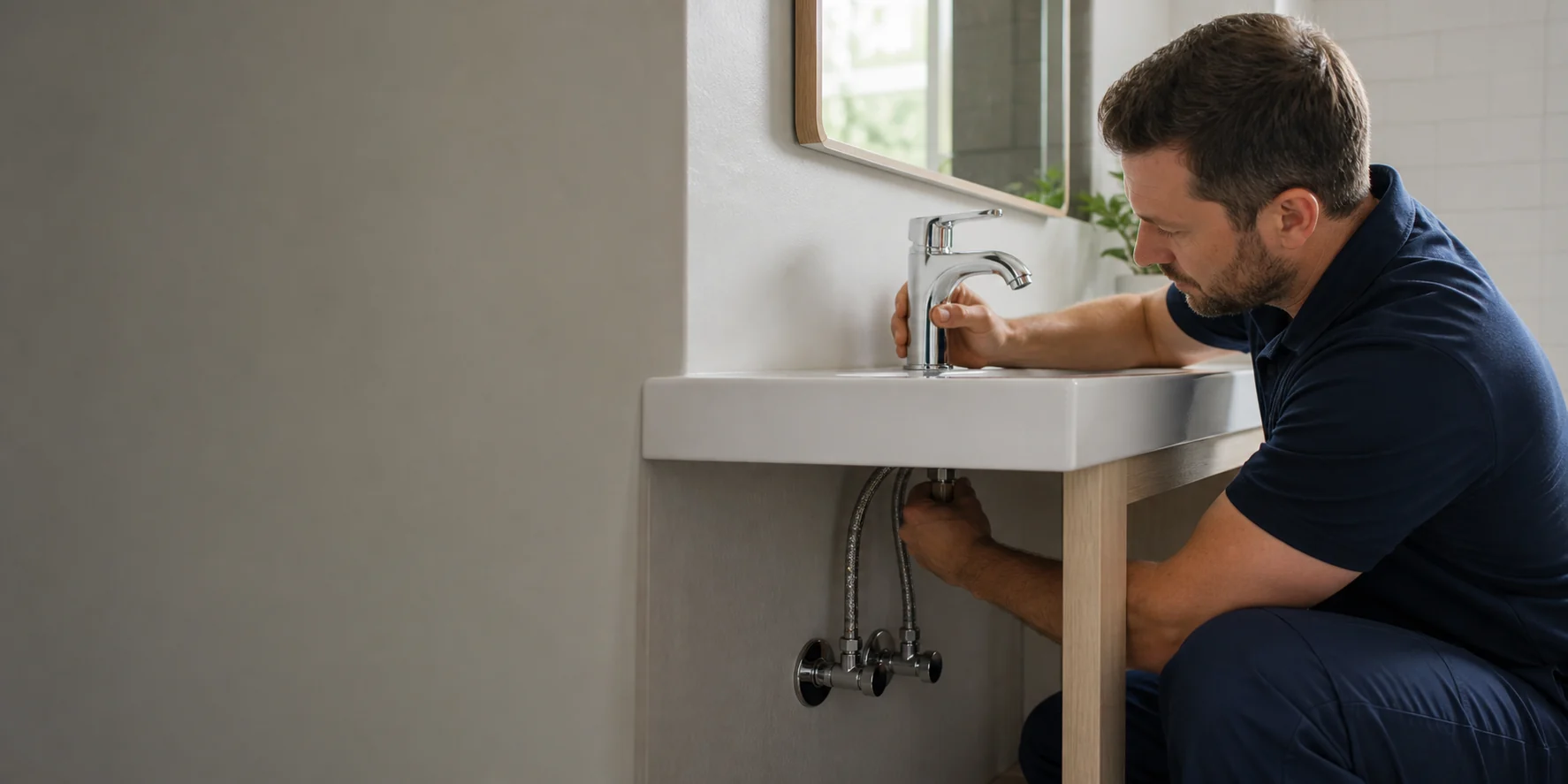
Putting in a new kitchen or bathroom faucet refreshes the fixture you touch most, and a clean install means no drips at the connections. Plumbing Advisors helps you pick a compatible faucet and connect with installation help.
Plumbing Advisors provides guidance and connection assistance. Independent providers perform the plumbing work and confirm availability, pricing, timing, and credentials.
On this pageOverview
 Plumbing Advisors Editorial TeamEditorial StandardsSource-Checked
Quick summary
- For new kitchen and bathroom faucet installs
- The sink's hole count decides what faucet fits
- Tired shutoffs are best replaced during the swap
- Call to confirm compatibility and get connected
About faucet installation
A faucet is the fixture you reach for dozens of times a day, so installing a new one is a small project with an outsized payoff in how a kitchen or bathroom feels and works. The work falls into two parts. The first is choosing a faucet that actually fits, which is more about the sink's hole layout and the type of faucet than the finish or brand. The second is the connection underneath: shutting off the water, mounting the new faucet, and hooking up the supply lines so there are no drips once the water is back on.
Kitchen and bathroom faucets are not interchangeable. Kitchen faucets sit taller, often include a pull-down or side sprayer, and may tie into a disposal or a water filter. Bathroom faucets are sized to the sink's hole spacing, whether that is a single hole, a four-inch centerset, or an eight-inch widespread layout. The connections matter too: the under-sink shutoff valves and the flexible supply lines are easy to refresh during the swap, and replacing tired ones then is far simpler than after a leak appears. Plumbing Advisors is a national service that helps you confirm compatibility and connects you with plumbing professionals who handle the installation in your area.
When a faucet installation makes sense
The old faucet leaks at the base
When water seeps from where the faucet meets the sink rather than the spout, the seal underneath has usually failed. That is hard to repair reliably, so installing a new faucet is often the cleaner fix.
You are remodeling or replacing the sink
A new sink or countertop is the natural moment to fit a new faucet, since the old one may not match the new hole layout. Doing both together avoids fitting a faucet twice.
You want new features
A pull-down sprayer, a touchless handle, or a filtered-water tap are common reasons to upgrade. These features are easiest to plan for before the install so the right model and fittings are ready.
The finish is worn or dated
Pitting, flaking, or a finish that no longer cleans up can make a faucet look tired even when it still runs. A new fixture refreshes the look of the whole sink area for a modest cost.
Repairs keep adding up
If a faucet has needed repeated cartridge or seal work, or parts are getting hard to find, a new one can be the better long-term value than another repair on an aging fixture.
The hole layout no longer suits you
Switching from separate handles to a single-handle faucet, or covering unused holes with a deck plate, is straightforward during an installation. It is a chance to match the faucet style to how you actually use the sink.
What to know
When you need it
- You are upgrading an old or worn-out faucet
- A new sink or countertop needs a faucet fitted
- You want a pull-down sprayer, touchless, or filtered model
- The current faucet leaks at the base and is not worth repairing
Common causes
- An aging faucet at the end of its lifespan
- A kitchen or bath remodel changing the fixtures
- A new sink with a different hole layout
- Wanting added features like a sprayer or filtered water
- A leak where the faucet meets the sink that repair will not fix
What to check first
- Count the mounting holes in the sink or counter (one, three, or four)
- Measure the spacing between the outer holes for bath faucets
- Check that the under-sink shutoff valves turn and hold
- Note whether the supply lines reach and are in good shape
When to call a pro
- The new faucet's hole layout does not match the sink
- The shutoff valves are stuck, corroded, or will not seal
- The supply lines are old, too short, or the wrong fittings
- You are adding a sprayer, filtration, or a touchless model
Choosing the right faucet for your sink
The faucet that fits is decided mostly by where it is going and how many holes the sink has. A professional can confirm compatibility before anything is bought.
Kitchen faucets
Kitchen faucets stand taller to clear pots and usually offer a pull-down or side sprayer. Many install in a single hole, often with a deck plate to cover extra holes, and some pair with a separate soap dispenser or filtered-water tap. Match the number of holes and decide on sprayer and filter features before buying.
Bathroom faucets
Bathroom faucets are sized to the sink's hole spacing. A single-hole faucet fits one opening, a centerset suits holes about four inches apart, and a widespread faucet needs separate holes eight inches or more apart. Measuring the spacing is the key step, since a mismatch will not mount correctly.
Shutoffs, supply lines, and add-ons
Whatever faucet you choose, the under-sink shutoff valves and flexible supply lines are part of the job. Refreshing old, corroded, or stiff valves during the install prevents future leaks, and a filter or sprayer is far easier to fit while the connections are already open.
What a typical faucet installation visit includes
- Confirming the sink's hole configuration and that the new faucet fits
- Shutting off the water at the under-sink valves and relieving pressure
- Removing the old faucet and cleaning the mounting surface
- Mounting the new faucet and securing it to the sink or countertop
- Replacing the supply lines and, if needed, the shutoff valves
- Connecting any sprayer, soap dispenser, or filtration that comes with it
- Turning the water back on and checking every connection for leaks
What faucet installation costs
A faucet installation quote should be based on the inspected scope, access, parts or equipment, permits, restoration, and urgency. Compare written quotes that describe the same work.
Typical faucet installation costs
| Project | Typical cost range |
|---|---|
| Shutoff / supply valve replacement | $80–$280 |
Labor-only project costs
| Labor | Typical cost range |
|---|---|
| Faucet installation labor | $135–$360 |
Labor costs
| Labor | Typical cost range |
|---|---|
| Faucet installed, fixture plus labor | $240–$730 per unit |
Per-item costs
| Item or service | Typical cost range |
|---|---|
| Kitchen faucet (fixture) | $85–$430 per unit |
| Bathroom faucet (fixture) | $55–$330 per unit |
Additional project costs
| Additional work | Typical cost range |
|---|---|
| Add a pull-down or side sprayer | $65–$250 |
| Under-sink water filter add-on | $165–$600 |
Cost ranges are estimates developed from standardized project scopes and reviewed pricing inputs. Government labor and regional cost data are used where applicable. See our Pricing Methodology for the exact sources, calculations, and review date. Actual prices vary by property, scope, materials or equipment, location, and provider.
What affects the cost
- Whether it is a simple swap or also involves new shutoffs and supply lines
- Fixture type and quality, from basic single-handle to pull-down or touchless
- Kitchen versus bathroom, since kitchen faucets and sprayers add steps
- Accessibility under the sink and the condition of existing valves and lines
- Whether a filtration system or extra features are added at the same time
- Regional labor rates, which vary by area
Typical service process
- 1Confirm the sink's hole configuration and pick a compatible faucet
- 2Shut off the supply valves and disconnect the old faucet
- 3Connect with a plumbing professional that services your area
- 4Remove the old faucet and clean the mounting surface
- 5Mount the new faucet and connect the supply lines and any sprayer or filter
- 6Turn the water back on and check every connection for leaks
How to choose the right pro
- Count the sink's mounting holes and measure the spacing before shopping
- Decide on a kitchen or bathroom faucet and any sprayer or filter features
- Confirm the professional is licensed and insured where your area requires it
- Ask whether new supply lines and shutoff valves are included in the quote
- Get a written estimate that separates the fixture from the labor
- Ask whether the installation and the new faucet carry a warranty
How Plumbing Advisors helps
Plumbing Advisors helps you confirm a new faucet will fit your sink and connect with plumbing professionals that service your area. Matching the hole configuration and refreshing tired shutoffs during the swap is what keeps the new fixture drip-free. Availability and pricing vary by location and provider.
Frequently asked questions
How do I know if a new faucet will fit my sink?
It comes down to the mounting holes. Count how many holes your sink or countertop has, usually one, three, or four, and for bathroom faucets measure the spacing between the outer holes. A single-hole faucet often includes a deck plate so it can cover three holes, but a widespread faucet needs the holes spaced to match.
Should the shutoff valves be replaced when installing a faucet?
Not always, but it is often a good idea. The under-sink shutoffs are right there during the job, and old valves that are stiff, corroded, or will not seal are far easier to replace then than after a leak starts. New supply lines are inexpensive and worth installing at the same time.
Can I add a sprayer or water filter during installation?
Often, yes. Many kitchen faucets come with a pull-down or side sprayer built in, and an under-sink filter or a separate filtered-water tap can be added if there is an open hole or room to drill one. It is worth deciding on these features before the install so the right fittings are on hand.
What is the difference between a centerset and a widespread bathroom faucet?
A centerset faucet combines the spout and handles on one base, typically for holes four inches apart, while a widespread faucet has separate pieces for holes spaced eight inches or more. The sink's hole spacing determines which style fits, so it is the first thing to check before buying.
Sources and further reading
These references support the safety and technical guidance on this page.
Faucet Installation guides
Learn before your faucet installation.
Free guides on cost, common problems, repairs, and what to expect — written to help you make the call with confidence.
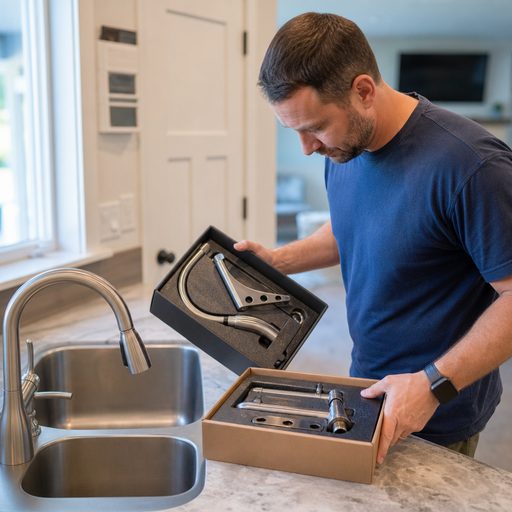
How to Choose a New Kitchen or Bathroom Faucet
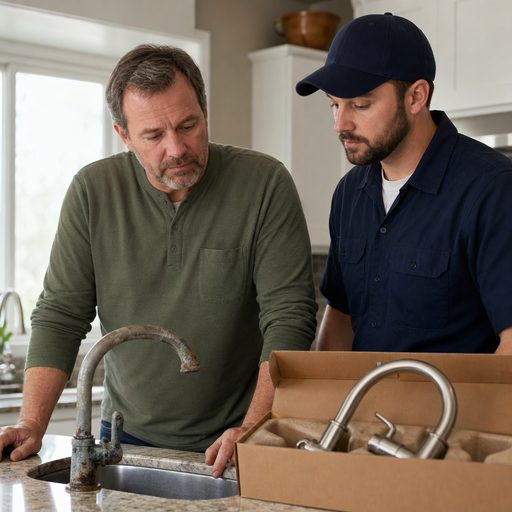
Should You Repair or Replace a Faucet?
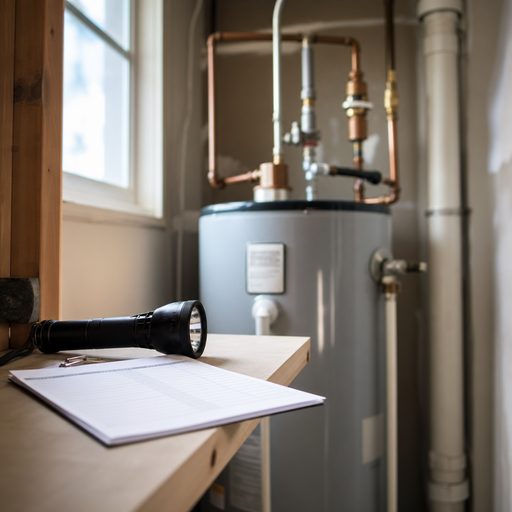
How Often Should Your Home's Plumbing Be Inspected?
What Does a Sewer Ejector Pump Do (and When Do You Need One)?
What Is Polybutylene Pipe and Should You Replace It?
Is PEX Safe for Drinking Water?
How Long Does PEX Plumbing Last?
Why Is My Sump Pump Running When It's Not Raining?
Do I Need a Battery Backup Sump Pump?
Choose your area
Faucet Installation near you
Find faucet installation in your state or city. Availability varies by location and provider.
Faucet Installation by state
AlabamaAL6 cities
ArizonaAZ8 cities
ArkansasAR5 cities
CaliforniaCA9 cities
ColoradoCO8 cities
ConnecticutCT6 cities
DelawareDE5 cities
FloridaFL8 cities
GeorgiaGA8 cities
IllinoisIL9 cities
IndianaIN8 cities
IowaIA6 cities
KentuckyKY6 cities
LouisianaLA6 cities
MarylandMD7 cities
MassachusettsMA8 cities
MichiganMI9 cities
MinnesotaMN7 cities
MississippiMS5 cities
MissouriMO8 cities
NebraskaNE5 cities
NevadaNV6 cities
New HampshireNH5 cities
New JerseyNJ8 cities
New MexicoNM5 cities
New YorkNY10 cities
North CarolinaNC8 cities
North DakotaND5 cities
OhioOH9 cities
PennsylvaniaPA9 cities
Rhode IslandRI5 cities
South CarolinaSC6 cities
South DakotaSD5 cities
TennesseeTN7 cities
TexasTX10 cities
VirginiaVA8 cities
WashingtonWA8 cities
West VirginiaWV5 cities
WisconsinWI7 cities
Need Plumbing Help Now?
Call Plumbing Advisors to connect with help for leaks, drains, water heaters, sewer lines, burst pipes, toilets, faucets, and more.
No-obligation request · Availability varies by location and provider