 Plumbing Advisors Editorial TeamEditorial StandardsUpdated May 4, 2026Source-Checked
Before anyone can fix a slab leak, they have to find it, and finding a leak hidden under a concrete foundation is a careful process in its own right. The goal is to pinpoint the exact spot so the repair can be as small and precise as possible, rather than opening up the floor to search. Modern leak detection makes this possible without guesswork, and understanding the steps involved can help you know what to expect and why a thorough diagnosis is worth the time it takes.
Confirming the Leak Exists
The first step is simply confirming that water is escaping somewhere and narrowing down where. A professional will often start by isolating the plumbing and watching the water meter, much like the meter test a homeowner can do, to verify there is an active leak. From there, they work to determine whether the problem is on a pressurized water line under the slab or somewhere else entirely, since the symptoms of a slab leak can overlap with other hidden leaks. Establishing this early prevents wasted effort and points the more precise tools in the right direction.
Listening, Pressure, and Cameras
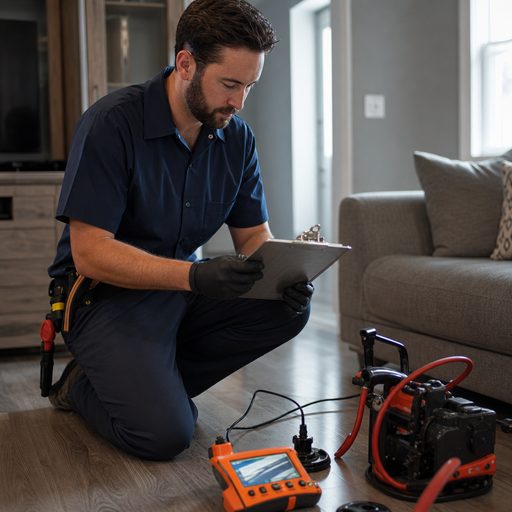
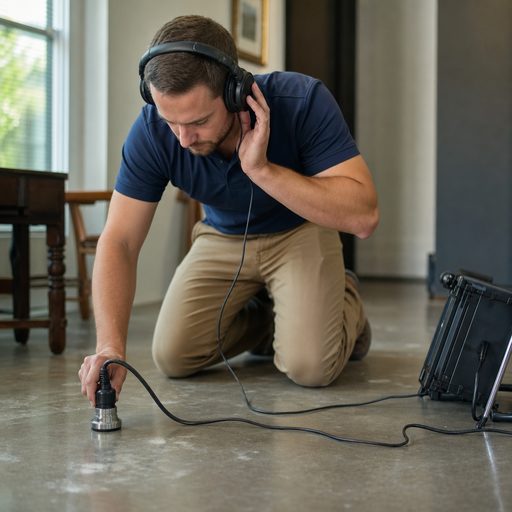
Once a slab leak is suspected, plumbers turn to specialized equipment that lets them hear and see what is happening below the concrete. These tools are sensitive enough to locate a leak within a small area, which is what makes a targeted repair possible. The methods below are the ones used most often, sometimes in combination.
- Acoustic listening equipment that amplifies the sound of water escaping under pressure, helping trace it to a precise point.
- Pressure testing, where a section of line is isolated and monitored to confirm it is losing pressure and to narrow down which line is involved.
- Electronic leak detection that can sense the location of escaping water through the slab.
- Thermal imaging that reveals the warm path of a hot water line leak spreading beneath the floor.
- A small inspection camera fed into the line when access allows, to see the inside of the pipe directly.
Pinpointing Before Any Repair
The reason for all this care is straightforward: the more precisely the leak is located, the less disruptive the repair has to be. A leak that is confirmed and marked within a small area can often be addressed with a focused fix, while guessing would mean opening far more of the floor than necessary. A good professional treats detection as a distinct step that happens before any repair decision is made, and will explain what they found and how before recommending how to proceed. This is also the moment when rerouting or relining a line may come up as alternatives to digging straight down to a single spot.
Ask to see where the leak was found
A reputable plumber should be able to show you the area they have identified and explain how they located it before any concrete is touched. Understanding where the leak is and why they are confident helps you make an informed decision about the repair approach and the cost involved.
When to Call a Professional
Locating a slab leak is not something to attempt yourself, and it is never a reason to break into your own foundation. Leak detection services have the acoustic, pressure, and imaging tools to pinpoint the problem accurately and without unnecessary demolition, and slab leak repair can then resolve it based on exactly what they find. Investing in a careful diagnosis up front usually means a smaller, cleaner repair in the end. To catch the problem early in the first place, see our guide on the early warning signs of a slab leak, and to understand what the repair itself may involve, our overview of slab leak repair costs explains what shapes the final price.
Sources and further reading
These references support material safety, technical, consumer, or planning guidance in this article. Confirm property-specific requirements with the applicable authority and professional.