 Plumbing Advisors Editorial TeamEditorial StandardsSource review July 31, 2026Source-Checked
Confirm the leak before planning foundation access
Hidden water use or moisture near the floor?
Confirm that unexplained water use remains after accessible fixtures and outdoor systems are ruled out, then require a documented leak location before approving floor access, rerouting, or a larger replacement.
A moving meter, warm floor, or damp area can justify further testing, but none of those signs proves where a pipe failed or whether the slab must be opened.
What the signs can and cannot establish
Start by separating active water use from a stain, temperature change, or older moisture mark. The pattern helps a professional choose the next test without treating a city condition as the diagnosis.
| What you notice | What it may indicate | What to do next |
|---|---|---|
| The meter changes while all water use is stopped | Water may be moving through a hidden fixture, appliance, irrigation, or supply-line leak | Rule out accessible uses, record the reading, and request leak location in Houston if the change continues. |
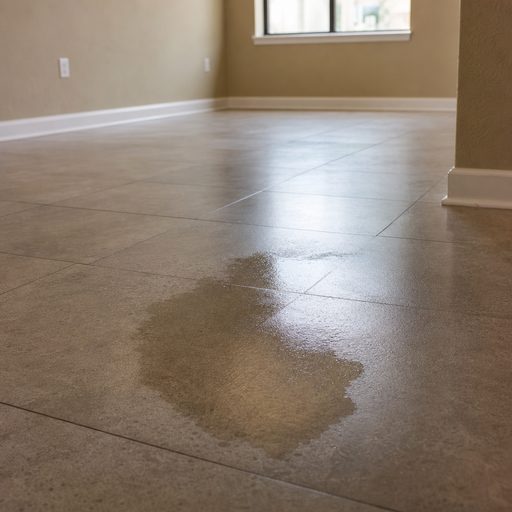
| A floor area is warm, damp, or changing | Moisture or heat may be reaching the surface from below or from a nearby source | Stop adding water, document the area, and avoid opening the floor before the source is narrowed. |
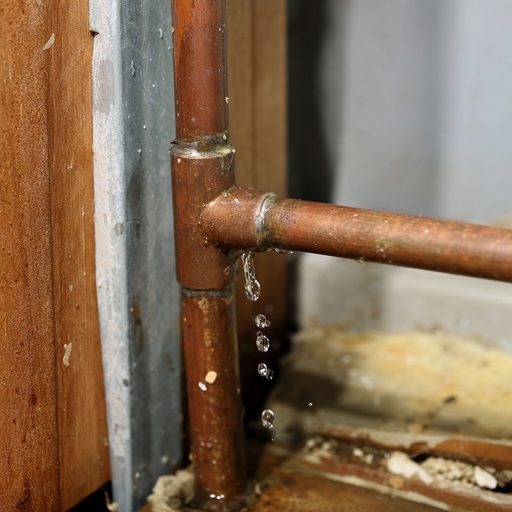
| Water is spreading across flooring or into a wall | An active pressurized leak may be causing ongoing damage | Use a safe, known shutoff if accessible and arrange prompt plumbing help. |
| Only one visible fixture or connection is wet | The source may be accessible rather than beneath the slab | Have the visible connection evaluated before authorizing buried-line testing or floor access. |
| A stain remains but the meter does not change | The moisture may be intermittent, no longer active, or unrelated to a pressurized supply line | Document when it changes and ask for broader moisture-source evaluation rather than assuming a slab leak. |
Use Houston's meter check before discussing foundation access
Houston Public Works recommends stopping all indoor and outdoor water use, checking the meter, waiting two hours, and checking it again. A changed reading supports further leak investigation, but the provider still needs to separate fixtures, irrigation, and accessible piping from a buried supply line.
The meter does not change during the no-water-use period
Document when the moisture or warmth appears and ask whether the source may be intermittent or unrelated to a pressurized line.
The meter changes after accessible uses are ruled out
Request line isolation and a documented location before approving any floor opening.
The proposal includes pipe repair or rerouting
Ask who will confirm the Houston permit and inspection requirements for the exact scope.
The provider's license information is unclear
Match the company and Responsible Master Plumber information to the Texas state list before signing.
Houston's meter test can confirm unexplained flow. It cannot identify the failed line, prove a slab leak, or choose between direct access and rerouting.
Sources: Fix a Leak, Houston Permitting Center - Repairs after the Winter Storm, Free Licensee List
Get help with a suspected slab leak in Houston
Describe the meter reading, floor temperature or moisture, affected room, and whether water is actively spreading.
No-obligation request · Availability varies by location and provider
What professional slab leak repair service does
A slab leak hides beneath your foundation, where it can cause serious damage before you notice. Plumbing Advisors helps you recognize the signs and connect with slab leak help.
Professional slab-leak work begins by confirming that water is escaping from a pressurized line and narrowing the affected run. The provider should explain what each observation or test shows before recommending access through a floor, wall, or ceiling.
After the leak is located, the repair discussion may compare direct access, rerouting, or a broader pipe replacement. The useful comparison includes the pipe work, access, testing, moisture response, and finish restoration rather than presenting one method as automatic.
What may contribute to a hidden supply-line leak
Aging or corroded piping
EPA identifies older piping and corrosion as possible household leak factors. The age of a home alone does not establish the pipe material or its condition.
Sources: WaterSense - Leak Detection and Flow Monitoring Devices
Pressure outside the plumbing system's intended range
Irregular water pressure can contribute to leaks, but a pressure reading and an inspection are needed before it is treated as the cause of a particular failure.
Sources: WaterSense - Leak Detection and Flow Monitoring Devices
A fitting, installation, or equipment problem
Incorrect installation, worn components, and equipment problems are among the possible causes EPA lists. Locating the leak still comes before choosing the repair.
Sources: WaterSense - Leak Detection and Flow Monitoring Devices
Moisture traveling away from the source
Water can appear somewhere other than the failed pipe. The visible damp area helps define the search, but it should not be used as the access point without further testing.
What you can safely document first
- Stop indoor and outdoor water use, note the meter, and repeat the reading after a no-water-use period.
- Record where a warm area, damp floor, sound, or odor appears and whether it changes while water remains off.
- Check accessible toilets, faucets, appliance lines, irrigation, and visible connections before assuming the leak is beneath the floor.
- Close a known fixture or main shutoff only when it is easy to reach and turns normally.
- Do not cut, drill, or break into a floor to search for the leak.
A meter confirms flow, not the leak location
A changed meter reading with all water use stopped supports further leak investigation. It does not identify the failed pipe, prove the leak is under the slab, or determine the repair method.
Sources: WaterSense - Home Maintenance, WaterSense - Leak Detection and Flow Monitoring Devices
When a suspected slab leak needs prompt help
If water is actively spreading, stabilize the leak before comparing long-term repair methods. Use only a safe, known shutoff and do not break into the floor.
- Water is moving across flooring or entering a wall or cabinet
- The meter continues moving rapidly with all known water use stopped
- A safe, accessible shutoff does not stop the active flow
- Electrical equipment or outlets are wet or immediately threatened
Sources: Fix a Leak, A Brief Guide to Mold, Moisture and Your Home
How the investigation should narrow the repair
Each step should answer a specific question: whether water is still flowing, which line is involved, where the source is, and which access plan causes the least unnecessary disruption.
| Method | Where it may fit | Important limitation |
|---|---|---|
| Meter and fixture isolation | Confirming unexplained flow and ruling out accessible fixtures or equipment | It does not locate a buried pipe failure by itself. |
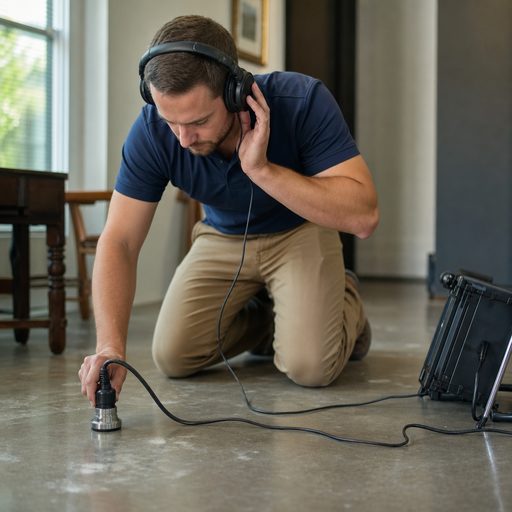
| Line isolation and professional location testing | Narrowing the affected run before any finished surface is opened | The provider should explain what the result supports and what uncertainty remains. |
| Direct access, reroute, or broader replacement comparison | Choosing a repair after the location and condition are documented | The least expensive pipe step may not include flooring, drying, or finish restoration. |
Sources: WaterSense - Home Maintenance, WaterSense - Leak Detection and Flow Monitoring Devices
What genuinely changes the slab-leak plan in Houston
Houston's meter procedure includes indoor and outdoor water use
Irrigation, appliances, and fixtures need to stay off during the two-hour check. That prevents an ordinary water use from being mistaken for hidden supply-line flow.
Sources: Fix a Leak
The repair scope determines the permit question
Houston's repair guidance places pipe repairs within the permit and inspection process. Ask the provider to identify the permit tied to the actual repair rather than adding a vague allowance before the location is known.
Sources: Houston Permitting Center - Repairs after the Winter Storm
Texas provides a Responsible Master Plumber check
The state board publishes a licensee list. Use the business and Responsible Master Plumber information shown on the proposal when checking the record.
Sources: Free Licensee List
Comparing a slab leak repair estimate
A Houston slab-leak estimate should separate location work, plumbing repair, access, testing, drying, and finish restoration. A single total can hide which parts are still allowances.
Scope factors
- Time and testing needed to locate and isolate the failed line
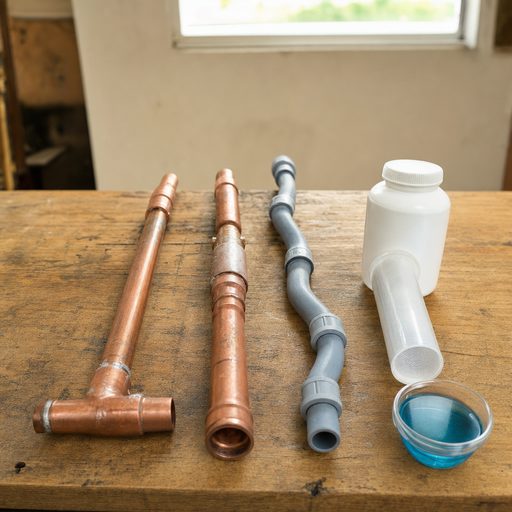
- Direct access, rerouting, or a broader replacement scope
- Floor, wall, or ceiling openings needed to reach or bypass the pipe
- Pressure testing and confirmation that the active leak has stopped
- Drying, flooring, and finish restoration handled outside the plumbing scope
- Local permit or inspection requirements for the defined repair
Questions for the estimate
- Which finding supports the proposed leak location and access point?
- Does the bid include location work, pipe repair, testing, and water restoration?
- Who handles drying, flooring, and finish repair after the plumbing is complete?
- What changes the price if the leak is not at the expected location?
What to tell Plumbing Advisors
A concise record of the water-use pattern and affected area helps the provider plan the first visit without guessing at the pipe or access point.
- The room and exact area where the Houston warning sign appears
- Meter readings taken while indoor and outdoor water use was stopped
- Whether the floor is warm, damp, stained, buckling, or making a water sound
- Whether a visible fixture, appliance, irrigation line, or connection has been ruled out
- Whether water is actively moving or spreading and which shutoffs are safely accessible
- Any prior leak-location result or proposed access point
Plumbing Advisors does not dispatch its own local technicians. The independent professional is responsible for confirming availability, credentials, diagnosis, price, warranty terms, and work performance.
Slab Leak Repair in Houston: frequently asked questions
Does a moving Houston water meter prove I have a slab leak?
No. Houston's no-water-use test can show that water is still moving, but the source may be a fixture, appliance, irrigation line, accessible pipe, or buried supply line. Those possibilities need to be narrowed before floor access is approved.
Should a Houston slab-leak proposal include permit work?
Ask after the repair scope is defined. Houston places pipe repairs within its permit and inspection guidance, so the proposal should state who confirms, obtains, and closes any permit required for the selected repair.
How should I compare direct access with rerouting?
Compare the evidence behind the location, the pipe work, access openings, testing, water restoration, drying, and finish repair. A lower plumbing total may omit flooring or wall restoration included in another bid.
How can I check a Houston plumbing company?
Use the Texas state licensee list and match the company and Responsible Master Plumber information to the proposal. Ask who carries the permit and inspection responsibility for the work.
Sources and editorial methodology
Sources are included when they substantively support a local, safety, technical, or consumer decision on this page.
- Houston and federal sources support the meter procedure, permit planning, license check, and moisture response shown on this page.
- No Houston soil, neighborhood, or foundation condition is presented as proof of the leak's cause or location.
U.S. Environmental Protection Agency
WaterSense - Home MaintenanceU.S. Environmental Protection Agency
WaterSense - Leak Detection and Flow Monitoring DevicesU.S. Environmental Protection Agency
A Brief Guide to Mold, Moisture and Your HomeCity of Houston - Houston Public Works
Fix a LeakCity of Houston
Houston Permitting Center - Repairs after the Winter StormTexas State Board of Plumbing Examiners
Free Licensee List