 Plumbing Advisors Editorial TeamEditorial StandardsUpdated July 5, 2026Source-Checked
Polybutylene pipe replacement is usually the recommended path if your home still has polybutylene supply lines. This gray plastic piping, common from roughly 1978 to 1995, has a long history of unexpected leaks and fitting failures. If you find it in your house, plan for a professional inspection and discuss full replacement rather than repeated spot repairs.
What is polybutylene pipe, and why is it a problem?
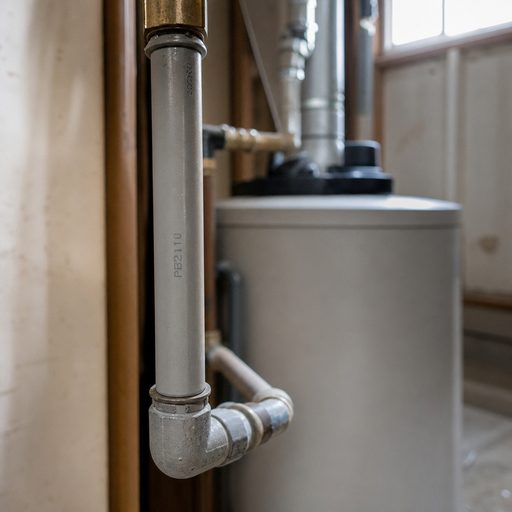
Polybutylene is a flexible gray plastic water supply pipe that was widely installed in homes between about 1978 and 1995. It was used for interior water lines and sometimes for underground service lines. Homeowners often discover it in basements, crawl spaces, utility rooms, and near the water heater. A common clue is the pipe itself being stamped with “PB2110,” which identifies the material. It may also appear with plastic or metal fittings at changes in direction and fixture connections.
The concern is not simply age. Polybutylene has a documented history of degrading from the inside out when exposed to chlorine and other oxidants commonly present in municipal water. That internal breakdown can make the pipe brittle and more likely to crack or split without much warning. Fittings can also fail, especially where stress, heat, or movement are involved. Because failures may start small and stay hidden behind walls, what looks like a minor issue can become water damage before anyone notices.
Polybutylene also has a well-known class-action history tied to these reliability concerns. That legal history does not mean every system fails immediately, but it does explain why plumbers, insurers, and home buyers treat the material cautiously. In most cases, replacement is considered the standard recommendation because the underlying problem is the pipe material itself, not just one isolated bad section.
How can you identify polybutylene in your home?
Start with a visual check in unfinished areas. Polybutylene is usually gray, though shades can vary slightly with age and lighting. Look for tubing that bends gently rather than holding rigid, straight lines like copper. Check exposed runs near the water heater, under sinks, at the main water line entry, and in crawl spaces or basements. Water heater connections are a common place to spot it because piping often remains visible there even when most of the home’s lines are hidden behind finished walls.
- Gray plastic water supply piping in unfinished areas
- “PB2110” stamped on the pipe
- Visible runs near the water heater or main water entry
- Plastic or metal fittings joining flexible gray tubing
- Supply piping installed during the late 1970s through mid-1990s
Do not confuse polybutylene with other plumbing materials. PEX is also flexible plastic pipe, but it is typically red, blue, or white and marked as PEX rather than PB2110. PVC and CPVC are more rigid and usually white, cream, or off-white. If you are unsure, a plumber can confirm the material during a Repiping evaluation or a Pipe Repair visit. If there is staining, damp drywall, or unexplained moisture near hidden lines, Leak Detection can help determine whether the system has already started to fail behind walls or under floors.
Should you replace polybutylene pipe or repair it?
For most homeowners, replacement is the better long-term decision. The main reason is that polybutylene failures are material-related, not just a matter of one bad joint. Replacing a short leaking section may stop the current drip, but it does not remove the rest of the aging pipe that may be degrading elsewhere. That is why many plumbers recommend whole-house replacement once polybutylene has been identified, especially if the home has had one or more leaks already.
Spot repairs can make sense in limited situations, such as stopping an active leak while you prepare for larger work. But they are generally considered temporary risk management rather than a full solution. If your home has hidden polybutylene in walls, ceilings, or slabs, waiting for multiple failures can lead to repeated disruption and water damage. Homeowners comparing options often also read Signs You May Need to Repipe Your Home to understand when isolated repairs stop being practical.
Why waiting can backfire
Polybutylene often fails without much exterior warning because the pipe can deteriorate internally first. Even if one repaired area looks fine, another hidden section may be nearing failure. If your home still has PB2110 piping, treat any leak history or moisture signs as a reason to schedule a professional assessment soon.
What happens during polybutylene pipe replacement?
Replacement usually means removing or bypassing the old polybutylene supply lines and installing a modern water distribution system throughout the home. The exact approach depends on the house layout, whether lines run through walls, attics, crawl spaces, or slabs, and which fixtures need new connections. A plumber may create strategic access openings in drywall to route new piping and connect each fixture, then pressure-test the system before walls are closed. In many homes, the old polybutylene is left in place after being disconnected if removing every section would cause unnecessary damage.
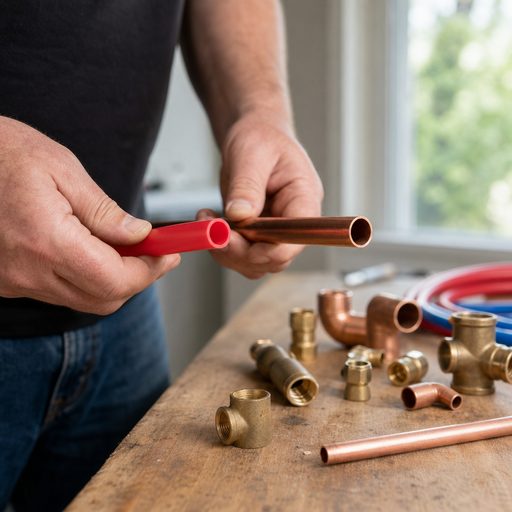
Most homeowners choosing replacement are also deciding between modern repipe materials. PEX is common because it is flexible and can reduce the number of fittings in some layouts. Copper remains an option in certain homes and regions. If you are comparing those materials, PEX vs. Copper for a Repipe: How to Choose is a useful next read. If budget planning is part of your decision, the guide How Much Does Whole-House Repiping Cost? explains the main factors that influence the scope and complexity of a full repipe.
Replacement planning should also account for related plumbing components nearby. A plumber may inspect fixture shutoffs, exposed supply connections, and the water heater area to ensure the new piping ties in properly. The work is usually organized to restore water to key fixtures as efficiently as possible, but the sequence varies by house design and access. Because routing changes can affect walls and ceilings, clear communication about access points and finish repairs matters just as much as the pipe material chosen.
How do insurance, home sales, and replacement timing affect the decision?
Polybutylene can complicate more than plumbing performance. Some insurers may decline coverage for homes with active polybutylene systems, request additional documentation, or apply stricter underwriting terms because of leak risk. Requirements vary by carrier and property, but homeowners often learn about the issue when shopping for insurance, renewing a policy, or filing a claim after water damage. If you are buying or selling a home, polybutylene may also come up during inspection and negotiations because many buyers view it as a known replacement item rather than a neutral plumbing detail.
Timing replacement before a failure can make the project more controlled and less stressful. When work is planned instead of emergency-driven, you have more time to compare materials, discuss routing, and coordinate wall access and repairs. That can be especially valuable if the house is occupied or recently remodeled. If you already have recurring leaks, staining, pressure changes, or unexplained moisture, the urgency increases. In that situation, Leak Detection can help identify active problems while you plan a larger Repiping project instead of continuing piecemeal Pipe Repair.
Can polybutylene be hidden even if I only see newer pipes under sinks?
Yes. Visible supply tubes at sinks and toilets may have been updated while older polybutylene remains inside walls, ceilings, crawl spaces, or at the main water entry. The water heater area, unfinished basement, and utility spaces are often better places to check. A plumber can trace exposed lines and identify where older material may still be feeding parts of the home.
Is all gray pipe in a house polybutylene?
No. Color alone is not enough for a positive identification. Gray pipe may be another material, and lighting or age can make plastics look similar. The strongest clue is a PB2110 marking on the pipe, along with the installation era and location in the home’s water supply system. If there is any doubt, professional identification is the safest way to confirm it.
Does one leak mean the whole system is failing right away?
Not necessarily, but one leak is a serious warning sign with polybutylene. Because the material can degrade internally, a single failure may indicate broader age-related weakness elsewhere in the system. Some homes experience isolated problems first, while others develop multiple leaks over time. That is why plumbers often treat a confirmed leak in polybutylene as a reason to evaluate full replacement rather than only the damaged section.
What replacement materials are commonly used instead of polybutylene?
Modern repipes are commonly done with PEX or copper, depending on the home, local practices, water conditions, and routing needs. PEX is flexible and often useful where fewer fittings help with layout. Copper is rigid and familiar in many plumbing systems. The best choice depends on the house and the installation plan, so it is worth discussing both materials before moving forward with a repipe.
Sources and further reading
These references support material safety, technical, consumer, or planning guidance in this article. Confirm property-specific requirements with the applicable authority and professional.
- U.S. EPA WaterSense - Home maintenance
- U.S. EPA WaterSense - Fix a Leak Week
- U.S. Department of Energy - Water heating
- U.S. Department of Energy - Water-heater selection guide
- NSF - Safety of PEX plumbing products
- NSF - Faucets and plumbing products
- National Association of Insurance Commissioners - Homeowners insurance