 Plumbing Advisors Editorial TeamEditorial StandardsSource review July 26, 2026Source-Checked
Start with the pattern, not a guessed cause
One fixture or several?
A sink or tub that is blocked by itself usually starts at that fixture or branch. Water appearing at a basement drain, several fixtures reacting together, or a backup that follows heavy rain calls for a broader drain-and-sewer check and a Chicago 311 report when flooding or basement backup is involved.
This is a service-triage framework, not a remote diagnosis. Stop adding water when another fixture rises or wastewater is entering the home.
What the drain pattern may mean
The number and location of affected fixtures usually tells you more than a guess about what may be inside the pipe.
| What you notice | What it may indicate | What to do next |
|---|---|---|
| One sink, shower, or tub will not drain | A stopper, trap, or fixture branch may be obstructed | Stop using that fixture, remove only accessible debris, and request clogged-drain help if flow does not return. |
| The same fixture blocks again after clearing | The obstruction may be deeper or only partly opened | Ask what was found and whether the branch needs a different clearing method or inspection. |
| Running one fixture raises water at another | A shared branch or building drain may be restricted | Stop adding water and describe both fixtures when requesting help. |
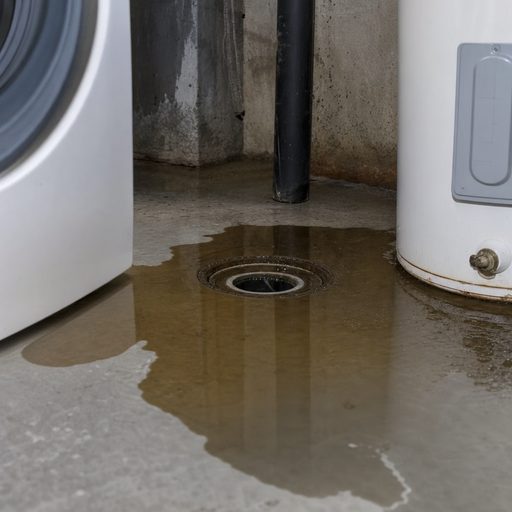
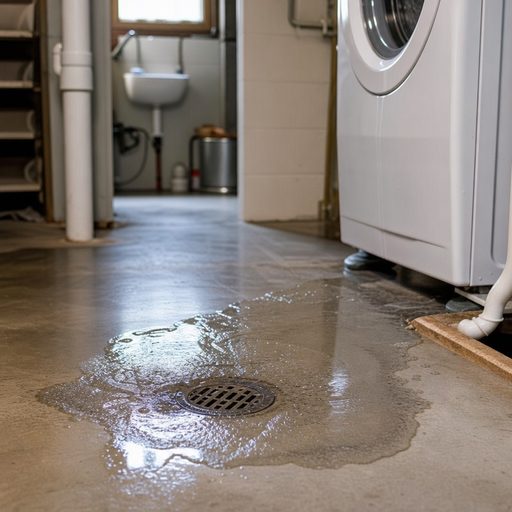
| Wastewater appears at a basement floor drain | A backup is reaching a low opening in the plumbing system | Avoid contact, stop household water use, notify Chicago 311, and arrange prompt private assessment. |
| The basement backup begins during heavy rain | Rain may be affecting sewer capacity, but it does not identify the condition of the private line | Record the timing for 311 and the plumbing professional evaluating the property. |
When a Chicago clogged drain should also be reported to 311
A single blocked fixture usually begins as private drain work. MWRD asks Chicago residents to notify 311 when the problem includes basement backup or flooding, while private plumbing still needs assessment when the obstruction is on the property.
One fixture is blocked and no other drain reacts
Start with that fixture or branch; the symptom alone does not indicate a public sewer problem.
Water appears through a basement floor drain or fixture
Stop household water use, avoid contact, notify Chicago 311, and request prompt plumbing help.
The backup starts during or just after heavy rain
Report the timing to 311 and give the same detail to the professional checking the private line.
A basement fixture blocks repeatedly in dry weather
Request private drain or lateral diagnosis instead of assuming the public system caused it.
A rain event or basement location changes the reporting decision, not the diagnosis. Do not enter wastewater or reach through contaminated water to test equipment.
Sources: What You Should Do During Flooding, Tunnel and Reservoir Plan, Sanitary Sewer Overflows
Get help with a clogged drain problem in Chicago
Describe which fixtures are affected, whether water moves between drains, and whether the problem has happened before.
No-obligation request · Availability varies by location and provider
What professional clogged drain service does
A clogged drain with standing water can bring a kitchen or bathroom to a halt. Plumbing Advisors helps you understand whether it is a simple clog or something deeper, and connect with help.
Professional drain service starts by identifying which fixture or line is affected and whether the pattern is local or shared. The goal is to restore flow without treating every slow drain as proof of a damaged sewer line.
Clearing removes an obstruction or restrictive buildup. Inspection becomes more important when clogs return, several fixtures react together, or the provider finds signs that the line may be offset, cracked, intruded by roots, or otherwise defective.
Why a drain may slow, stop, or clog again
Buildup near one fixture
Hair, soap residue, food debris, and grease can narrow a trap or fixture branch until water slows or stops.
An object or unsuitable material
Wipes, hygiene products, food scraps, and other materials can lodge in a fixture or contribute to a blockage farther downstream.
Roots entering a defective sewer line
Roots can enter through an opening or defect and catch debris. The address or age of a home does not establish that roots are the cause; the line has to be assessed.
A restriction or defect beyond the clog
A recurring blockage may be maintenance-related, but it can also occur alongside a damaged or misaligned line. Clearing restores an opening; it does not prove the pipe is structurally sound.
Sources: Sewer Pipe Assessment
What you can safely check first
- Check whether one fixture or several fixtures are affected.
- Remove only visible, easily accessible debris from a stopper or drain cover.
- Stop using a fixture that is holding water or causing another drain to rise.
- Keep people and pets away from wastewater and avoid contact with contaminated water.
- If a chemical product has already been used, do not add another product and tell the professional before the line is opened.
Be careful with chemical drain cleaners
Acidic and alkaline drain cleaners can cause heat, splashback, and chemical burns. Do not mix products or lean over a blocked drain after adding a cleaner. For an exposure, follow the product label and contact Poison Control at 1-800-222-1222 in the United States.
Sources: What's in drain cleaner and what happens if you drink it?
When a drain problem is urgent
A clogged drain becomes urgent when wastewater is entering the home, several fixtures are backing up, or normal water use makes a basement drain rise.
- Raw wastewater is visible at a floor drain, tub, shower, or toilet.
- Running one fixture causes another low drain to rise.
- The backup is spreading toward electrical equipment, finished rooms, or belongings.
- The home cannot use essential fixtures without causing another backup.
Sources: Sanitary Sewer Overflows, What You Should Do During Flooding
How the service method should be chosen
The method should follow the affected line, likely obstruction, access, recurrence history, and observed pipe condition. A more aggressive method is not automatically a better one.
| Method | Where it may fit | Important limitation |
|---|---|---|
| Mechanical cabling or augering | A localized obstruction or a line that needs a controlled opening | It may open a path without removing every deposit from the pipe wall. |
| Water jetting | Heavy grease or recurring buildup when the pipe condition and access support it | It is not automatically appropriate for every line; the provider should consider pipe condition first. |
| Camera inspection | Recurring clogs, shared-line symptoms, or a suspected defect | A camera documents visible conditions but does not by itself price or authorize a repair. |
Sources: Sewer Pipe Assessment
What genuinely changes the drain decision in Chicago
Basement location changes the urgency
MWRD describes basement floor drains and plumbing fixtures as common places for backups to appear. A blocked upper-floor sink is a different service pattern from wastewater rising at the home's lowest drain.
Sources: What You Should Do During Flooding
Rain timing belongs in the service request
Most of Chicago uses combined sewers, so heavy rain can reduce available capacity. The timing is useful context for 311 and the plumber, but it does not prove the public system caused a specific clog.
Sources: Tunnel and Reservoir Plan, What You Should Do During Flooding
Wipes and grease are preventable, not a remote diagnosis
MWRD warns that wipes, fats, oils, and grease can block household plumbing and neighborhood sewers. Keep them out of drains, but ask what the clearing actually found before assigning a cause to the current blockage.
Sources: Flush With Care
Comparing a clogged drain estimate
The estimate should identify whether the work covers one fixture, a shared branch, the building drain, or the private lateral. Those scopes should not be combined into one unexplained clogged-drain price.
Scope factors
- The number and location of affected fixtures
- Access to the trap, drain, or cleanout
- Whether the blockage returns after flow is restored
- Whether inspection is needed to answer a recurrence question
- The selected clearing method and any after-hours timing
Questions for the estimate
- Which fixture or line is included in the quoted work?
- What clearing method will be used and why?
- When would camera inspection become useful?
- What finding would move the recommendation from clearing to repair?
What to tell Plumbing Advisors
A short symptom history helps explain where the problem may begin without pretending to diagnose the line over the phone.
- List every affected fixture and identify the lowest drain involved.
- Note whether the problem began during rain or continued in dry weather.
- Describe previous clearing, inspection, or repair work on the same line.
- Say whether wastewater, a strong sewer odor, or water moving between fixtures is present.
- Mention any chemical product already placed in the drain.
Plumbing Advisors does not dispatch its own local technicians. The independent professional is responsible for confirming availability, credentials, diagnosis, price, warranty terms, and work performance.
Clogged Drain in Chicago: frequently asked questions
Should I call Chicago 311 for one clogged sink?
Not based on that symptom alone. MWRD's 311 guidance is relevant when the problem includes basement backup or flooding. A single blocked fixture generally starts with private clogged-drain help.
What makes a Chicago basement clog urgent?
Treat it urgently when wastewater is visible, several fixtures react together, or household water use raises the level at a basement drain. Stop adding water, avoid contact, notify 311, and arrange private assessment.
Does rain prove Chicago's sewer caused the clog?
No. Combined-sewer capacity makes rain timing relevant, but the timing does not establish the condition of a building drain or private lateral. Report the event and have the private plumbing evaluated.
What should I ask when the same Chicago drain blocks again?
Ask what the earlier clearing found, whether stable flow was confirmed, and what specific question an inspection would answer. Recurrence supports further diagnosis, not an automatic repair conclusion.
Sources and editorial methodology
Sources are included when they substantively support a local, safety, technical, or consumer decision on this page.
- Local claims are limited to facts that change reporting, safety, diagnosis, or service planning.
- City and regional sources provide system context; they are not treated as proof of a property's diagnosis.
- National technical and safety claims use public agencies, a standards body, and Poison Control rather than plumbing competitors.
Metropolitan Water Reclamation District of Greater Chicago
Flush With CareMetropolitan Water Reclamation District of Greater Chicago
What You Should Do During FloodingMetropolitan Water Reclamation District of Greater Chicago
Tunnel and Reservoir PlanU.S. Environmental Protection Agency
Sanitary Sewer Overflow Frequent QuestionsU.S. Environmental Protection Agency
Sanitary Sewer OverflowsNational Association of Sewer Service Companies
Sewer Pipe Assessment