 Plumbing Advisors Editorial TeamEditorial StandardsUpdated July 5, 2026Source-Checked
If your drain keeps clogging, the problem usually is not the latest blockage—it is an underlying issue that never fully cleared. Common causes include grease or soap buildup, hair, wipes, scale inside older pipes, poor drain venting, or a partial obstruction in the branch line or main sewer line. Repeated clogs are a sign to stop treating symptoms and identify the source.
What usually causes a drain to keep clogging?
Most recurring clogs happen because material is still stuck somewhere in the line after a temporary fix. A plunger or small hand snake may open a narrow path through the blockage, but it may leave grease, sludge, hair, or paper buildup along the pipe walls. Water drains for a while, then the opening narrows again and the same fixture backs up. This is especially common in kitchen sinks, bathroom sinks, tubs, and shower drains where residue builds slowly over time.
Habits also matter. Grease, coffee grounds, starchy food scraps, “flushable” wipes, paper towels, and heavy soap residue can keep feeding the same clog pattern. In older homes, pipe scale or rough interior surfaces can catch debris more easily than newer piping. If you have already dealt with the same drain more than once in a short period, that points to a persistent restriction rather than a one-time blockage.
Is it just one drain, or is it a bigger sewer problem?
A single slow tub, shower, or bathroom sink often means the clog is in that fixture’s trap arm or branch drain. But when more than one fixture acts up—especially on the lowest level of the home—the issue may be farther downstream in the main drain or sewer line. A toilet that gurgles when a shower runs, a tub that backs up when you flush, or several drains slowing at once are stronger signs of a main-line issue.
This distinction matters because the fix is different. A local Clogged Drain near one fixture may respond to targeted Drain Cleaning. A repeating problem that affects multiple drains may call for Sewer Camera Inspection to find a partial collapse, root intrusion, heavy buildup, or another defect in the main line. If you are not sure which situation you have, compare the symptoms with Single-Fixture Clog vs. Main-Line Clog: How to Tell.
Can roots, pipe damage, or a belly cause repeat clogs?
Yes. If your line keeps clogging even after it has been cleared, the pipe itself may be part of the problem. Tree roots can enter through joints or small cracks and keep catching paper and waste. Older cast iron can develop heavy internal scale, reducing the opening inside the pipe. Some buried lines develop a belly, which is a low spot where wastewater and solids collect instead of flowing smoothly away. Any of these conditions can create a pattern of repeated backups.
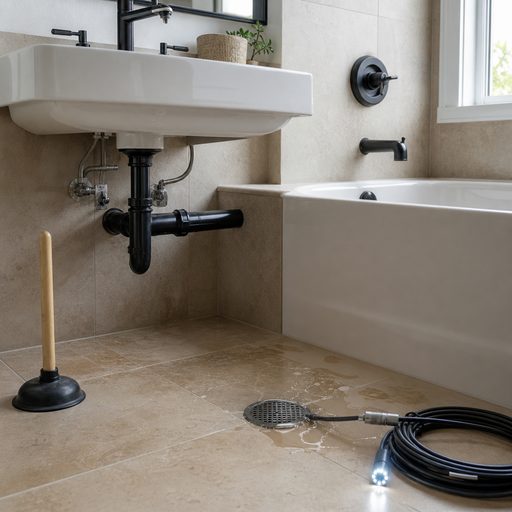
These are the situations where a camera inspection becomes especially useful. A sewer camera can show whether the clog is simply buildup that needs thorough cleaning or whether the line has a structural problem. It is also the best way to distinguish between recurring debris and a damaged section that will continue causing trouble until repaired. If a drain backs up again soon after professional clearing, that is a strong reason to consider Sewer Camera Inspection.
- One sink or tub only: more likely a local branch-line blockage
- Several drains slowing together: more likely a downstream obstruction
- Toilet gurgling when nearby water drains: possible vent or main-line issue
- Lowest fixtures backing up first: common with sewer line restrictions
- Backups returning soon after clearing: often means buildup, roots, or pipe damage remains
Could poor venting or buildup inside the pipe be the reason?
Yes. Drain systems need proper venting so water can flow without creating suction that slows or disturbs drainage. A vent problem can make fixtures drain sluggishly, gurgle, or lose water from traps. While vent issues are less common than simple buildup, they can contribute to recurring symptoms that feel like a clog. In kitchens and baths, residue on the inside of the pipe can have the same effect by narrowing the passage little by little.
Kitchen drains often clog repeatedly because grease cools and sticks to the pipe walls. Bathroom drains collect hair, soap scum, and toothpaste residue. Laundry drains can accumulate lint and detergent residue. When this buildup is the real problem, the line needs to be cleaned thoroughly enough to restore the pipe opening, not just poked through. If you want to reduce the chances of the same problem returning, see How to Prevent Clogged Drains.
When repeat clogs mean it is time for a camera inspection
If the same drain clogs again after being cleared, or multiple fixtures are backing up together, the next step may be to look inside the line. Sewer Camera Inspection can reveal roots, heavy scale, a bellied pipe, or another hidden cause that simple clearing will not solve.
What should homeowners do when a drain keeps clogging?
Start by paying attention to the pattern. Note which fixtures are affected, whether the problem is isolated or house-wide, and what happens when you run water or flush a toilet. If a sink or tub is draining slowly, removing visible hair or debris near the drain opening may help, but avoid repeated use of chemical drain cleaners because they can damage some piping and make later service harder. For recurring problems, the goal is proper diagnosis, not stronger chemicals.
If the issue comes back, professional Drain Cleaning is usually the next practical step. When the symptoms suggest a bigger line issue, ask whether Sewer Camera Inspection makes sense. If you are trying to judge urgency, How to Tell If a Drain Clog Is Serious can help you decide whether the problem is a minor nuisance or a warning sign of a larger sewer-line restriction. The key is not to ignore a recurring clog, because repeat backups can become more disruptive over time.
Why does my sink drain fine for a few days and then clog again?
That usually means the clog was only partially opened, not fully removed. Water can pass through a small channel for a while, but grease, soap scum, hair, or food residue still lines the pipe and catches more debris. A recurring short-cycle clog often points to buildup inside the branch drain rather than a completely new blockage each time.
Do recurring clogs always mean I have to replace a pipe?
No. Many repeat clogs are caused by buildup that can be cleaned out thoroughly. Replacement is more likely when inspection shows a damaged line, severe internal scale, root intrusion, or a bellied section that keeps collecting waste. The reason professionals often recommend inspection after repeat backups is to tell the difference between a cleaning issue and a pipe-condition issue.
Why does my toilet gurgle when the shower or sink drains?
A gurgling toilet can mean air is being pulled through the system because of a blockage or venting problem. It may also suggest a restriction farther down the drain line, especially if other fixtures are slow. When one fixture’s use affects another fixture, the problem is often beyond a simple local clog and may involve a shared branch line or main drain.
Can wipes and grease really cause long-term clog problems?
Yes. Wipes do not break apart like toilet paper and can snag on rough spots, roots, or partial obstructions in the line. Grease can cool, harden, and coat the inside of kitchen drains, steadily shrinking the opening. Both create recurring-clog conditions because they build on themselves, making it easier for the next load of debris to stick and block flow.
Sources and further reading
These references support material safety, technical, consumer, or planning guidance in this article. Confirm property-specific requirements with the applicable authority and professional.