Plumbing Advisors Editorial TeamEditorial StandardsSource review July 31, 2026Source-Checked
Follow the water level before choosing a sump-pump repair
Power, float, pump, or discharge?
Test the Houston property's pump and discharge as one system, while treating the City's wider stormwater network only as context and not as proof of why water entered a particular basin.
A silent pump, a running pump that does not lower the water, rapid cycling, and a backup alarm point to different checks. Keep out of standing water and do not touch the pump, cord, receptacle, or controls when anything is wet.
What the pump and pit are doing
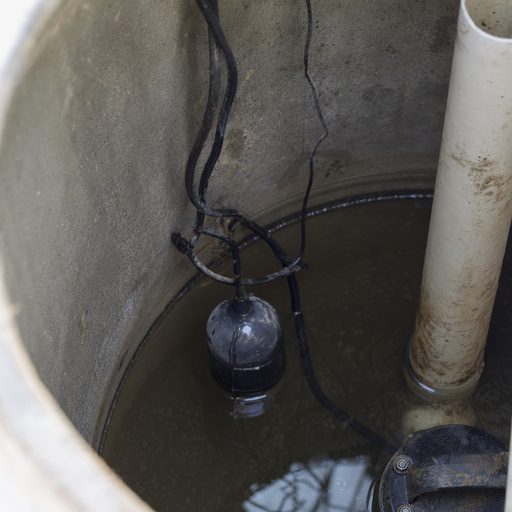
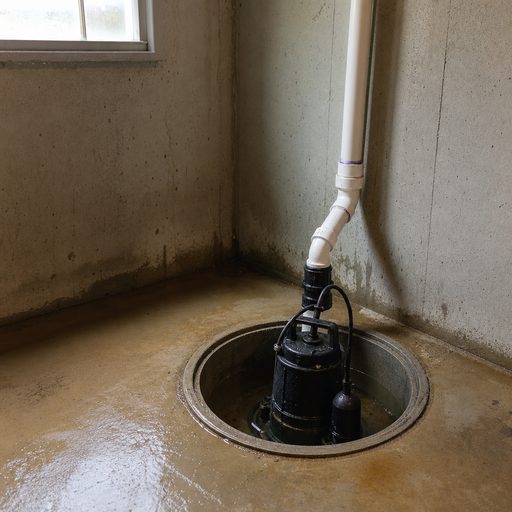
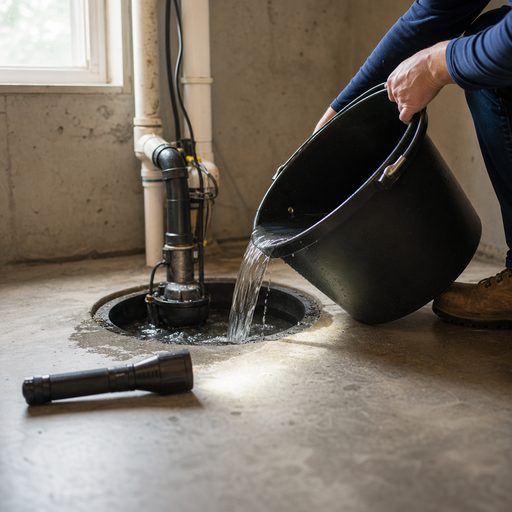
From a dry location, note the water level, sound, cycle pattern, alarm status, power status, and whether water is leaving the exterior discharge. Those observations are more useful than guessing which part failed.
| What you notice | What it may indicate | What to do next |
|---|---|---|
| The water rises but the pump stays silent | The float, control, power supply, or motor may not be starting the pump | Stay dry, do not touch wet equipment, record the water and alarm status, and request prompt service. |
| The pump runs but the water level does not fall | The intake, pumping components, check valve, discharge, or verified capacity may be involved | Leave the equipment assembled and ask for a full flow and discharge assessment. |
| The pump starts and stops rapidly | Float clearance, returned discharge water, control setup, basin fit, or changing inflow may be shortening the cycle | Record a short cycle from dry footing and have the exact installation checked before adjustments are made. |
| The backup alarm or charger reports a problem | The secondary pump, float, battery, charger, alarm, or discharge may not be ready | Keep the primary and backup findings separate and arrange the model-specific backup test. |
Keep the Houston pump finding separate from the surrounding drainage system
Houston Public Works maps drainage through storm sewers, roadside ditches, channels, and bayous. That information can frame property questions, but the repair still depends on the water entering this basin and the tested pump, float, discharge, power, alarm, and backup.
The pump fails during a rain event
Record the event and inspect the complete private system without assuming public drainage caused the failure.
The pump works but water continues to enter
Measure inflow and discharge over time before deciding the pump is too small.
An outside area drain or discharge changes
Ask who will verify the Houston plumbing, drainage, and permit scope before the route is altered.
Standing water reaches electrical equipment
Do not cross the water or operate the equipment; arrange safe electrical isolation and urgent water control.
Houston's stormwater information describes systems and modeled patterns across the city. It does not establish the source, depth, or diagnosis of water at an individual home.
Sources: Houston Stormwater Master Plan, Plumbing Inspections and Permit Types, Safety Guidelines: Reentering Your Flooded Home
Describe what the sump system is doing in Houston
Share whether the pump is silent or running, whether the water level falls, how often it cycles, which alarms show, and whether a primary or backup system is involved.
No-obligation request · Availability varies by location and provider
What professional sump pump repair service does
A failing sump pump can leave your basement exposed right when you need protection most. Plumbing Advisors helps you spot the warning signs and connect with sump pump repair help.
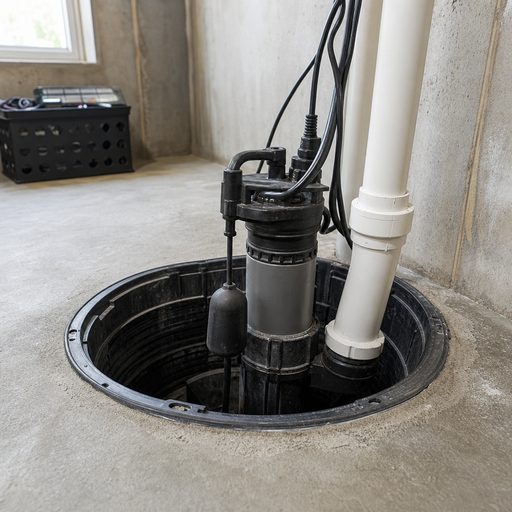
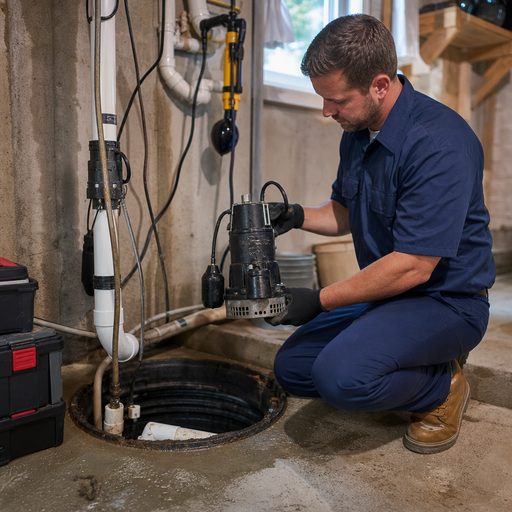
A sump-pump repair should evaluate the water entering the basin, pump support, intake, float travel, switch, motor, check valve, discharge path, power supply, alarm, and any backup system as separate parts of one installation. The provider should reproduce a cycle only when the area and electrical equipment are safe.
The written scope should identify the observed failure, the exact pump and compatible part, any plumbing or electrical work, how the discharge will be tested, and what changes would support replacement. A noisy pump, older unit, or city address alone is not enough to choose a new pump.
What can change the repair
The pump stays silent as the water rises
The float may be obstructed, power may be unavailable, a control may have opened, or the motor may have failed. Do not test electrical equipment while standing in water.
Sources: Submersible Sump Pump Installation Manual, Safety Guidelines: Reentering Your Flooded Home
The motor runs but the water level does not fall
A blocked intake, damaged pumping component, closed or obstructed discharge, incorrect check-valve condition, or capacity problem may be involved. The repair should follow the measured flow and discharge findings.
The pump starts and stops in short intervals
Restricted float travel, water returning through the discharge, a basin or control mismatch, or changing inflow can shorten the cycle. The exact model setup and observed water movement should be checked before adjusting anything.
The backup system reports a fault
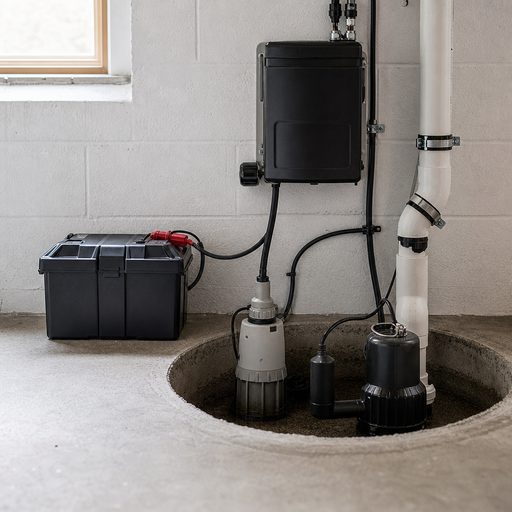
A backup has its own pump, float, battery, charger, alarm, and discharge requirements. A primary-pump repair does not prove that the backup is ready, and a backup is not a substitute for correcting the primary failure.
Sources: Model 441 Battery Back-up System Installation Manual
What you can safely observe first
- Stay out of standing water and keep away from wet cords, receptacles, controls, pumps, and electrical panels.
- If water is present and power can be switched off from a dry, safely accessible location, use the correct disconnect. Do not cross water to reach it.
- From dry footing, note whether the float appears trapped against the basin, cover, piping, or another pump without reaching into the pit.
- Watch the exterior discharge from a safe location during a normal cycle and record whether flow starts, stops, or returns; do not open or disconnect piping while powered.
- Photograph the model label, alarm lights, charger display, basin, cover, check valve, and visible discharge arrangement for the service provider.
Do not work in a wet electrical area
Never switch power, unplug equipment, lift a pump, reach into the basin, or use an electrical tool while standing in water. If the disconnect cannot be reached from a dry location, leave the area and call qualified help.
Sources: Safety Guidelines: Reentering Your Flooded Home, Submersible Sump Pump Installation Manual
When a sump-pump problem is urgent
Act promptly when water is rising, spreading toward electrical equipment, or entering occupied space. Keep people away and do not cross standing water to reach the pump or breaker.
- Standing water is touching or approaching a receptacle, cord, control, panel, appliance, or other electrical equipment.
- The pit is near overflow and the primary and backup systems are not lowering the water.
- Water is spreading into finished rooms, egress paths, or areas used by children or pets.
- The pump, charger, receptacle, cord, or control smokes, sparks, smells burned, or trips power repeatedly.
Sources: Safety Guidelines: Reentering Your Flooded Home, Submersible Sump Pump Installation Manual
How the repair path should be chosen
Match the work to the observed water, mechanical, discharge, control, and electrical condition. A reset, float correction, discharge repair, pump replacement, and backup service solve different problems.
| Method | Where it may fit | Important limitation |
|---|---|---|
| Float, switch, or control correction | The pump and discharge are serviceable but the exact control is obstructed, mispositioned, or defective | It does not correct a failed motor, blocked discharge, inadequate capacity, unsafe power supply, or water source outside the sump system. |
| Pump or discharge repair | Testing identifies a serviceable pump component, connection, check valve, or accessible discharge problem | The repaired system still needs a full cycle, flow, return-water, leak, alarm, and power check. |
| Primary-pump replacement | The inspected pump is not safely or reliably repairable, or verified capacity and head no longer fit the use | A new pump does not correct an unsuitable basin, discharge, power source, alarm, backup, or site-drainage condition. |
| Backup-system service | The primary works but the secondary pump, float, battery, charger, alarm, or backup discharge fails its exact test | Battery and discharge requirements are model-specific, and the backup cannot be assumed ready from a status light alone. |
Sources: Submersible Sump Pump Installation Manual, Model 441 Battery Back-up System Installation Manual
What genuinely changes sump-pump repair in Houston
Houston drainage varies by property and watershed
Public Works evaluates local storm sewers and roadside ditches together with channels, bayous, and rivers. Use the address and actual site drainage when investigating inflow; a citywide statement is not a private-system diagnosis.
Sources: Houston Stormwater Master Plan
Outside drainage work can have its own permit path
Houston's plumbing-inspection page identifies a permit for catch basins and outside area drains. If a repair changes those elements or the discharge destination, include that review in the scope.
Homeowner permit eligibility is narrow
Houston's homeowner path applies to an owner-occupant homestead when the homeowner performs the plumbing work and still requires inspection and code compliance. It does not authorize electrical work or guarantee approval for this project.
Sources: Homeowner's Plumbing Permit
Comparing a sump pump repair estimate
A Houston repair estimate should identify the failed or unsuitable part of the sump system before parts or replacement are priced.
Scope factors
- The observed water, pump, float, control, power, alarm, and discharge condition
- Exact pump and compatible switch, check valve, control, charger, battery, or piping parts
- Basin access, standing-water safety, discharge access, and prior system changes
- Separate plumbing and electrical labor when both are involved
- Full-cycle, flow, return-water, leak, alarm, and backup testing after repair
Questions for the estimate
- What observed condition does the proposed repair address?
- Are primary pump, backup, discharge, alarm, and electrical findings listed separately?
- What tests are included after the repair, and what result counts as passing?
- What documented finding would support replacement rather than repair?
What to tell Plumbing Advisors
A dry-location photo set and a short cycle history help the provider separate pump, discharge, power, alarm, and water-entry conditions.
- Note the Houston pump's sound, water level, cycle timing, alarm status, and whether the primary or backup is affected.
- Record whether exterior discharge is visible during a cycle and whether water returns after the pump stops.
- Provide the pump, switch, alarm, charger, and battery model information without opening equipment.
- Describe previous repairs, outages, high-water events, or discharge changes.
- Tell the provider immediately if standing water is near cords, receptacles, controls, panels, or other electrical equipment.
Plumbing Advisors does not dispatch its own local technicians. The independent professional is responsible for confirming availability, credentials, diagnosis, price, warranty terms, and work performance.
Sump Pump Repair in Houston: frequently asked questions
Does heavy rain prove a Houston sump pump is undersized?
No. Rain timing is useful, but the provider still needs to measure inflow, lift, discharge, return water, pump performance, and power. Public drainage conditions do not prove a private equipment diagnosis.
Who handles a Houston outside-drain change during sump repair?
The proposal should identify the plumbing or drainage provider, the intended discharge, and any Houston permit and inspection responsibility before the line or area drain changes.
Can Houston's homeowner plumbing permit cover sump electrical work?
No. The homeowner page is a limited plumbing path. Receptacle, circuit, control, alarm, charger, or other electrical work needs separate qualified review and applicable approval.
Sources and editorial methodology
Sources are included when they substantively support a local, safety, technical, or consumer decision on this page.
- Manufacturer and federal sources control pump, backup, testing, and standing-water safety statements.
- Houston Public Works supplies drainage-system context; permitting pages support only local responsibility planning.
- The copy never treats Houston rain, flood history, flat terrain, or a city model as the diagnosis of a specific property.
Liberty Pumps
Submersible Sump Pump Installation ManualLiberty Pumps
Model 441 Battery Back-up System Installation ManualCenters for Disease Control and Prevention
Safety Guidelines: Reentering Your Flooded HomeFederal Emergency Management Agency
Be Flood Smart. Protect Your PropertyHouston Public Works
Houston Stormwater Master PlanHouston Permitting Center
Plumbing Inspections and Permit TypesHouston Permitting Center
Homeowner's Plumbing Permit