 Plumbing Advisors Editorial TeamEditorial StandardsUpdated May 5, 2026Source-Checked
A sump pump does one job, but it can fall short in several different ways, and most failures trace back to a small handful of causes. Because the pump sits out of sight and out of mind, those problems often go unnoticed until a storm puts the system to the test. Understanding why pumps fail, and which warning signs point to which cause, helps you catch trouble early and decide whether a safe check might solve it or whether it is time to call for service before the next downpour finds the weak spot for you.
The Most Common Causes of Failure
Some sump pump failures come from a worn or broken part, others from how the pump is set up, and a few from simply asking an old or undersized unit to do more than it can. The causes below account for most of the failures homeowners run into, and several of them give off warning signs well before the pump quits for good.
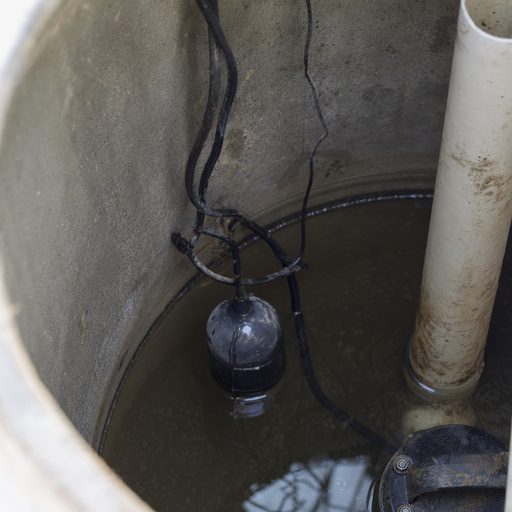
- A stuck or tangled float switch, which can leave the pump running constantly or failing to turn on at all.
- Loss of power, especially during the storms and outages when the pump is needed most.
- A clogged intake or pit, where debris and sediment jam the impeller or block water from reaching the pump.
- A failed check valve or clogged, frozen, or disconnected discharge line that lets water flow back into the pit.
- A worn-out motor or damaged impeller, common as a pump passes roughly seven to ten years of age.
- An undersized pump that simply cannot keep up with how much water the pit receives during heavy rain.
Safe Checks You Can Run
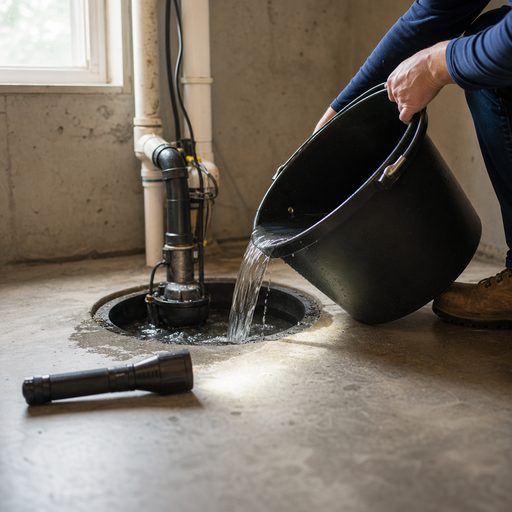
A few simple checks can tell you a lot about a struggling pump, and none of them require taking the unit apart. Confirm the pump has power and that nothing is interfering with the float, then test it the way a storm would. The most telling test is to pour a bucket of water into the pit and watch: the float should rise, the pump should switch on, clear the water, and shut itself off cleanly. If it does not, you have learned something useful to pass along to a professional.
- Confirm the pump is plugged in and the outlet has power. If a breaker has tripped, you may reset it once, but if it trips again, stop and call a professional.
- Check that the float can move freely and is not stuck against the pit wall or tangled in the cord.
- Pour a bucket of water into the pit and watch the full cycle: the pump should turn on, drain the water, and shut off on its own.
- Look outside to confirm the discharge line is clear, not frozen, and pointed away from the foundation.
- Clear any visible debris from the pit that could jam the pump or block its intake.
Never step into a flooded basement with power on
Standing water and electricity are a deadly combination. If the basement has flooded and the pump or any outlet sits in or near the water, do not wade in to check or unplug it. Stay out of the water and, if you can safely reach your breaker box without standing in water, cut power to the area. Otherwise, keep clear and call a professional.
Why Failures Cluster During Storms
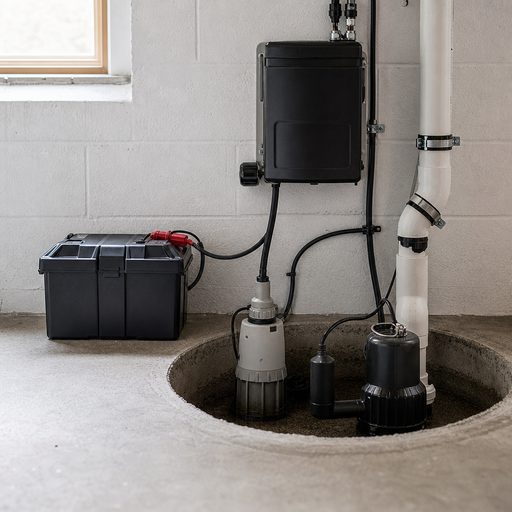
Sump pumps are stressed hardest exactly when the weather is worst. Heavy rain raises groundwater fast and forces the pump to run almost continuously, which exposes a tired motor or a marginal float. Storms are also when power outages are most likely, and a pump with no power cannot move a drop. That overlap is why a pump that tested fine in dry weather can still be caught out by the combination of a downpour and a dead outlet, and why a backup power source is such a worthwhile safeguard for the moment a basement is most likely to flood.
When to Call a Professional
If your pump fails the bucket test, makes grinding noises, trips a breaker repeatedly, or is reaching the end of its life, sump pump repair can pinpoint the failed motor, switch, impeller, or valve and restore dependable protection. If a pump has already failed and water is rising, emergency plumber service can help you respond quickly and safely. To keep the next failure from sneaking up on you, our sump pump maintenance checklist covers the routine that catches problems early, and our guide on adding a battery backup explains how to keep the pump running when the power goes out.
Sources and further reading
These references support material safety, technical, consumer, or planning guidance in this article. Confirm property-specific requirements with the applicable authority and professional.