Plumbing Advisors Editorial TeamEditorial StandardsSource review July 31, 2026Source-Checked
Confirm the replacement case and define the installation
Condition first, equipment choice second
Confirm that replacement fits the equipment condition and household demand, then identify the correct Miami-Dade or municipal building authority before comparing installed proposals.
Visible leakage, corrosion, reduced hot-water availability, and recurring performance trouble can support a replacement discussion. The final choice still depends on the unit's condition, household demand, installation space, utilities, and local requirements.
What to establish before selecting a new unit
Document the current equipment, the reason replacement is being considered, and whether its capacity has met the household's needs. That keeps sizing and equipment comparisons tied to the home instead of a generic recommendation.
| What you notice | What it may indicate | What to do next |
|---|---|---|
| Water is leaking from a tank seam or the tank body is visibly corroded | The storage vessel may be failing rather than an accessible connection | Request a condition assessment and replacement scope in Miami before the leak spreads. |
| Repairs recur while hot-water performance keeps declining | The cumulative repair history may support comparing replacement | Bring prior invoices and ask what condition remains after the proposed repair. |
| The current tank cannot meet documented household demand | Capacity, recovery, or simultaneous fixture use may need to change | List peak fixture use and compare sizing recommendations against the same demand pattern. |
| A heat-pump or tankless conversion is being considered | Space, drainage, fuel, electrical, venting, and flow requirements may change | Ask each bidder to document every site upgrade required for the proposed model. |
| Discolored water is the main reason for replacement | The public supply, water heater, or hot-water piping must be distinguished | Compare hot and cold observations and review utility information before authorizing a new unit. |
Identify the building authority and permit applicant
Miami-Dade's online permit guidance applies to qualifying unincorporated County properties and says municipalities have their own building officials. The proposal should identify the authority before making a permit promise.
The property is in unincorporated Miami-Dade
Confirm the folio and current County permit steps for the proposed water-heater replacement.
The property is inside a municipality
Use that municipality's building official rather than assuming the County process controls.
A contractor will obtain the permit
Make sure the permit applicant matches the party performing and taking responsibility for the work.
Poor recovery is the only reason for a larger unit
Document peak demand and compare sizing against the same fixture-use pattern.
The permit authority follows the property's jurisdiction, not the city name used in a service search or mailing address.
Sources: How to Apply for Permits, Super-Efficient Water Heater
Compare water-heater replacement help in Miami
Share the current heater type, capacity, location, visible condition, hot-water demand, and any written repair or replacement findings.
No-obligation request · Availability varies by location and provider
What professional water heater replacement service does
When a water heater is leaking, rusting, or simply worn out, replacing it is usually the dependable fix. Plumbing Advisors helps you weigh your options and connect with replacement help that services your area.
Professional replacement planning should confirm why the existing unit is being retired, how much hot water the household uses, and what fuel, electrical, venting, drainage, space, and access conditions the installation must satisfy.
A useful proposal names the equipment, capacity, conversion work, permit responsibility, inspection, removal, startup testing, warranty terms, and finish work. A broad equipment recommendation should not be based on city climate or water conditions alone.
What supports a replacement discussion
Tank leakage or visible corrosion
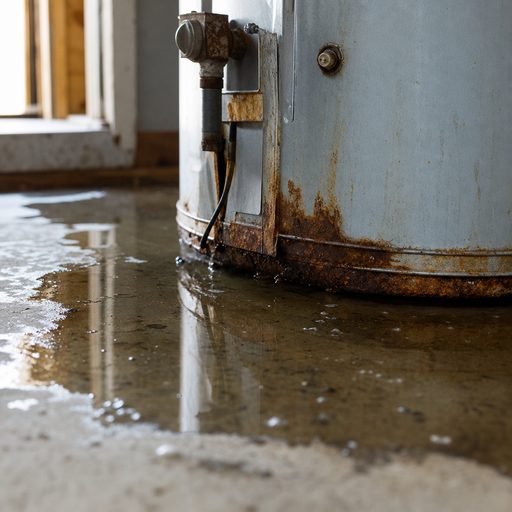
ENERGY STAR identifies leakage at joints or seams and visible corrosion as signs that can indicate failure. The provider should distinguish the tank from a repairable connection before finalizing the scope.
Sources: Water Heater Replacement Signs
Age combined with declining performance
ENERGY STAR recommends planning ahead when a heater is 10 years old or older. Age adds context, but the observed condition and repair history still matter.
Sources: Water Heater Replacement Signs
Household demand has changed
The current tank capacity is a useful starting point when it has met demand. Changes in occupancy, simultaneous fixture use, or recovery expectations belong in the sizing discussion.
Sources: Super-Efficient Water Heater
A different equipment type is being considered
A heat-pump, tankless, gas, or electric conversion can change space, drainage, fuel, electrical, and venting needs. Compare those site conditions before comparing equipment claims.
Sources: Super-Efficient Water Heater
What to gather before requesting estimates
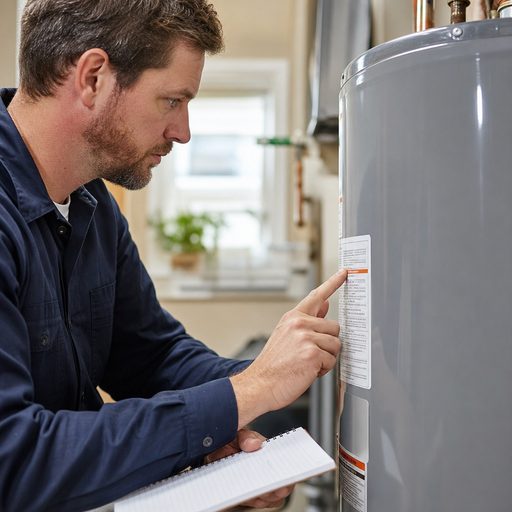
- Photograph the current equipment label, capacity, fuel type, and visible connections without removing covers.
- List the fixtures and times when the household most often runs short of hot water.
- Measure only the accessible room and doorway clearances; leave vent, gas, electrical, and pressure-relief evaluation to the installer.
- Ask each bidder to identify the exact model, capacity, efficiency rating, and required conversion work.
- Keep people away from an actively leaking unit or water that is too hot to use safely.
A larger temperature setting is not a sizing solution
The U.S. Consumer Product Safety Commission recommends a residential water-heater setting of 120 degrees Fahrenheit to reduce scald risk. Capacity and recovery concerns should be addressed through equipment and demand planning, not a higher setpoint.
Sources: Avoiding Tap Water Scalds
When the existing unit needs prompt attention
A permit plan should not delay immediate attention to an actively leaking tank or unsafe delivered temperature.
- Water is spreading from the storage tank or a tank seam.
- Corrosion is accompanied by active moisture or declining operation.
- The delivered hot water cannot be used safely because the temperature is unpredictable.
Sources: Water Heater Replacement Signs, Avoiding Tap Water Scalds
How to compare replacement paths
Compare options against the same household demand and site conditions. The selected equipment must fit the available space, utilities, drainage, access, and local installation requirements.
| Method | Where it may fit | Important limitation |
|---|---|---|
| Like-for-like storage replacement | A current tank size and fuel type that have served the household well | Equivalent capacity does not remove permit, safety, or site-condition checks. |
| Storage-capacity change | Documented changes in occupancy, fixture use, or recovery needs | A larger tank may require different space, structural, utility, or venting provisions. |
| Heat-pump water heater | A location with suitable air volume, drainage, service access, and operating conditions | The selected model's installation instructions control the actual space and temperature requirements. |
| Tankless or fuel-type conversion | A household whose flow demand and site utilities support the proposed equipment | Venting, gas, electrical, water, and access upgrades can be a substantial part of the scope. |
Sources: Water Heater Replacement Signs, Super-Efficient Water Heater
What genuinely changes water-heater replacement planning in Miami
Miami-Dade and municipal permits are separate paths
Miami-Dade says its described online process applies to qualifying unincorporated properties and directs municipal properties to their own building officials. Verify the address jurisdiction before relying on a permit timeline.
Sources: How to Apply for Permits
The permit is issued in the performer's name
The County states that permits are issued in the name of the person performing the work and may be obtained by licensed contractors or qualifying owner-builders. Match the permit applicant to the proposed responsibility.
Sources: How to Apply for Permits
Setpoint and capacity solve different problems
Miami-Dade recommends a residential setting between 115 and 120 degrees Fahrenheit for energy conservation. If the household runs short of hot water, size the replacement around demand instead of planning a higher setpoint.
Sources: Green Tips, Super-Efficient Water Heater
Comparing a water heater replacement estimate
A Miami replacement estimate should identify the exact equipment and separate unit cost, removal, site changes, permits, inspection, startup testing, and finish work.
Scope factors
- Equipment type, capacity, efficiency, and household hot-water demand
- Fuel, electrical, venting, drainage, and piping changes
- Room, doorway, service-access, and removal constraints
- Permit, inspection, code, and equipment-documentation responsibility
- Disposal, startup testing, warranty registration, and owner orientation
- Drywall, platform, cabinet, or finish work outside the installation
Questions for the estimate
- Why does this capacity and equipment type fit the documented demand?
- Which fuel, electrical, venting, drainage, or access changes are included?
- Who obtains the permit and schedules the inspection?
- Are removal, startup, warranty registration, and finish work included?
What to tell Plumbing Advisors
Bring the equipment details, demand pattern, and written findings so each proposal can be compared on the same scope.
- The reason replacement is being considered at the Miami property
- Current equipment type, fuel, capacity, model, age, and visible condition
- Peak household hot-water use and whether the current capacity has been adequate
- Available room, doorway, service-access, and nearby drainage conditions
- Every proposed fuel, electrical, venting, condensate, or piping change
- Who handles the permit, inspection, removal, startup test, and warranty registration
Plumbing Advisors does not dispatch its own local technicians. The independent professional is responsible for confirming availability, credentials, diagnosis, price, warranty terms, and work performance.
Water Heater Replacement in Miami: frequently asked questions
Does Miami-Dade issue every Miami water-heater replacement permit?
No. The County describes its process for qualifying unincorporated properties and notes that municipalities have their own building officials. Verify the property's jurisdiction first.
Who should appear as the permit applicant on a Miami-Dade replacement?
The County says the permit is issued in the name of the person performing the work and identifies licensed contractors and qualifying owner-builders as possible applicants under its process.
Should I choose a larger tank because my Miami home runs out of hot water?
Not without documenting demand. List simultaneous showers, appliances, fixtures, occupancy, and recovery expectations, then compare the recommendation to those facts.
What should a complete Miami replacement scope include?
It should identify the unit, capacity, fuel, site changes, permit authority, applicant, inspection, removal, startup test, warranty, and any excluded finish work.
Sources and editorial methodology
Sources are included when they substantively support a local, safety, technical, or consumer decision on this page.
- Miami-Dade and federal sources support permit jurisdiction, applicant responsibility, temperature guidance, equipment condition, sizing, and safety.
- The property's permit jurisdiction is kept separate from the equipment and sizing decision.
U.S. Consumer Product Safety Commission
Avoiding Tap Water ScaldsENERGY STAR
Water Heater Replacement SignsENERGY STAR
Super-Efficient Water HeaterMiami-Dade County
How to Apply for PermitsMiami-Dade County
Green Tips