 Plumbing Advisors Editorial TeamEditorial StandardsUpdated July 5, 2026Source-Checked
Deciding between a standard tank and a tankless water heater at replacement time comes down to your household’s needs, your current setup, and your priorities for hot water, energy efficiency, and convenience. Both types have distinct benefits and trade-offs; understanding these differences helps ensure you don’t just copy what was there before, but choose the best fit for your home.
How Do Tank and Tankless Water Heaters Work?
This on-demand heating means a tankless unit has no standing supply, freeing up floor space and potentially offering an endless stream of hot water. But it also means conversion may require upgraded plumbing, venting, gas lines, or electricity. Key components involved in either setup include the dip tube (brings cold water into the tank), the TPR valve (safety release on tanks), and the heat exchanger (core of tankless models).
What Changes When Replacing a Tank Water Heater?
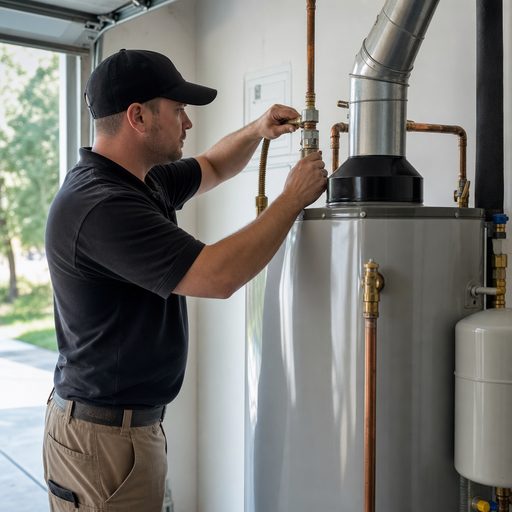
Swapping an old tank water heater for another is often the most direct path. In many cases, the new model can use the same footprint and connections. A typical visit involves shutting off the fuel and water supply, draining the old tank, disconnecting plumbing and venting, and installing the new heater in its place. A professional ensures the new thermostat, anode rod, and temperature and pressure relief (TPR) valve are correctly fitted and code compliant—requirements that may vary based on your municipality.
What Does a Tankless Upgrade Involve?
Converting to a tankless water heater brings changes both visible—the smaller wall unit—and hidden: higher energy efficiency, potentially lower long-term utility use, and a longer useful life (often 15–20 years, if flushed and descaled properly). Yet, installation is more complex. Most tankless systems require a larger gas line and specific venting (direct vent or concentric pipe) for safe exhaust, especially with high-output models. Electrical models might need dedicated circuits or service panel upgrades.
A plumber will assess your home’s existing infrastructure. If gas, they’ll check for proper sizing and up-to-date shut-off valves. For electric units—like those from Stiebel Eltron—a circuit evaluation is needed. In both cases, code compliance and permit requirements may affect timeline and complexity, and wall mounting and drainage lines for condensing units could require additional carpentry or drywall work.
Tankless installation and code requirements
Switching to tankless may require building permits and upgrades to meet plumbing, gas, and electrical codes—these can vary by city or county. Always check with your local building authority, and consult our guide Permits and What a Water Heater Replacement Involves for a step-by-step overview.
Major Differences: Hot Water Delivery and Capacity
Tank water heaters provide a set amount of hot water—when the tank is empty, you wait for more to heat up. A 40-gallon heater may serve two showers and a load of laundry, then pause. Tankless models, however, heat on demand for as long as needed, but their total simultaneous output is limited by flow rate (measured in gallons per minute). High-demand homes may need multiple tankless units or a larger commercial-grade model to avoid temperature drops during heavy, simultaneous use.
When deciding, evaluate your family’s habits. If multiple showers, laundry, and dishwashing run at once, even a high-capacity tankless unit could reach its limit. In these scenarios, sizing is crucial. Consult How to Size a New Water Heater for Your Home to ensure you match your choice to your expected peak water demand.
Which Factors Drive the Cost of Replacement?
A straight tank-for-tank swap is often less expensive, both in terms of the heater and the labor. Converting to tankless often costs more due to additional work involved: rerouting gas lines, installing new venting, running a condensate drain for condensing models, or upgrading electrical service. The related cost guide compares typical cost drivers. These factors include local code requirements, heater brand and size, and the need for parts like pressure relief valves, expansion tanks, or upgraded shut-off valves.
For households with existing high-efficiency venting or upgraded gas supply, upgrading to tankless may cost less. However, if your home requires significant modifications—such as wall repair for new venting—a tankless upgrade’s total bill can climb. Always have a professional plumber provide a written estimate after inspecting your specific setup.
Maintenance and Longevity: What to Expect
Tankless water heaters require descaling (removing mineral buildup from the heat exchanger), particularly if your home has hard water. Many units include built-in flush kits for annual service, but professional flushing ensures system longevity. Some models from manufacturers like Navien and Rinnai alert you when service is due.
Prevention is key
Extending water heater life is mostly a matter of consistent maintenance: flushing tanks, checking anode rods, and descaling tankless heat exchangers. Using a water softener where hardness is high can also significantly reduce mineral buildup and service needs.
Space and Placement: What Fits Where?
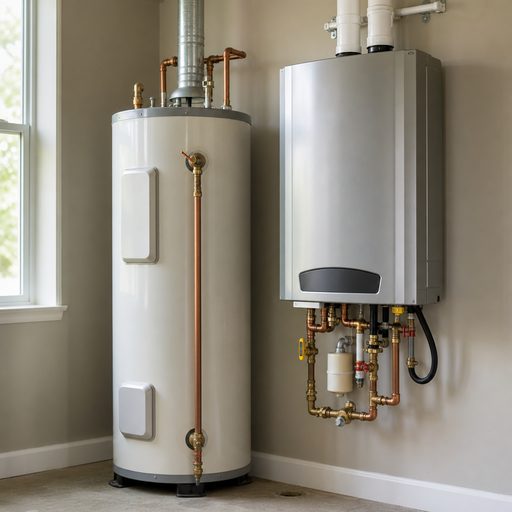
Traditional tank water heaters take up a prominent footprint—often closet, garage, or utility room space. Standard vertical tanks can be around two feet wide and four to five feet tall. This may be fine if space isn’t at a premium, but if you’re fighting for square footage in a small laundry area or tiny basement, the tank’s presence can be a problem.
Tankless models are wall-mounted and much more compact, freeing valuable floor space for storage or other uses. This can make a major difference in urban homes, apartments, or where relocating the water heater opens up design possibilities. However, the need for new venting or a wall drain could add complexity. Each manufacturer specifies minimum clearance for safe maintenance access—review these if planning a tight fit.
- Tank water heater components: Dip tube, anode rod, and TPR (temperature & pressure relief) valve
- Tankless components: Heat exchanger, flow sensor, and control board
- Popular tank brands: Rheem, A.O. Smith, Bradford White
- Popular tankless brands: Navien, Rinnai, Stiebel Eltron
Choosing the Right Path for Your Home and Future
A tank water heater is often the easy replacement choice when up-front cost matters and your family’s demand hasn’t overwhelmed the old system. Tankless units suit those who value future savings, have space constraints, or want endless hot water. Remember: making the switch is more than an even swap, and every home has unique plumbing, venting, and legal requirements. Professional guidance is key, and your pro can help you evaluate sizing, code compliance, and practical installation issues.
If you want to explore concrete service options—including what each visit involves—see our Water Heater Replacement and Tankless Water Heater Installation services. For additional help in picking the correctly sized model, the guide How to Size a New Water Heater for Your Home covers capacity calculations in detail. If you’re unsure about local code or permit needs, Permits and What a Water Heater Replacement Involves is a must-read.
How do I know if tankless water heating is possible in my house?
Tankless compatibility depends on your home’s gas line size, venting route, electrical panel capacity, and placement options. A plumbing professional can assess these during a home visit, identify upgrade needs, and help ensure your choice meets local code and practical use requirements.
Will I run out of hot water with a tankless heater?
Tankless heaters provide endless hot water as long as their maximum flow rate isn’t exceeded. If too many showers or appliances run at once, output may drop. Sizing the unit correctly for your home’s peak usage is essential to avoid noticeable temperature dips.
How long does it take to install a new water heater?
Replacing a tank with another tank is often completed in a few hours, assuming connections are standard. Converting to tankless can take longer—often most of a day—because of the extra work rerouting gas, venting, or wiring. Permits and final inspections may add time as well.
What maintenance does each type require?
Tank heaters need periodic flushing to remove sediment and routine replacement of the anode rod. Tankless units require annual descaling to keep the heat exchanger efficient. Addressing hard water with a softener can help both types last longer and require less frequent service.
Are certain brands better for longevity or features?
Rheem, Bradford White, and A.O. Smith are respected for tank water heaters; for tankless, Navien and Rinnai are frequent professional picks. Features like built-in circulation pumps or smart controls may be available, but reliability, support, and available service should guide your final brand choice.
Sources and further reading
These references support material safety, technical, consumer, or planning guidance in this article. Confirm property-specific requirements with the applicable authority and professional.
- MedlinePlus - Drain cleaner poisoning
- U.S. EPA - Household hazardous waste
- U.S. Department of Energy - Water heating
- U.S. Department of Energy - Water-heater selection guide
- U.S. Geological Survey - Hardness of water
- U.S. Geological Survey - Water corrosivity
- Federal Trade Commission - Avoiding home-improvement scams