 Plumbing Advisors Editorial TeamEditorial StandardsSource review July 31, 2026Source-Checked
Match the heater to demand, utilities, and the room
Equipment and installation are one decision
Match the heater to demand and site conditions, then require the Houston registered master plumber, permit, inspection, and every utility or access change in the proposal.
A model is not a complete recommendation until its capacity, fuel or electrical needs, venting, drainage, access, and local installation requirements have been checked at the property.
What the existing setup tells you
Document why the unit is being installed, how the household uses hot water, and what the current room and utility connections can support. Those observations give each bidder the same starting point.
| What you notice | What it may indicate | What to do next |
|---|---|---|
| The current unit has met household demand | Its capacity and fuel type provide a useful starting point | Document any occupancy or fixture-use change before choosing a different size. |
| Hot water runs short during repeatable peak use | Capacity, recovery, simultaneous demand, or equipment condition may need review | List the fixtures and timing for the Houston installer instead of selecting a larger unit from square footage alone. |
| A heat-pump water heater is being considered | Air volume, drainage, access, room effects, and electrical supply become part of the plan | Compare the exact model requirements with the actual installation area. |
| The new unit changes fuel type or location | Piping, wiring, venting, drainage, structural, and finish work may expand | Require every site change and approval responsibility in the written scope. |
| The equipment is selected before the room is inspected | Delivery, service access, utilities, or drainage may not fit the model | Schedule a property-specific installation review before ordering the unit. |
Put the registered master plumber, permit, and inspection in writing
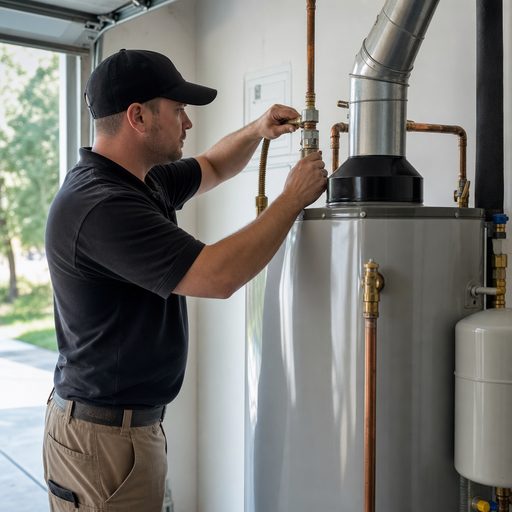
The Houston Permitting Center says water-heater replacement and installation require a plumbing permit obtained by a master plumber registered with the City, followed by inspection. Identify that person before the installation date.
The property is a single-family residence
Do not confuse Houston's stated plan-review exception with an exception from the permit or inspection.
A different fuel or equipment type is proposed
List every gas, electrical, venting, drainage, piping, and access change in the permitted scope.
A heat-pump model is being considered
Confirm room air, condensate drainage, service access, sound, and electrical work for the exact model.
The bid does not name the permit holder
Ask which registered master plumber will obtain the permit and take inspection responsibility.
Houston's single-family plan-review statement is narrow. The same City guidance still requires the water-heater permit and inspection.
Sources: Houston Permitting Center - Water Heater, Super-Efficient Water Heater, Heat Pump Water Heater Design Considerations
Plan a water-heater installation in Houston
Share the current unit, household demand, proposed equipment type, installation area, and any fuel, electrical, venting, drainage, or access change.
No-obligation request · Availability varies by location and provider
What professional water heater installation service does
Whether you are replacing a failing unit or upgrading to tankless, the right water heater installation makes a daily difference. Plumbing Advisors helps you weigh options and connect with installation help.
Professional water-heater installation planning should verify capacity, equipment type, site access, structural support, water connections, pressure-relief discharge, fuel or electrical supply, venting, drainage, and required approvals before the unit is ordered.
The installed scope should identify the exact model, removal, connections, site modifications, permit responsibility, inspection, startup testing, warranty registration, and homeowner orientation. A product label or citywide condition does not replace a property-specific plan.
What shapes the installation plan
Household hot-water demand
The current tank is a useful starting point when it has met the household's needs. Occupancy, simultaneous fixture use, and recovery expectations should be documented before changing capacity.
Sources: Super-Efficient Water Heater
The equipment type and energy supply
Storage, heat-pump, gas, electric, and tankless equipment can require different fuel, electrical, venting, and control work. The proposal should name every change needed for the selected model.
Sources: Super-Efficient Water Heater
Room, access, air, and drainage
Heat-pump water heaters need model-specific air, service access, and condensate drainage. Doorways, platforms, drains, and clearances should be checked before delivery.
Sources: Super-Efficient Water Heater, Heat Pump Water Heater Design Considerations
The permitted and inspected scope
Permit and inspection responsibilities vary by jurisdiction and project. Put the responsible party and included approvals in writing rather than assuming they are part of the bid.
What you can document without altering the system
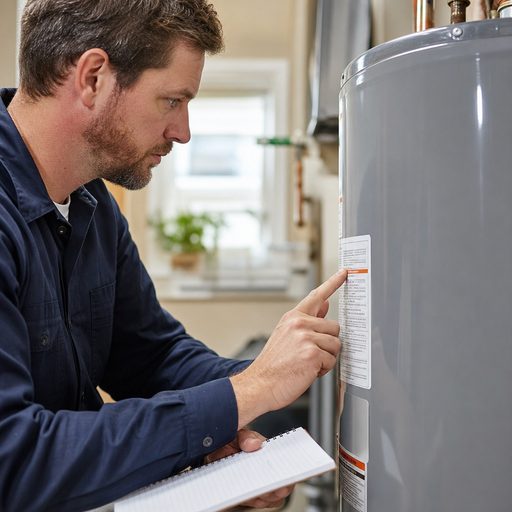
- Photograph the current equipment label, fuel type, capacity, and visible connections without removing a cover.
- List peak hot-water uses and which fixtures or appliances commonly run at the same time.
- Measure accessible room, doorway, platform, and service-clearance dimensions.
- Note nearby drainage and whether the proposed location is conditioned, unconditioned, or enclosed.
- Leave gas, electrical, venting, pressure-relief, and structural evaluation to the installer.
Do not use a higher setpoint to compensate for undersizing
The U.S. Consumer Product Safety Commission recommends a residential water-heater setting of 120 degrees Fahrenheit to reduce scald risk. Capacity and recovery should be addressed through sizing and equipment planning.
Sources: Avoiding Tap Water Scalds
When the existing unit needs attention before installation day
Do not wait for the scheduled installation when the existing unit is actively leaking or delivering water at an unsafe temperature.
- Water is escaping from the tank body, a seam, or a worsening connection.
- Visible corrosion is accompanied by active moisture or spreading water.
- Delivered hot water is suddenly too hot or unstable for safe use.
Sources: Water Heater Replacement Signs, Avoiding Tap Water Scalds
How to compare installation paths
Compare each option against the same demand and site conditions. A lower equipment price can be offset by utility, venting, drainage, access, or finish work that is missing from the proposal.
| Method | Where it may fit | Important limitation |
|---|---|---|
| Like-for-like storage installation | The existing capacity, fuel, and location have served the household well | Equivalent equipment still needs current site, approval, and safety checks. |
| Storage capacity change | Documented demand has changed or the current unit has not met peak use | A larger unit can change space, weight, energy-supply, and recovery requirements. |
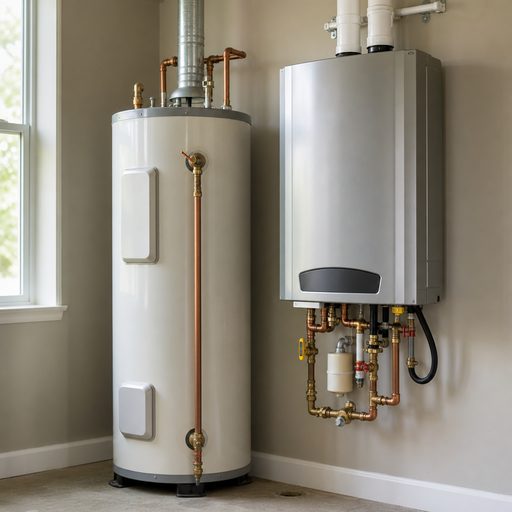
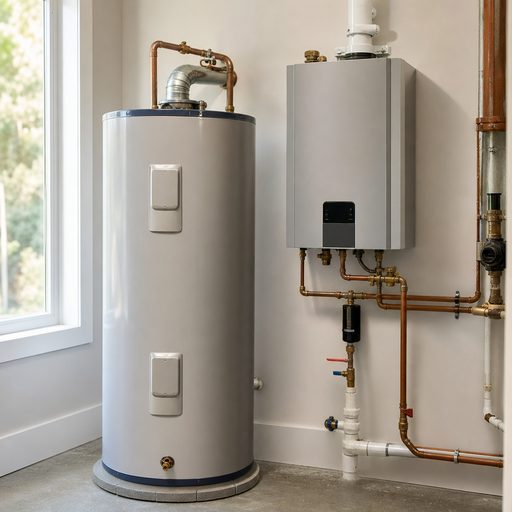
| Heat-pump water heater | The room supports the selected model's air, drainage, access, and electrical needs | The equipment can affect room temperature and sound; the actual location must be evaluated. |
| Relocation or fuel-type conversion | The household has a clear equipment goal and the site supports the required changes | New piping, wiring, venting, drainage, structural, and finish work may dominate the scope. |
Sources: Super-Efficient Water Heater, Heat Pump Water Heater Design Considerations
What genuinely changes installation planning in Houston
Houston assigns the permit to a registered master plumber
The City says the water-heater permit must be obtained by a master plumber registered with Houston. The proposal should identify that person and the business responsible for inspection follow-through.
Plan review and inspection are different steps
Houston says a single-family water-heater installation does not need plan review under the cited guidance, while still requiring a permit and inspection. Keep those steps distinct in the schedule.
A heat-pump proposal needs a drainage plan
ENERGY STAR explains that heat-pump water heaters produce condensate and need a suitable drain or pump along with air and service access. Confirm the route and responsibility before selecting the unit.
Sources: Super-Efficient Water Heater, Heat Pump Water Heater Design Considerations
Comparing a water heater installation estimate
A Houston water-heater installation estimate should identify the exact unit and separate removal, connections, site changes, approvals, inspection, startup, warranty, and finish work.
Scope factors
- Equipment type, capacity, efficiency, and household demand
- Fuel, electrical, venting, drainage, water, and relief-discharge work
- Location, doorway, platform, structural support, and service access
- Permit, inspection, removal, disposal, and startup responsibility
- Warranty registration and homeowner operation or maintenance guidance
- Drywall, cabinet, paint, platform, or other finish work
Questions for the estimate
- Why does this equipment and capacity fit the documented demand?
- Which site, utility, venting, drainage, or access changes are included?
- Who obtains the permit and schedules the inspection?
- Are removal, startup testing, warranty registration, and finish work included?
What to tell Plumbing Advisors
A consistent demand and site record makes competing proposals easier to compare and exposes missing installation work.
- The reason for the new installation at the Houston property
- Current equipment type, fuel, capacity, age, and visible condition
- Peak household hot-water uses and whether current capacity has been adequate
- Room, doorway, platform, service-access, and drainage measurements
- Every proposed fuel, electrical, venting, piping, or location change
- Permit, inspection, removal, startup, warranty, and finish-work responsibility
Plumbing Advisors does not dispatch its own local technicians. The independent professional is responsible for confirming availability, credentials, diagnosis, price, warranty terms, and work performance.
Water Heater Installation in Houston: frequently asked questions
Who obtains a Houston water-heater installation permit?
The Houston Permitting Center says the permit must be obtained by a master plumber registered with the City and that the work is subject to inspection.
Does a single-family Houston installation skip inspection?
No. The cited City page says plan review is not needed for a single-family installation, but it still identifies the permit and inspection as required.
What should a Houston heat-pump water-heater proposal include?
It should address demand, room air, condensate drainage, service access, electrical work, permit responsibility, inspection, startup, and the exact model instructions.
How should I compare Houston installation bids?
Compare the same equipment and demand assumptions, then check the registered master plumber, permit, inspection, site changes, removal, startup, warranty, and exclusions.
Sources and editorial methodology
Sources are included when they substantively support a local, safety, technical, or consumer decision on this page.
- Houston and federal sources support registered master-plumber responsibility, permit and inspection steps, equipment sizing, heat-pump site needs, and safety.
- The City process is applied only after the equipment and property scope are defined.
U.S. Consumer Product Safety Commission
Avoiding Tap Water ScaldsENERGY STAR
Super-Efficient Water HeaterENERGY STAR
Heat Pump Water Heater Design ConsiderationsCity of Houston
Houston Permitting Center - Water HeaterENERGY STAR
Water Heater Replacement Signs