 Plumbing Advisors Editorial TeamEditorial StandardsUpdated July 5, 2026Source-Checked
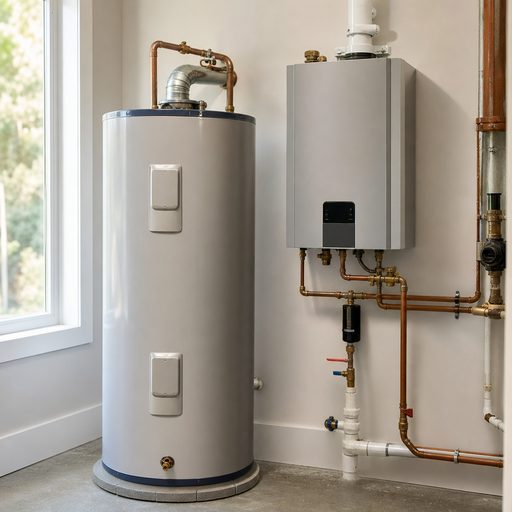
The right water heater size depends on how many people use hot water, whether you want a tank or tankless unit, and how often you run showers, laundry, and dishwashing at the same time. Most homes choose a tank by first-hour rating and household size, or a tankless model by gallons per minute and temperature rise.
What does water heater size actually mean?
For a standard tank water heater, size usually means storage capacity and first-hour rating. Storage capacity is how many gallons the tank holds. First-hour rating is more important for busy households because it estimates how much hot water the unit can deliver during a high-use hour, when the tank is being drained and reheated at the same time. Two tanks with similar gallon sizes can still perform differently if their burners or heating elements recover at different rates.
For a tankless water heater, size is not about storage at all. It is about flow rate, measured in gallons per minute, and temperature rise, which is how much the unit has to heat incoming cold water to reach your target hot-water temperature. That means the right tankless model in a warm climate may be too small in a colder area, even for the same family size.
How big should a tank water heater be for your household?
Look closely at your busiest hour of hot-water use. A family of three that spreads showers throughout the day may need less than a family of two that showers together while the dishwasher and washing machine run. If your hot water runs out before everyone is done, the problem may be sizing, but it can also point to age, sediment buildup in the tank, or a failing heating component. If that sounds familiar, see Why Your Hot Water Runs Out Quickly.
- Choose by first-hour rating if your home has heavy peak demand
- Bigger is not always better if your household uses modest amounts of hot water
How do you size a tankless water heater?
Tankless sizing starts with simultaneous demand. Add up the fixtures and appliances you expect to use at once, such as one shower, a bathroom sink, and a washing machine. That total gives you the gallons per minute the unit needs to deliver. Then match that demand to your climate. The colder the incoming water, the harder the heater has to work to raise it to a comfortable temperature.
This is why homeowners sometimes feel disappointed after switching to tankless. The issue is not that tankless systems are weak. It is that the selected unit may not have been sized for real-world demand. If two showers often run at once, or if winter groundwater is cold where you live, sizing gets more important. If you are comparing systems overall, Tankless vs. Tank Water Heater: Which Is Right for You? can help you think through performance, space, and day-to-day use.
What happens if your water heater is too small or too large?
An undersized water heater is the problem homeowners notice first. You may get cold showers, temperature swings, or have to wait for the tank to recover between uses. In a tankless system, an undersized unit may struggle to supply enough hot water when multiple fixtures run at the same time. These problems are frustrating, but they also push people to change routines just to avoid running out of hot water.
Oversizing is less obvious, but it matters too. A tank that is much larger than your needs can waste energy by heating more stored water than your household regularly uses. A tankless unit that is far beyond your demand may still function well, but buying more capacity than you need does not automatically improve comfort. The goal is a right-fit system that supports your normal routines without constant standby waste or avoidable shortages.
Which home details change the size you need?
Household size is only one factor. Fixture count matters, especially if your home has multiple full bathrooms. So do appliances: a dishwasher and clothes washer can add meaningful demand when they run during the same window as showers. Large tubs, rainfall showerheads, and body sprays can push demand higher than a basic bathroom setup. If your current water heater struggles, compare those features to how your household actually uses hot water during weekday mornings and evenings.
Climate also changes the calculation, especially for tankless units, because incoming cold water varies by region and season. Available space may matter too if you are replacing an existing tank in a tight utility closet or considering a wall-mounted tankless system. If you are planning Water Heater Installation, Water Heater Replacement, or Tankless Water Heater Installation, a local pro can measure real demand, confirm venting and fuel compatibility where applicable, and help match the unit to your home instead of relying on a rough guess.
When cost comes up, the main drivers are usually the type of heater, the capacity you choose, installation complexity, and whether changes are needed to venting, gas supply, water lines, drainage, or electrical service. For a broader breakdown of replacement factors, read How Much Does Water Heater Replacement Cost?. The best value usually comes from proper sizing first. A cheaper but undersized unit can create daily frustration, while an oversized model may add unnecessary operating waste over time.
Does a bigger water heater always give better performance?
Not necessarily. A larger tank stores more hot water, but if your household does not use that capacity, you may end up heating water you do not need. With tankless systems, extra capacity only helps if your home truly has higher simultaneous demand. Better performance usually comes from matching the heater to your peak usage rather than simply choosing the biggest model.
Can I replace my old water heater with the same size?
Sometimes, but it is worth reconsidering. Your old heater may have been undersized from the start, or your household may have changed since it was installed. New fixtures, extra bathrooms, or different shower habits can all affect sizing. If the old unit worked well for years, the same size may still fit, but replacement is a good time to confirm rather than assume.
How do I know if my current water heater is too small or just failing?
If you never had enough hot water, sizing may be the issue. If hot water used to last longer and now runs out faster, the problem may be wear, sediment buildup in the tank, or a failing heating part. Age also matters. Tank water heaters typically last around 8 to 12 years, so declining performance in an older unit often points to condition as much as size.
Is tankless better for a large family?
It can be, but only when it is sized correctly for simultaneous demand and local water temperature. A properly sized tankless heater can provide hot water continuously, which helps with back-to-back showers. But if several fixtures run at once and the unit is too small, performance can disappoint. Large families often do well with either a larger tank or a correctly sized tankless setup.
Sources and further reading
These references support material safety, technical, consumer, or planning guidance in this article. Confirm property-specific requirements with the applicable authority and professional.