 Plumbing Advisors Editorial TeamEditorial StandardsSource review July 31, 2026Source-Checked
Plan the whole sump system before selecting the pump
Water source, basin, discharge, and power
Confirm the Miami property's water source, mapped risk, municipal jurisdiction, basin, discharge, power, alarm, and measured duty before deciding whether a primary sump or backup belongs in the plan.
Pump capacity is only one part of the installation. The water source, basin, float clearance, vertical lift, discharge route, check valve, power, alarm, backup, service access, and local approval path all need to work together.
What to document before installation
Record where water enters, the highest observed level, existing drainage, basin dimensions, discharge destination, vertical and horizontal run, available dry service access, electrical arrangement, and any prior pump or flooding history.
| What you notice | What it may indicate | What to do next |
|---|---|---|
| An existing primary pump needs replacement | The basin and discharge may be reusable, but the exact duty, support, float, power, and connection still need verification | Document the old model, basin, water level, lift, discharge, check valve, alarm, backup, and prior problems before choosing equipment. |
| Water collects but there is no sump basin | The property may need broader drainage and water-source evaluation before a pump is selected | Ask the Miami providers to identify drainage, excavation, discharge, electrical, structural, and permit responsibilities in the proposal. |
| The primary works but there is no backup or alarm | The system may lack notice or a separate response to a power outage or primary failure | Compare an independently controlled backup and high-water alarm using the exact product and measured duty. |
| Water has risen faster than the existing system can move it | Capacity, head, discharge, power, drainage, or more than one condition may be limiting performance | Use measured inflow and a complete system inspection rather than increasing horsepower from the symptom alone. |
Start the Miami installation with the address and the actual water path
Miami-Dade offers property flood information and separates County from municipal permitting. The installer should document what water the proposed sump would collect, where it would discharge, and which authority reviews the plumbing, electrical, drainage, and flood-related work.
The proposal cites a general Miami flood risk
Replace the generalization with the property's map, elevation or site records, and observed water path.
The home is in an incorporated municipality
Use that municipality's building official rather than assuming the County permit process applies.
The plan includes a primary and battery backup
Document each pump, float, capacity, discharge, charger, battery, alarm, power source, and test.
The discharge affects grading or exterior drainage
Include property-specific flood, environmental, public-works, plumbing, and restoration review as applicable.
A mapped zone or heavy-rain recommendation is a planning input. It does not select a pump, approve a discharge, establish insurance coverage, or diagnose the building.
Sources: Flood Zone Maps, Heavy Rain, Homeowners General Permit Information
Plan a complete sump system for the Miami property
Share the water-entry pattern, existing pit and pump, discharge route, power and alarm setup, access limits, and whether you are comparing a primary replacement or a separate backup.
No-obligation request · Availability varies by location and provider
What professional sump pump installation service does
A sump pump keeps groundwater out of your basement, but it only protects you if it is the right size and installed correctly. Plumbing Advisors helps you choose a system and connect with sump pump installation help.
A sump-pump installation plan should identify what water the system is intended to manage and whether a sump is an appropriate part of the property drainage strategy. The designer should measure inflow, total lift and discharge losses, basin geometry, float travel, support, service clearance, and the legal discharge point before choosing the exact equipment.
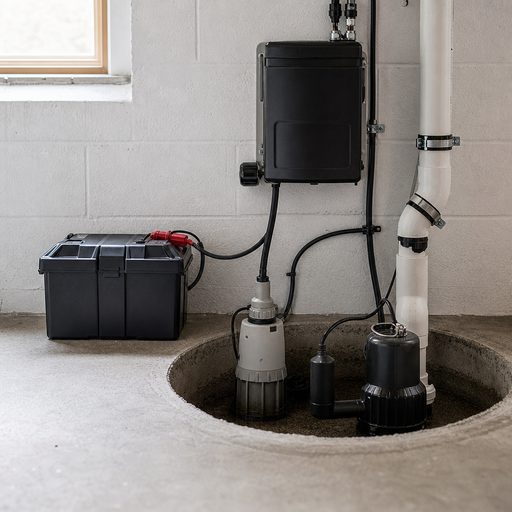
The proposal should list the primary pump, basin and cover, check valve, union or service connection, discharge piping, electrical work, high-water alarm, optional backup, permits, testing, maintenance access, warranty, and change-order process. National guidance cannot establish the approved discharge or electrical scope for a particular address.
What shapes the installation
The water source and destination come first
Foundation drainage, surface collection, an existing sump, and another water source can have different design and approval rules. Confirm what enters the basin and where it may legally discharge before selecting equipment.
Capacity depends on measured inflow and total head
Horsepower alone does not size a pump. Compare the manufacturer's performance information with observed inflow, vertical lift, pipe run, fittings, and discharge conditions.
The basin has to provide stable support and clear float travel
The exact pump and control need room to stand securely, move through a full cycle, avoid the walls and piping, and remain accessible beneath a suitable cover.
Backup protection is a separate maintained system
A battery backup can address a power outage or primary failure, but it adds a secondary pump, control, battery, charger, alarm, discharge details, and periodic testing. Suitability depends on the property and exact product.
Sources: Model 441 Battery Back-up System Installation Manual, Be Flood Smart. Protect Your Property
What to gather before requesting proposals
- Photograph water marks and the area where water first appears without entering standing water or touching wet electrical equipment.
- Measure an existing basin from dry, stable footing and note the cover, pump support, float clearance, check valve, discharge, alarm, and service access.
- Record the visible discharge route and approximate vertical lift, but do not disconnect, reroute, or test piping from generic instructions.
- Identify the current receptacle, cord, disconnect, alarm, and backup equipment without opening panels or altering wiring.
- Collect any permit, grading, drainage, flood-zone, prior-installation, and exact product records available for the address.
Keep electrical work and standing water apart
Do not add an outlet, extension cord, generator connection, charger, alarm, or other electrical equipment from a generic diagram. Use the exact product instructions, a dry and approved power arrangement, and qualified electrical work where required.
Sources: Safety Guidelines: Reentering Your Flooded Home, Submersible Sump Pump Installation Manual, Model 441 Battery Back-up System Installation Manual
When active water or unsafe power comes first
A planned installation should wait until active flooding, wet electrical equipment, contaminated water, an unsafe structure, or a failed existing pump is stabilized by the right professionals.
- Standing water blocks dry access to the panel, receptacle, pump, or proposed work area.
- Water is actively rising or spreading faster than the existing system can move it.
- The proposed basin or discharge work may affect a foundation, slope, public way, sewer, drain, or neighboring property.
- The existing pump, alarm, backup, cord, receptacle, or panel has been submerged or damaged.
Sources: Safety Guidelines: Reentering Your Flooded Home, Be Flood Smart. Protect Your Property
How to compare installation options
Compare proposals using the same measured inflow, lift, discharge, basin, power, alarm, backup, approval, and testing assumptions. A larger motor or added battery is not automatically a complete solution.
| Method | Where it may fit | Important limitation |
|---|---|---|
| Like-for-like primary replacement | The existing basin, discharge, check valve, power, alarm, and measured duty are verified for the exact new pump | A similar housing or horsepower does not prove performance, float clearance, connection, or approval compatibility. |
| New or revised primary sump system | The water source, collection point, basin, discharge, power, and local review support a complete new design | It may involve drainage, excavation, grading, plumbing, electrical, structural, or waterproofing work beyond setting a pump. |
| Secondary battery backup | The primary system is sound and the property needs a separately sized response to power loss or primary failure | Battery runtime and pumping performance vary with the exact equipment, charge, condition, lift, and inflow. |
| High-water alarm and monitoring | The homeowner needs notice when water rises or a primary or backup component reports a fault | An alarm provides notice; it does not move water or replace routine primary and backup testing. |
Sources: Submersible Sump Pump Installation Manual, Model 441 Battery Back-up System Installation Manual
What genuinely changes sump-pump installation in Miami
Use the County map as a property record
Miami-Dade's tool lets a homeowner enter an address and request confirmation. Add that result to the site assessment instead of assigning the whole city one flood condition.
Sources: Flood Zone Maps
Backup planning follows the existing risk and system
For a low-foundation home that already uses a sump, County heavy-rain guidance points to battery backup. The final design still has to verify primary capacity, secondary capacity, power, alarm, discharge, and maintenance.
Sources: Heavy Rain
The address determines the permitting authority
Miami-Dade tells incorporated-property owners to use their municipality's building official. The proposal should name the correct jurisdiction and separate building, plumbing, electrical, drainage, and flood reviews.
Comparing a sump pump installation estimate
A Miami installation estimate should price the complete measured sump system rather than only a pump and horsepower label.
Scope factors
- Water-source assessment, measured inflow, lift, discharge run, and legal destination
- Basin, cover, support, float clearance, check valve, union, piping, and service access
- Exact primary pump, alarm, backup pump, battery, charger, controls, and warranty
- Plumbing, electrical, drainage, grading, excavation, restoration, permit, and inspection responsibilities
- Primary, backup, alarm, power-loss, flow, return-water, leak, and handoff testing
Questions for the estimate
- What measured inflow and head assumptions support the selected pump?
- Where will the water discharge, and who verifies that destination for this address?
- Which primary, alarm, backup, plumbing, and electrical components are included?
- Who handles permits, inspection, restoration, testing, and future maintenance access?
What to tell Plumbing Advisors
The useful proposal starts with property measurements, water and discharge evidence, exact equipment, and clearly assigned plumbing, electrical, drainage, and permit responsibilities.
- Describe where and when water appears at the Miami property without assuming groundwater, runoff, or a drainage defect is the cause.
- Provide the existing pump model, basin dimensions, highest observed water level, and any prior service records.
- Photograph the discharge route, check valve, cover, power, alarm, and backup from dry footing.
- Share the approximate vertical lift, visible pipe run, service access, and any finished-area constraints.
- Ask every bidder to list the exact equipment, approvals, tests, maintenance access, and excluded work.
Plumbing Advisors does not dispatch its own local technicians. The independent professional is responsible for confirming availability, credentials, diagnosis, price, warranty terms, and work performance.
Sump Pump Installation in Miami: frequently asked questions
Does every Miami home need a sump pump?
No. The need depends on the property's observed water path, structure, drainage, mapped information, and a professional site assessment. A city or county location by itself is not enough.
What local record should a Miami installer review first?
Start with the exact address, municipal jurisdiction, available flood-zone or elevation information, prior permits, and any drainage records, then compare them with the observed site conditions.
Can the County battery-backup advice select my Miami equipment?
No. It supports considering backup in a defined situation. The exact primary and secondary pumps, battery, charger, alarm, runtime, discharge, electrical work, and maintenance plan still require design.
Sources and editorial methodology
Sources are included when they substantively support a local, safety, technical, or consumer decision on this page.
- The national layer provides the deterministic equipment, testing, backup, alarm, and safety content.
- County sources add only property-map, conditional preparedness, permitting, and jurisdiction information.
- No statement invents water-table conditions, building elevation, flood history, insurance results, permit approval, or equipment need for a Miami address.
Liberty Pumps
Submersible Sump Pump Installation ManualLiberty Pumps
Model 441 Battery Back-up System Installation ManualCenters for Disease Control and Prevention
Safety Guidelines: Reentering Your Flooded HomeFederal Emergency Management Agency
Be Flood Smart. Protect Your PropertyMiami-Dade County
Heavy RainMiami-Dade County
Flood Zone MapsMiami-Dade County
Homeowners General Permit Information