Plumbing Advisors Editorial TeamEditorial StandardsSource review July 31, 2026Source-Checked
Separate the symptom before choosing a disposal repair
Jam, power, leak, or drain?
Identify whether the Chicago disposal problem is mechanical, plumbing, drainage, or electrical, then apply the City's narrow repair exemptions and licensing rules only to the work the inspection actually supports.
A unit that hums, a unit that stays silent, a leak at a connection, and a sink that drains slowly are different problems. Disconnect power before any close check and use the exact model instructions instead of assuming every disposal has the same reset or jam-clearing method.
What the disposal and sink are doing
Note the sound, leak location, reset or breaker behavior, and whether the sink drains normally when the disposal is not running. Those observations narrow the inspection without reaching into the grinding chamber.
| What you notice | What it may indicate | What to do next |
|---|---|---|
| The unit hums but does not rotate | A mechanical jam or another rotating-component problem may be preventing movement | Stop the unit promptly, disconnect power fully, and use only the exact model instructions. |
| The unit stays completely silent | The reset, receptacle, switch, breaker, cord, motor protector, or internal electrical system may be involved | Tell the Chicago provider whether a reset or breaker tripped and whether the cabinet is dry. |
| The reset or breaker trips again | A jam, motor fault, wet connection, wiring problem, or overloaded circuit needs evaluation | Do not keep resetting or re-energizing the unit; leave it off for qualified help. |
| Water starts at the sink flange or mounting ring | The upper seal, flange, sink opening, or mounting assembly may be involved | Stop using the sink and photograph where fresh water first appears. |
| Water starts at the hose, discharge, trap, or drain joint | A dishwasher or drainage connection may be leaking separately from the disposer body | Keep the sink and dishwasher out of use until the wet connection is identified. |
| Water comes through the disposer housing | The unit itself may have failed rather than an external connection | Leave the power off and ask for a repair-versus-replacement finding tied to the observed leak. |
Tie the Chicago permit question to the confirmed repair
Chicago publishes limited permit exemptions for certain repairs and separate plumbing permit and license rules. Confirm the failed part first, then identify whether the proposal stays within a listed repair or changes a fixture, pipe, connection, or electrical system.
The unit hums with a dry cabinet
Disconnect power and use the exact model procedure to distinguish a possible jam from a motor or electrical failure.
Water starts at the flange, hose, or discharge
Trace the wet joint and separate leak repair from motor, drain, and electrical work.
The work alters plumbing or electrical systems
Ask who will verify Chicago permits, perform the regulated work, and arrange any inspection.
A plumbing contractor signs the proposal
Match the business to Chicago's active plumbing-contractor license and bond record.
The City's repair exemptions do not diagnose the disposal and should not be read as a blanket exemption for every repair or replacement.
Sources: Clearing a Jammed Disposer, Chicago Municipal Code 14A-4-402.1 - Work Exempt from Permit, Chicago Municipal Code 18-29-106.1 - Plumbing Permits and Licensing, Plumbing Contractors (Active)
Describe what the disposal is doing in Chicago
Share whether the unit hums or stays silent, where water appears, whether a reset or breaker trips, and whether the sink or dishwasher is affected.
No-obligation request · Availability varies by location and provider
What professional garbage disposal repair service does
A jammed, humming, or leaking garbage disposal can quickly back up your kitchen sink. Plumbing Advisors helps you understand the problem and connect with disposal repair help.
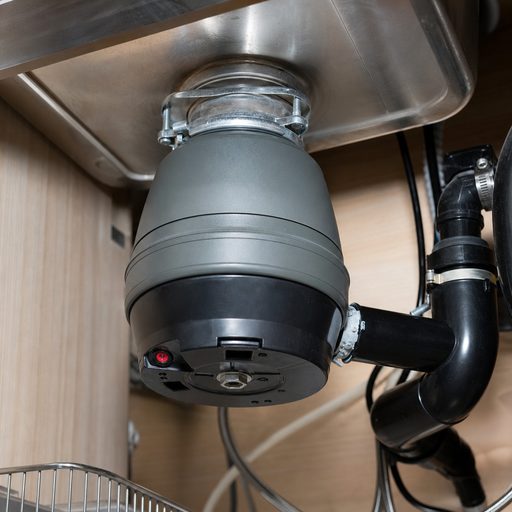
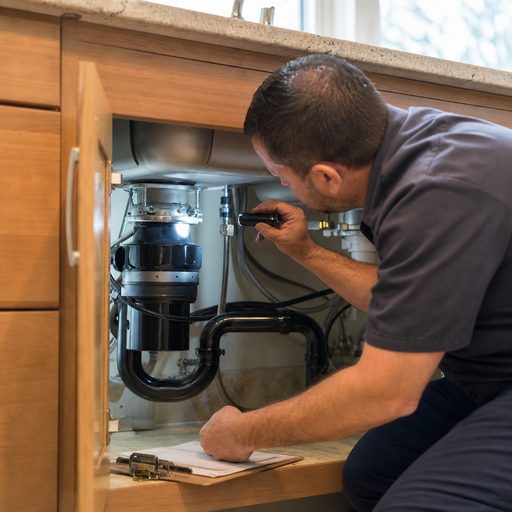
A disposal repair should begin with the power isolated and the symptom reproduced only when it is safe to do so. The inspection should separate the disposer motor and grinding components from the sink flange, mounting assembly, dishwasher hose, discharge connection, trap, drain, switch, receptacle, cord, and branch circuit.
The written repair scope should identify the observed failure, the exact model and compatible part, the plumbing and electrical responsibilities, and the final operation and leak tests. A body leak, repeated electrical trip, damaged mounting system, or unavailable part may support replacement, but the city and age alone do not.
What commonly changes the repair
The motor hums but the rotating components do not move
A jam or another mechanical problem may be preventing movement. Stop the unit promptly, disconnect power, and follow only the exact manufacturer's procedure for that model.
Sources: Clearing a Jammed Disposer
The unit stays silent
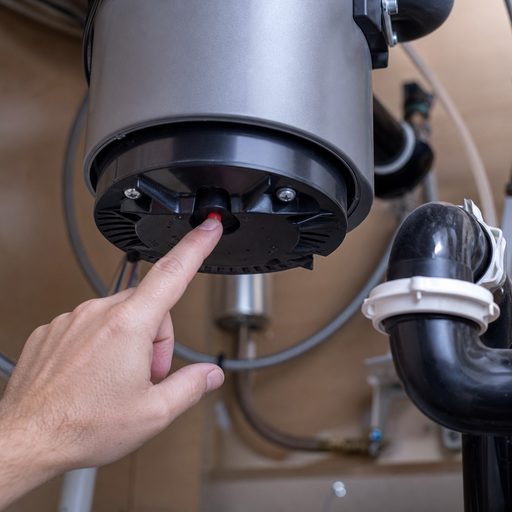
A model-specific reset, receptacle, switch, breaker, cord, motor protector, or internal electrical failure may be involved. Repeated trips or wet electrical equipment need qualified evaluation rather than repeated reset attempts.
Sources: How to Reset a Garbage Disposal
Water appears at a plumbing connection
The sink flange, dishwasher hose, discharge elbow, gasket, clamp, trap, or nearby drain joint can leak independently of the disposer body. Dry the cabinet and identify where fresh water first appears.
The disposer body itself leaks
Water coming through the housing is different from a loose connection. The inspection should confirm that location before replacement is recommended.
The sink drains slowly even when the unit is off
A restricted trap or drain line can exist alongside a working or failed disposal. Repairing the appliance does not automatically clear or diagnose the downstream drain.
What you can safely observe first
- Turn the wall control off, unplug the unit when it has an accessible cord, or switch off the correct breaker before any close inspection. Verify that the disposal cannot start.
- Never place a hand or finger in the grinding chamber, even when the power appears to be off.
- Listen for humming, silence, clicking, or grinding only during a brief test when the cabinet is dry and the unit is safe to energize.
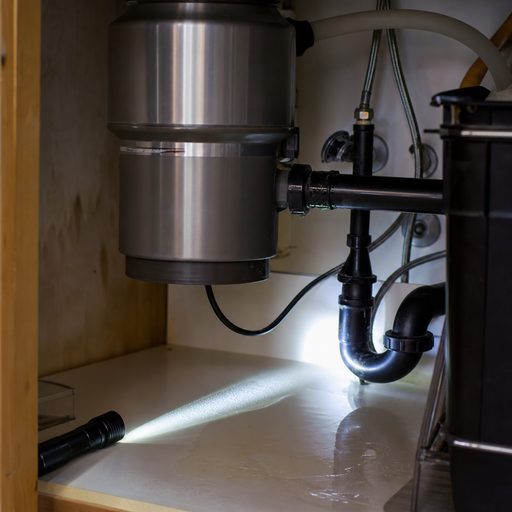
- Dry the sink flange, disposer body, dishwasher hose, discharge connection, trap, and cabinet floor before watching for fresh water without touching wet electrical equipment.
- Record the model number and consult its instructions before locating a reset button or using a manufacturer-specified jam tool.
Stop when water and electricity meet
Do not operate, unplug, reset, or touch a disposal, receptacle, switch, cord, or cabinet wiring when the area is wet. Keep the sink out of use, avoid the cabinet, and arrange qualified plumbing and electrical help.
Sources: How to Reset a Garbage Disposal, Clearing a Jammed Disposer
When to stop using the disposal and sink
Leave the disposal off and stop using the sink when water reaches electrical equipment, the reset or breaker trips repeatedly, or the unit produces smoke or a burning odor.
- Water is touching the receptacle, cord, switch, wiring, or disposer electrical connection.
- The reset or breaker trips again after the unit is re-energized.
- The disposer smokes, smells burned, sparks, or makes a severe metal-on-metal sound.
- Wastewater backs into the sink or dishwasher, or water spreads into the cabinet and floor.
Sources: How to Reset a Garbage Disposal, Clearing a Jammed Disposer
How the repair path should be chosen
Match the work to the observed mechanical, plumbing, drain, or electrical condition and the exact product instructions. A reset, connection repair, drain service, and replacement solve different problems.
| Method | Where it may fit | Important limitation |
|---|---|---|
| One model-specific reset check | A dry unit that stopped without smoke, burning odor, leakage, repeated trips, or other electrical warning | A reset does not clear a mechanical jam, repair a leak, or make repeated electrical trips safe. |
| Model-specific jam inspection | A unit that hums but does not rotate after power is fully disconnected | Never reach into the chamber or use a tool that the exact manufacturer instructions do not specify. |
| Connection or drain repair | Water is traced to a flange, hose, discharge joint, trap, or downstream restriction | It does not correct a motor, housing, switch, receptacle, cord, or branch-circuit problem. |
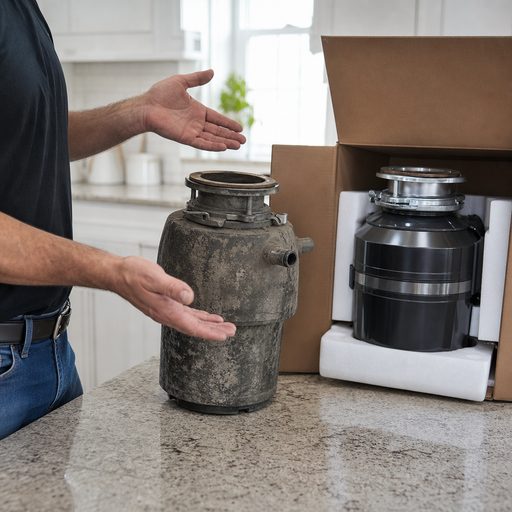
| Repair-versus-replacement comparison | The body leaks, an internal component fails, parts are unavailable, or reliable repair is not supported | The replacement still needs verified mounting, discharge, dishwasher, electrical, clearance, and approval fit. |
Sources: How to Reset a Garbage Disposal, Clearing a Jammed Disposer, Food Waste Disposer Use and Care Guide
What genuinely changes disposal repair in Chicago
Chicago exemptions are tied to a limited repair scope
The current code lists narrow plumbing and electrical repairs that do not require a permit. A proposal that replaces or rearranges fixtures, piping, controls, receptacles, or wiring needs its own permit review instead of borrowing a minor-repair exemption.
Sources: Chicago Municipal Code 14A-4-402.1 - Work Exempt from Permit
Plumbing licensing can be checked before work begins
Chicago publishes active plumbing-contractor license and bond information. Use the legal business name from the agreement when the disposal repair includes regulated plumbing work.
Sources: Plumbing Contractors (Active)
Electrical work should be stated separately
A silent disposal or repeated trip may involve the unit, switch, receptacle, cord, or circuit. The estimate should identify who evaluates and performs any electrical work rather than treating it as an incidental plumbing step.
Sources: Chicago Municipal Code 14A-4-402.1 - Work Exempt from Permit
Comparing a garbage disposal repair estimate
A Chicago disposal-repair estimate should identify the observed mechanical, plumbing, drain, or electrical condition before parts or replacement are priced.
Scope factors
- The observed symptom and confirmed failed component or connection
- Mechanical jam, reset, motor, flange, mount, hose, discharge, trap, drain, or electrical scope
- Exact model, compatible parts, access, prior repairs, and housing condition
- Plumbing and electrical labor separated when both are involved
- Operation, drain, dishwasher, vibration, and leak testing after the work
Questions for the estimate
- What observed condition does the proposed repair address?
- Are disposer, connection, drain, and electrical findings priced separately?
- What operation and leak tests are included after the repair?
- What finding would support replacement instead of another repair?
What to tell Plumbing Advisors
A few dry-cabinet photos and a short symptom history help separate appliance, plumbing, drain, and electrical work.
- Whether the Chicago disposal hums, stays silent, grinds abnormally, trips a reset, or trips a breaker
- Where fresh water first appears: sink flange, mount, dishwasher hose, discharge, trap, body, or another joint
- Whether the sink drains normally and whether the dishwasher is affected
- Brand, model, connection type, control type, and any prior repair if known
- Dry-cabinet photos of the unit, mount, hoses, discharge, trap, receptacle, cord, and switch location
- Any smoke, burning odor, wet electrical equipment, repeated trip, wastewater backup, or cabinet damage
Plumbing Advisors does not dispatch its own local technicians. The independent professional is responsible for confirming availability, credentials, diagnosis, price, warranty terms, and work performance.
Garbage Disposal Repair in Chicago: frequently asked questions
Is every garbage disposal repair permit-free in Chicago?
No. Chicago lists specific repair exemptions, but a broader replacement or alteration to plumbing or electrical systems can fall outside them. The provider should check the actual scope before work starts.
How can I check a Chicago plumbing contractor?
Use the City's active plumbing-contractor lookup and compare the listed business, license, and bond information with the agreement you receive.
Should I keep pressing the reset on a Chicago disposal?
No. A single model-specific reset check may be reasonable only when the unit is dry and no warning is present. Repeated trips, wet equipment, smoke, or a burning odor are reasons to leave the power off.
Sources and editorial methodology
Sources are included when they substantively support a local, safety, technical, or consumer decision on this page.
- Manufacturer sources support the power-disconnection, jam, reset, and connection guidance.
- Chicago code and license records support only the local permit-scope and contractor-verification statements.
- The page does not infer a defect, permit exemption, or electrical diagnosis from the Chicago address.
Whirlpool
How to Reset a Garbage DisposalWhirlpool
Clearing a Jammed DisposerU.S. Environmental Protection Agency
How to Care for Your Septic SystemCity of Chicago
Chicago Municipal Code 14A-4-402.1 - Work Exempt from PermitCity of Chicago
Plumbing Contractors (Active)