 Plumbing Advisors Editorial TeamEditorial StandardsSource review July 31, 2026Source-Checked
Confirm the complete installation before ordering the unit
Sink, drain, dishwasher, and power
Verify the exact disposal against the Chicago sink, drain, dishwasher, and power arrangement, then assign plumbing and electrical permit responsibilities instead of assuming a like-for-like swap covers every connection.
The disposer has to fit the sink opening and mounting system, clear the cabinet, align with the discharge and trap, accept the dishwasher connection when needed, and match a safe electrical setup. The exact model instructions control those details.
What to verify beneath the sink
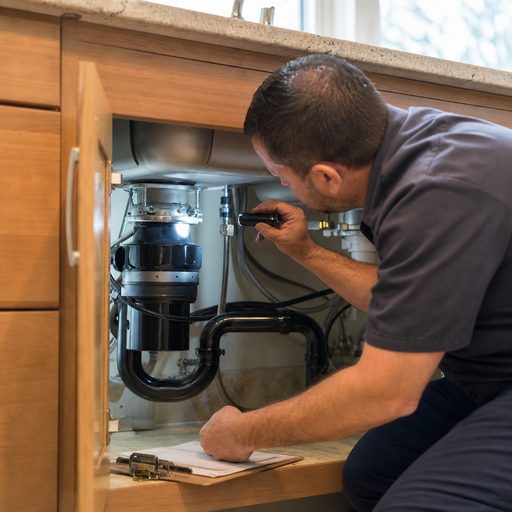
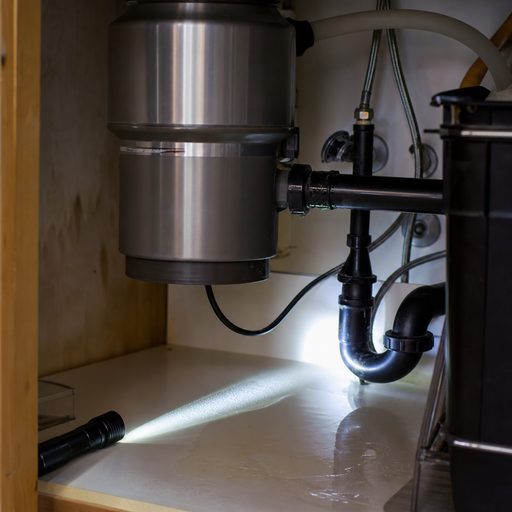
Photograph and measure the sink, mount, cabinet, discharge, trap, dishwasher hose, switch, receptacle, cord, and nearby storage before selecting the exact product.
| What you notice | What it may indicate | What to do next |
|---|---|---|
| The new model uses a different mounting system | The sink flange, mounting ring, sink support, or opening may need a different installation scope | Compare the exact product drawing with the existing sink and mount before removal. |
| The discharge outlet sits at a different height | The discharge tube, trap, and wall connection may no longer align for proper drainage | Measure the Chicago cabinet and drain elevations before ordering the unit. |
| A dishwasher drains through the existing disposal | The new unit needs the correct inlet, hose routing, clamp, and model-specific knockout step | Include the dishwasher connection and final drain test in the written scope. |
| The existing unit is hardwired or uses an unusual control | Qualified electrical work may be needed to match the new product and local requirements | Document the current power and control arrangement without opening or altering it. |
| The cabinet has limited service clearance | The unit, discharge, trap, hose, cord, and future access may conflict | Check usable dimensions with every connection in place, not only the appliance body. |
Separate the Chicago plumbing and electrical scopes
The disposal connects to the sanitary drain and to an electrical supply. Chicago's permit and license rules should be checked against each part of the actual installation, especially when the new model changes the mount, piping, control, receptacle, cord, or wiring.
The new model matches the old brand or size
Still compare the exact mounting, discharge, dishwasher, cord or hardwire, control, and clearance requirements.
The discharge or trap needs rearrangement
Identify the plumbing permit and licensed-work responsibility before the piping is changed.
The receptacle, switch, cord, or wiring changes
Treat that as a separate electrical scope with its own qualified provider and approval check.
The installer will handle regulated plumbing
Confirm the signing business in Chicago's active plumbing-contractor record.
Calling the project a replacement does not establish that every plumbing or electrical change is exempt from a Chicago permit.
Sources: Food Waste Disposer Use and Care Guide, Chicago Municipal Code 14A-4-402.1 - Work Exempt from Permit, Chicago Municipal Code 18-29-106.1 - Plumbing Permits and Licensing, Plumbing Contractors (Active)
Plan a garbage disposal installation in Chicago
Share the disposer model, sink and cabinet measurements, dishwasher connection, existing plumbing, and current electrical arrangement.
No-obligation request · Availability varies by location and provider
What professional garbage disposal installation service does
Putting in a new garbage disposal means matching the right unit to your kitchen and connecting it safely to the drain, dishwasher, and power. Plumbing Advisors helps you choose well and connect with disposal installation help.
A disposal-installation plan should verify the exact product, sink opening and support, mounting system, cabinet clearance, discharge height and orientation, trap alignment, dishwasher connection, and service access before the old unit or drain assembly is removed.
The proposal should separate plumbing from electrical work and identify the cord or hardwired connection, switch or approved control, grounding, permit and inspection responsibility, removal, disposal, startup, vibration check, and leak testing. Any hidden sink, drain, cabinet, or wiring condition should follow a documented change process.
What shapes the installation plan
The sink and mounting assembly must support the exact unit
The drain opening, flange, mounting hardware, sink material, support, and available access must match the manufacturer's instructions. A similar-looking mount is not proof of compatibility.
Discharge height and trap alignment affect drainage
The outlet, discharge tube, trap, and wall connection need a workable gravity path without forcing or improvised fittings. Cabinet space alone does not establish that the plumbing will align.
A dishwasher connection is a separate decision
When a dishwasher drains through the disposer, the hose routing, inlet, clamp, air-gap or high-loop arrangement, and model-specific knockout step must be included. Do not remove a knockout when no dishwasher connection is planned.
The electrical arrangement has to match the product and local rules
Cord-connected and hardwired units, wall switches, approved controls, receptacles, grounding, and branch-circuit work are not interchangeable. Qualified electrical work and its approvals should be assigned separately.
What to document before selecting a disposal
- Record the exact model under consideration and obtain its current installation instructions before comparing dimensions or connections.
- Photograph the sink opening, mounting ring, cabinet, discharge piping, trap, dishwasher hose, receptacle, cord, switch, and surrounding wiring without touching wet equipment.
- Measure cabinet width, depth, and usable height, including clearance for the discharge, trap, dishwasher hose, and future service.
- Confirm whether a dishwasher drains through the disposer and whether its connection is part of the quoted work.
- Identify whether the existing unit is cord-connected or hardwired, but leave wiring changes and electrical testing to a qualified professional.
Do not improvise the electrical connection
A disposal combines water, grounded electrical equipment, and rotating components. Do not convert a cord, hardwire a unit, add a control, or alter a receptacle from generic instructions. Use the exact product requirements and qualified electrical work where required.
When an existing leak or electrical problem comes first
A planned installation should wait until active leaks, wastewater backup, wet wiring, a damaged sink, or an unsafe existing electrical connection is addressed.
- The sink, flange, supply, dishwasher hose, discharge, or trap is actively leaking.
- The receptacle, cord, switch, hardwire connection, or cabinet wiring is wet or damaged.
- The sink or mounting area is cracked, loose, corroded, or unable to support the unit.
- The drain is backed up or cannot be tested without causing water to rise elsewhere.
How to compare disposal installation options
Use the same sink, drain, dishwasher, power, approval, and testing assumptions for every proposal. Product size or motor rating alone does not define a complete installation.
| Method | Where it may fit | Important limitation |
|---|---|---|
| Like-for-like replacement | The new model is verified against the existing mount, cabinet, discharge, dishwasher, and electrical arrangement | A familiar brand or similar dimensions do not confirm mounting, connection, control, or approval compatibility. |
| New disposer at a sink without one | The sink, drainage, cabinet, household wastewater system, and electrical plan all support the addition | The work can extend beyond the appliance to the flange, trap, piping, control, receptacle, circuit, cabinet, and approvals. |
| Installation with dishwasher connection | The dishwasher is intended to drain through the new unit and the exact inlet and hose requirements are confirmed | The knockout, hose routing, clamp, air-gap or high-loop details must follow the product and local requirements. |
| Installation with plumbing or electrical correction | Inspection finds unsuitable discharge alignment, a damaged mount, wet wiring, an incompatible control, or another confirmed defect | The proposal should identify the responsible trade, permit, inspection, and change-order process before work begins. |
What genuinely changes disposal installation in Chicago
A disposal installation can contain two regulated scopes
The plumbing side includes the flange, mount, discharge, trap, and dishwasher drain. The electrical side includes the cord or hardwire, grounding, receptacle, switch, control, and circuit; the proposal should name responsibility for each.
Sources: Food Waste Disposer Use and Care Guide, Chicago Municipal Code 14A-4-402.1 - Work Exempt from Permit
Do not stretch a minor-repair exemption
Chicago's no-permit list is specific. If the installation replaces or rearranges a fixture, pipe, connection, electrical device, or system beyond that list, the permit path must be checked for the property and scope.
Sources: Chicago Municipal Code 14A-4-402.1 - Work Exempt from Permit
The contract name should match the City record
When regulated plumbing is included, compare the agreement with Chicago's active plumbing-contractor license and bond lookup before authorizing the work.
Sources: Plumbing Contractors (Active)
Comparing a garbage disposal installation estimate
A Chicago disposal-installation estimate should separate the exact unit and mounting hardware from plumbing, dishwasher, electrical, permit, removal, and testing work.
Scope factors
- Exact unit, mount, flange, discharge parts, cord or wiring kit, and warranty
- Sink support, cabinet access, discharge height, trap alignment, and dishwasher connection
- Cord-connected or hardwired power, switch or control, receptacle, grounding, and circuit work
- Plumbing and electrical permit or inspection responsibility
- Removal, disposal, startup, leak testing, vibration check, and hidden-condition process
Questions for the estimate
- Does the exact unit fit the sink, mount, cabinet, discharge, trap, dishwasher, and power arrangement?
- Which plumbing and electrical parts and trades are included?
- Who handles permits, inspections, removal, disposal, startup, and warranty service?
- How will hidden sink, drain, cabinet, or wiring conditions be documented and priced?
What to tell Plumbing Advisors
Exact product information and clear plumbing, dishwasher, electrical, and approval responsibilities make proposals easier to compare.
- Why a disposal is being added or replaced at the Chicago sink
- Exact model, installation manual, included cord or hardware, and warranty
- Sink opening and support, mount, cabinet dimensions, discharge height, trap, and service clearance
- Dishwasher connection and hose routing, including who handles the inlet setup
- Existing cord or hardwire, receptacle, switch or control, grounding, and assigned electrical work
- Removal, disposal, permits, inspections, startup, leak testing, vibration check, and warranty responsibility
Plumbing Advisors does not dispatch its own local technicians. The independent professional is responsible for confirming availability, credentials, diagnosis, price, warranty terms, and work performance.
Garbage Disposal Installation in Chicago: frequently asked questions
Does a like-for-like Chicago disposal swap avoid every permit?
Not automatically. The mount, drain, dishwasher, receptacle, control, cord, and wiring determine the actual scope. Ask the providers to identify which Chicago permits or inspections apply.
Can one Chicago proposal cover both plumbing and electrical work?
It can describe the whole project, but it should still identify the qualified party, permit responsibility, and warranty for each trade instead of hiding the electrical connection inside a plumbing line item.
What should be tested after a Chicago disposal installation?
The final check should cover secure mounting, operation, vibration, sink drainage, dishwasher drainage when connected, and leaks at the flange, inlet, discharge, trap, and disturbed joints.
Sources and editorial methodology
Sources are included when they substantively support a local, safety, technical, or consumer decision on this page.
- The manufacturer guide supports the model, mounting, discharge, dishwasher, grounding, and testing requirements.
- Chicago records support the local plumbing, electrical, permit, license, and bond boundaries.
- No city fact is used to claim that a specific sink, circuit, or disposer is compatible.
Whirlpool
How to Reset a Garbage DisposalWhirlpool
Clearing a Jammed DisposerU.S. Environmental Protection Agency
How to Care for Your Septic SystemCity of Chicago
Chicago Municipal Code 14A-4-402.1 - Work Exempt from PermitCity of Chicago
Plumbing Contractors (Active)