
Sump Pump Installation
Sump Pump Installation in Indianapolis, IN
If you are looking for sump pump installation in Indianapolis, IN, first document when water enters, how quickly the basin fills, and where a lawful discharge can terminate. The goal is to give the professional a useful starting pattern, not to diagnose a Indiana property from the city or symptom alone.
Plumbing Advisors provides guidance and connection assistance. Independent providers perform the plumbing work and confirm availability, pricing, timing, and credentials.
On this pageOverview
 Plumbing Advisors Editorial TeamEditorial StandardsSource-Checked
If you are looking for sump pump installation in Indianapolis, IN, first document when water enters, how quickly the basin fills, and where a lawful discharge can terminate. The goal is to give the professional a useful starting pattern, not to diagnose a Indiana property from the city or symptom alone.
The quick answer
- Typical cost
- Discharge line and check valve typically costs $140 to $650. The final cost depends on the confirmed scope, access, parts or equipment, labor, timing, and related work.
- Repair or replace
- Before anyone sets a pump, the main choices are submersible versus pedestal, the capacity, and whether to add a battery backup.
- Get help fast
- Describe the problem and we'll connect you with independent sump pump installation pros serving Indianapolis, IN — no obligation.
Sump Pump Installation in Indianapolis
Sump pump installation puts a pump in a pit in your basement or crawlspace so it can move groundwater away from the foundation before it floods the floor. Water collects in the pit, a float switch tells the pump when the level has risen, and a discharge line carries the water outside and away from the house. People install one when a basement floods or stays damp after rain, when a home sits on a high water table, when they are finishing a basement and want to protect it, or when an old pump has worn out.
Getting the system right comes down to a few choices: a submersible or pedestal pump, the right capacity for how much water you get, a properly run discharge line with a check valve, and whether to add a battery backup. Safety is a real concern because the pit holds standing water and the pump runs on electricity, which is a dangerous combination. Keep clear of standing water near an outlet, and leave any wiring or outlet work to a qualified pro. Plumbing Advisors is a national service that helps you weigh these choices and connects you with plumbing professionals who work in your area.
When to install a sump pump in Indianapolis
Your basement floods after rain
Standing water or recurring puddles after storms are the clearest sign you need a pump. A sump system collects that water in a pit and sends it outside before it spreads across the floor.
The basement stays damp
Persistent moisture, musty smells, or water marks low on the walls point to groundwater pushing in. A pump paired with good drainage helps keep the space dry and usable.
You sit on a high water table
Homes on low ground or in areas with a high water table take on groundwater even without heavy rain. A pump sized to keep up is the standard protection in these spots.
You are finishing the basement
Before adding flooring, drywall, or living space, a sump pump protects that investment. It is far easier to plan the pit and discharge line before the space is finished than after.
Your old pump has failed
A pump near the end of its life, or one that has quit during a storm, leaves the basement exposed. Replacing it with a properly sized unit restores protection ahead of the next heavy rain.
You want outage protection
If you already rely on a single pump that runs on household power, an outage during a storm leaves you exposed. Adding a battery backup at install time covers the moment flooding is most likely.
Causes and scope drivers to inspect
- A high water table around the foundation
- Heavy or frequent rain that pools at the basement
- Poor grading or drainage near the house
- Finishing a basement that needs to stay dry
- An aging pump that can no longer keep up
Choosing the right sump pump system
Before anyone sets a pump, the main choices are submersible versus pedestal, the capacity, and whether to add a battery backup. Here is how they compare.
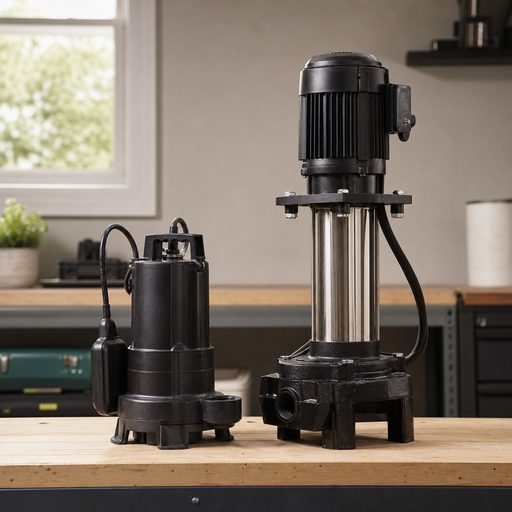
Submersible pump
A submersible pump sits inside the pit, under the water. It runs quietly, handles larger volumes, and is sealed against debris, which makes it a strong choice for busier pits and finished basements. It usually costs more up front and, being underwater, is a bit more involved to service.
Pedestal pump
A pedestal pump keeps its motor up on a shaft above the water with only the intake down in the pit. It costs less, lasts a long time, and is easy to reach for maintenance. The trade-offs are that it is louder and typically moves less water, so it fits lighter-duty or narrower pits.
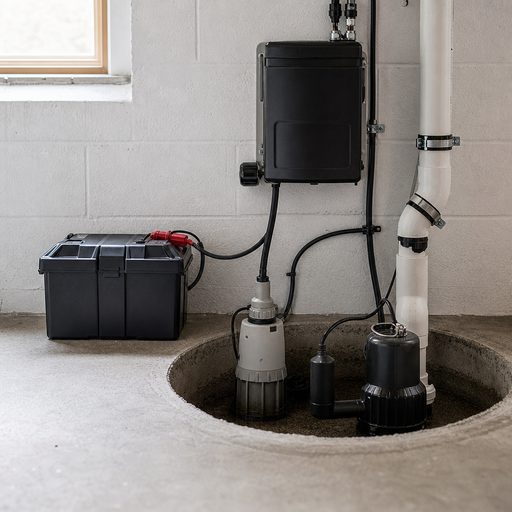
Add a battery backup
A battery backup pump is worth considering alongside either choice, because the storms that cause flooding are also the ones that knock out power. It keeps the pit pumping when the main unit cannot run. Whether you need one depends on your flood risk and how much the basement matters to you.
How much does sump pump installation cost in Indianapolis?
For sump pump installation in Indianapolis, IN, compare itemized quotes for the same inspected scope. Access, testing, parts or equipment, permits, restoration, and urgency can change the final price.
Typical plumbing rates in Indianapolis, IN
| Service | Typical cost range |
|---|---|
| Service call | $60–$145 per visit |
| Minimum visit charge | $105–$240 per visit |
Hourly labor rates
| Labor | Typical cost range |
|---|---|
| Residential plumbing labor | $90–$165 per hour |
Emergency pricing factors
| Factor | Typical range |
|---|---|
| After-hours or emergency factor | 1.43x–2.5x |
Typical sump pump installation costs in Indianapolis, IN
| Project | Typical cost range |
|---|---|
| Discharge line and check valve | $140–$650 |
| Battery backup system, installed | $480–$1,650 |
Additional project costs
| Additional work | Typical cost range |
|---|---|
| Adding an outlet or wiring | $160–$790 |
Additional per-item costs
| Additional item | Typical cost range |
|---|---|
| Pedestal pump (unit only) | $95–$290 per unit |
| Submersible pump (unit only) | $150–$480 per unit |
Cost ranges are estimates developed from standardized project scopes and reviewed pricing inputs. Government labor and regional cost data are used where applicable. See our Pricing Methodology for the exact sources, calculations, and review date. Actual prices vary by property, scope, materials or equipment, location, and provider.
What affects the cost
- Whether a pit already exists or one must be dug into the floor
- Pump type and capacity (pedestal vs. submersible, sized to the water volume)
- Whether a primary, backup, or combination system is installed
- The length and routing of the discharge line and the check valve
- Whether an outlet or new wiring is needed, which a qualified pro handles
Planning sump pump installation in Indianapolis
A useful local scenario
For Indianapolis, IN, separate what you observed from what you think failed. Start with "An old pump has failed and needs replacing," add the sequence of events, and let testing determine whether the Indiana property needs the requested service or a different scope.
Property and access planning
Before an appointment in Indianapolis, prepare basin size, pump duty, dedicated power, alarm, backup, check valve, discharge route, and approvals. The professional should confirm the property-specific scope and any applicable Indiana or local requirements before work begins. For the Indianapolis, IN estimate, ask the professional to identify the inspected component or system, the planned access point, and the exclusions that apply to the Indianapolis property.
Credential checks in Indiana
Plumbing in Indiana is regulated statewide by the Indiana Professional Licensing Agency (IPLA) through the Indiana Plumbing Commission. State law makes it unlawful to act as a plumbing contractor or journeyman plumber without a license, so for most plumbing work you should hire a state-licensed plumber.
The Indiana Plumbing Commission issues apprentice, journeyman plumber, and plumbing contractor licenses. You can confirm that a plumber or company holds a current Indiana license using the state's MyLicense verification system at mylicense.in.gov before you hire.
Permits and inspections in Indiana
Plumbing permit and inspection requirements in Indiana are set locally and vary by city and county, with your local building department acting as the authority. In Indianapolis and Marion County, for example, the Department of Business and Neighborhood Services requires permits for changes to a plumbing system and inspects the work, and homeowners can pull a plumbing permit only in limited situations. Always check your local building department first.
Get matched with a sump pump installation pro in Indianapolis
Tell us what's going on and we'll connect you with independent sump pump installation help serving Indianapolis, IN.
No-obligation request · Availability varies by location and provider
What a sump pump installation visit includes
- Reviewing your flooding history and where water collects
- Helping choose submersible vs pedestal and size the pump to your water volume
- Setting or preparing the pit, or digging one where none exists
- Installing the pump and connecting the float switch
- Running the discharge line and fitting a check valve to stop backflow
- Connecting to a grounded outlet (any wiring work by a qualified pro)
- Testing the float and pump cycle and confirming it discharges properly
What to expect at the appointment
- 1Note your flooding history and where water collects
- 2Choose submersible or pedestal and the right capacity
- 3Connect with a plumbing professional that services your area
- 4Have the pit, pump, and discharge route planned
- 5Install the pump, discharge line, and check valve
- 6Test the float and pump cycle and confirm discharge
What to do first
- Note where and how often water shows up in the basement
- Look for an existing pit or a low spot where water collects
- Check whether a grounded outlet is nearby
- Keep clear of standing water near any electrical outlet
How to choose a sump pump installation pro in Indianapolis
- Confirm the professional is licensed and insured where your state requires it
- Ask for a written estimate before work begins
- Get the scope itemized, including the pump and any backup separately
- Ask which pump type and capacity they recommend for your water volume
- Confirm who handles any electrical work if an outlet is needed
- Check that the pump and the installation carry a warranty
How Plumbing Advisors helps
Plumbing Advisors helps you decide between a submersible and pedestal pump, size it to your basement, and weigh a battery backup, then connects you with plumbing professionals that service your area. Because the pit holds water and the pump runs on electricity, any wiring or outlet work belongs to a qualified pro. Availability and pricing vary by location and provider.
Sump Pump Installation in Indianapolis: FAQs
What can change a sump pump installation quote in Indianapolis, IN?
For Indianapolis, IN, one important scope driver is whether a primary, backup, or combination system is installed. Access, testing, parts or equipment, permits, restoration, and urgency may also matter. Compare itemized quotes for the same inspected scope rather than relying on an unsupported Indiana price.
What should I note before requesting sump pump installation in Indianapolis, IN?
When water enters, how quickly the basin fills, and where a lawful discharge can terminate. For the Indianapolis, IN request, add when the condition began, what changes it, and any safe shutoff or access information. These details help frame the first inspection but do not confirm the cause at a Indiana property.
Is a submersible pump worth the extra cost?
Often, yes. A submersible runs quieter, handles more water, and is sealed against debris, which suits busier pits and finished basements. A pedestal pump costs less and is easy to service, but it is louder and moves less water, so the right choice depends on your basement.
Do I really need a sump pump?
If your basement floods, stays damp after storms, or sits below a high water table, a sump pump is the standard way to keep it dry. Homes on low ground or with a history of seepage benefit most. A pro can confirm whether your situation calls for one.
What is the difference between a submersible and a pedestal pump?
A submersible pump sits down in the pit underwater, runs quieter, and is usually more powerful, which suits busier pits and finished basements. A pedestal pump keeps its motor up on a shaft above the water, costs less, and is easier to service, but it is louder and typically moves less water.
What size sump pump do I need?
Sizing is based on how much water your pit takes on and how high it has to be pumped. Many homes do fine with a 1/3 HP pump, while wetter basements or longer discharge runs call for 1/2 HP or more. An installer can size it to your pit rather than guessing.
Should I add a battery backup?
A battery backup keeps the pump running during power outages, which often happen during the very storms that cause flooding. It is a separate system added alongside the main pump. Whether you need one depends on your flood risk and how much the basement matters to you.
Sources and local references
These primary and public-agency references support the safety, credential, permit, efficiency, equipment, or local-system guidance used on this page. They do not diagnose a specific property.
Problems that may lead to sump pump installation
Sump Pump Installation in nearby cities
Other plumbing services in Indianapolis






Sump Pump Installation guides
Learn before your sump pump installation in Indianapolis.
Free guides on cost, common problems, repairs, and what to expect — written to help you make the call with confidence.
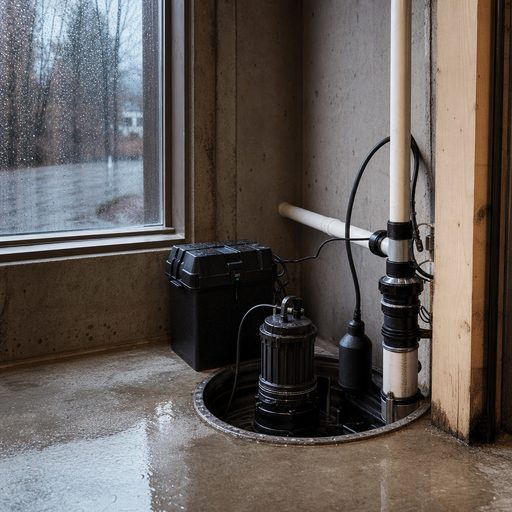
Do I Need a Battery Backup Sump Pump?
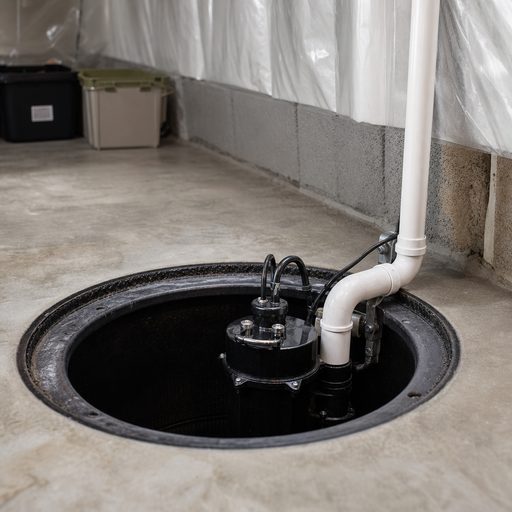
How Long Do Sump Pumps Last?
Submersible vs. Pedestal Sump Pumps
Sump Pump Maintenance Checklist
Should You Add a Battery Backup Sump Pump?
How Much Does Sump Pump Repair Cost?
How Often Should Your Home's Plumbing Be Inspected?
What Does a Sewer Ejector Pump Do (and When Do You Need One)?
What Is Polybutylene Pipe and Should You Replace It?
Need Plumbing Help Now?
Call Plumbing Advisors to connect with help for leaks, drains, water heaters, sewer lines, burst pipes, toilets, faucets, and more.
No-obligation request · Availability varies by location and provider