 Plumbing Advisors Editorial TeamEditorial StandardsSource review July 31, 2026Source-Checked
Match the faucet to the sink before ordering
Fit, function, and connections
Match the faucet to the Chicago sink and room first, then confirm the correct City flow category, lead-free product certification, and permit and licensed-work responsibility before installation.
Hole count and spacing are only the beginning. The faucet also needs suitable deck thickness, reach, clearance, mounting access, supply connections, and the right drain or sprayer scope for the room.
What to verify at the existing sink
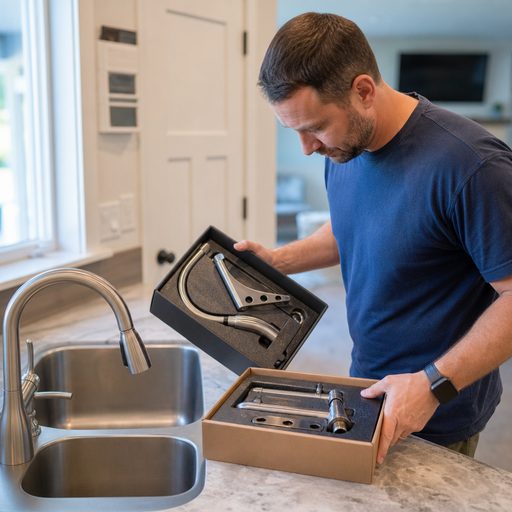
Photograph and measure the mounting area, cabinet, shutoffs, supplies, drain, and nearby equipment. Then compare those conditions with the exact faucet and every included accessory.
| What you notice | What it may indicate | What to do next |
|---|---|---|
| The new faucet uses a different mounting layout | The sink holes, spacing, deck plate, or mounting access may not match | Measure the usable holes and deck before ordering the exact model. |
| The spout or handles may contact the sink or backsplash | Reach, height, handle travel, or room clearance may be unsuitable | Compare the product drawing with measurements from the Chicago sink. |
| A bathroom faucet includes a pop-up drain | The drain type, basin overflow, finish, and linkage need a separate fit check | Confirm whether drain installation and any tailpiece or trap changes are included. |
| A kitchen faucet has a pull-down or pull-out hose | The hose and weight need unobstructed travel inside the cabinet | Check for conflicts with a disposal, piping, shelves, and stored items. |
| The shutoffs or supplies are stiff, corroded, or leaking | Connection work may be needed before the new faucet can be tested reliably | List that work separately instead of assuming it is part of a basic faucet swap. |
Match the room, model, and Chicago plumbing scope
Chicago lists separate maximum flow rates for private lavatory and residential kitchen faucets and regulates plumbing permits and licenses. Apply those requirements to the exact product after verifying its physical fit.
The faucet is for a private bathroom lavatory
Verify the WaterSense model, the City's lavatory flow category, basin reach, handle clearance, and drain compatibility.
The faucet is for a residential kitchen sink
Check Chicago's kitchen flow category, product certification, spout reach, sprayer travel, and cabinet clearance.
The scope includes shutoff, supply, or drain changes
Assign the licensed work, permit check, inspection, and final testing responsibility in writing.
A plumbing company will perform the installation
Match the legal business on the proposal with Chicago's active contractor record.
A compliant flow rate and lead-free certification do not establish sink fit. Measurements and access from the actual Chicago property still control the installation plan.
Sources: WaterSense - Home Maintenance, WaterSense Product Search - Bathroom Sink Faucets and Accessories, Safe Drinking Water Act Lead-Free Requirements for Faucets and Fixtures, Chicago Municipal Code 18-29-604.4 - Fixture Water Consumption, Chicago Municipal Code 18-29-106.1 - Plumbing Permits and Licensing, Plumbing Contractors (Active)
Plan a faucet installation in Chicago
Share whether the faucet is for a kitchen or bathroom, the mounting measurements, the chosen model, and any connection or drain work that may be needed.
No-obligation request · Availability varies by location and provider
What professional faucet installation service does
Putting in a new kitchen or bathroom faucet refreshes the fixture you touch most, and a clean install means no drips at the connections. Plumbing Advisors helps you pick a compatible faucet and connect with installation help.
A faucet-installation plan should verify the sink or counter holes, spacing, deck thickness, mounting access, spout reach, handle movement, cabinet clearance, shutoffs, supplies, and the exact product before removal begins. Bathroom pop-up drains and kitchen sprayers or pull-down hoses need their own fit checks.
The written proposal should identify the exact faucet, included accessories, removal and disposal, supply or shutoff changes, drain work, sink or counter exclusions, permit responsibility, final leak and function testing, and warranty terms. Conditions hidden by the old fixture should follow a documented change process.
What shapes the installation plan
The mounting pattern and deck set the physical fit
Count usable holes, measure their spacing and deck thickness, and inspect access from below. A deck plate can cover some unused holes but does not correct an incompatible mounting pattern or inaccessible fastener.
Kitchen and bathroom faucets serve different jobs
Kitchen reach, pot clearance, sprayer travel, and cabinet equipment differ from bathroom basin reach, splash control, handle clearance, and pop-up drain needs.
Sources: WaterSense - Home Maintenance
Potable-water products need the right certification
Faucets and fittings used for drinking water must meet federal lead-free requirements. Verify the product certification and exact model rather than relying on a general marketing claim.
Sources: Safe Drinking Water Act Lead-Free Requirements for Faucets and Fixtures
The surrounding shutoffs, supplies, drain, and cabinet affect scope
A new faucet does not repair a leaking shutoff, damaged supply, failed drain joint, deteriorated sink, or limited cabinet access. Include those conditions separately when they are observed.
What to document before selecting a faucet
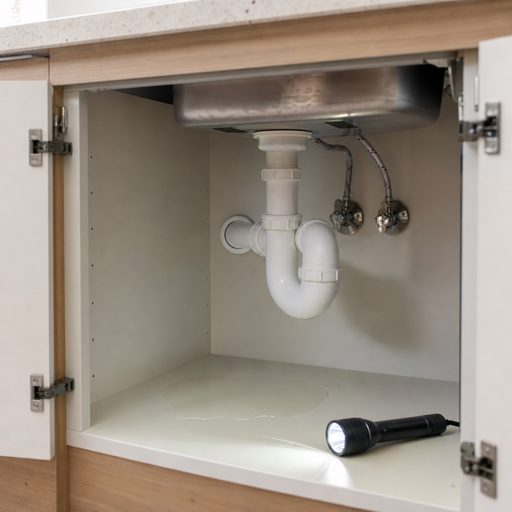
- Photograph the sink from above and the faucet, mounting hardware, shutoffs, supplies, drain, and cabinet from below.
- Count the usable holes and measure their center-to-center spacing, deck thickness, and available mounting access.
- Measure spout reach, height, handle movement, backsplash clearance, basin depth, and nearby window or cabinet clearance.
- For a kitchen faucet, check pull-down hose travel, sprayer clearance, and conflicts with a disposal or stored items.
- For a bathroom faucet, confirm whether a matching pop-up drain is included and whether the basin has an overflow opening.
WaterSense applies differently in kitchens and bathrooms
EPA certifies bathroom sink faucets and aerators through WaterSense. For kitchen faucets, EPA instead recommends comparing the model's stated flow rate. Do not treat a kitchen faucet as WaterSense certified unless the applicable EPA product category says so.
Sources: WaterSense - Home Maintenance, WaterSense Product Search - Bathroom Sink Faucets and Accessories
When an existing leak should be handled first
A planned faucet installation should not delay help for an active supply leak, spreading cabinet damage, or water near electrical equipment.
- Water continues to escape when the faucet is not being used.
- A shutoff, supply, or faucet connection is spraying or will not hold.
- Water is near a disposal, receptacle, appliance connection, or exposed wiring.
- The sink or counter is loose, cracked, or unable to support the proposed fixture safely.
Sources: WaterSense - Home Maintenance
How to compare faucet installation options
Use the same sink measurements, connection assumptions, accessory list, and testing scope for every proposal. Separate product features from plumbing and finish work.
| Method | Where it may fit | Important limitation |
|---|---|---|
| Like-for-like faucet swap | The existing mounting pattern, reach, controls, supplies, and drain arrangement work well | The old fixture can still hide damaged connections, a difficult mounting surface, or cabinet deterioration. |
| Bathroom WaterSense faucet or aerator | A bathroom sink needs independently certified water efficiency and performance | Certification does not confirm mounting fit, basin reach, splash control, or drain compatibility. |
| Kitchen feature change | The household needs different reach, height, controls, or pull-down function | Hose travel, backsplash clearance, cabinet equipment, and supply access can rule out a model. |
| Installation with connection or drain work | Observed shutoff, supply, pop-up, basket, drain, or mounting conditions need correction | The proposal should distinguish confirmed work from conditions visible only after removal. |
Sources: WaterSense Product Search - Bathroom Sink Faucets and Accessories, Safe Drinking Water Act Lead-Free Requirements for Faucets and Fixtures
What genuinely changes faucet installation in Chicago
Chicago separates bathroom and kitchen faucet flow
The City table lists 1.5 gallons per minute at 60 psi for a private lavatory and 1.8 gallons per minute at 60 psi for a residential kitchen sink faucet. Confirm the current rule and exact product category before purchase.
Sources: Chicago Municipal Code 18-29-604.4 - Fixture Water Consumption
Permit and licensed-work responsibility belongs in the proposal
Chicago's plumbing code connects plumbing work with permits and licensing. The installer should identify who verifies the approval path, completes regulated work, and schedules any required inspection.
Sources: Chicago Municipal Code 18-29-106.1 - Plumbing Permits and Licensing
Verify the contracting business before work begins
The City provides an active plumbing-contractor list with license and bond details. Compare that listing with the company named on the installation agreement.
Sources: Plumbing Contractors (Active)
Comparing a faucet installation estimate
A Chicago faucet-installation estimate should separate the exact fixture and accessories from removal, mounting, supplies, shutoffs, drain work, approvals, finish work, and final testing.
Scope factors
- Exact faucet, drain, sprayer, deck plate, supplies, adapters, and warranty
- Hole pattern, deck thickness, mounting access, reach, controls, and cabinet clearance
- Shutoff, supply, drain, sink, counter, disposal, and finish condition
- Removal, disposal, permit, inspection, testing, and return responsibility
- Known work versus conditions that can be confirmed only after removal
Questions for the estimate
- Which exact faucet, accessories, connection parts, and drain parts are included?
- Does the model fit the measured sink, deck, reach, clearance, and cabinet access?
- Who handles removal, disposal, permit checks, final testing, and warranty service?
- How will hidden connection or mounting conditions be documented and priced?
What to tell Plumbing Advisors
Measurements, model information, and a clear accessory list make installation proposals easier to compare.
- Whether the Chicago faucet is for a kitchen or bathroom and why it is being changed
- Exact faucet model, included accessories, product certification, and warranty
- Hole count, spacing, deck thickness, spout reach, and clearance measurements
- Photos of the faucet, sink, mounting area, shutoffs, supplies, drain, and cabinet
- Any pop-up drain, sprayer, soap dispenser, disposal, supply, shutoff, or finish work
- Removal, disposal, permit, inspection, testing, change-order, and warranty responsibility
Plumbing Advisors does not dispatch its own local technicians. The independent professional is responsible for confirming availability, credentials, diagnosis, price, warranty terms, and work performance.
Faucet Installation in Chicago: frequently asked questions
Can I use the same Chicago flow rule for kitchen and bathroom faucets?
No. Chicago's table separates private lavatories and residential kitchen sink faucets. Confirm which category applies, then verify the exact model, fit, certification, and current requirement.
Does WaterSense certify a Chicago kitchen faucet?
EPA's faucet product search covers bathroom sink faucets and accessories. For a kitchen model, compare its stated flow rate and lead-free certification without describing it as a WaterSense bathroom faucet.
What should a Chicago faucet-installation proposal include?
It should name the faucet and accessories, connection and drain parts, removal and disposal, permit and inspection responsibility when applicable, final testing, exclusions, and the process for hidden conditions.
Sources and editorial methodology
Sources are included when they substantively support a local, safety, technical, or consumer decision on this page.
- EPA sources distinguish bathroom WaterSense certification, kitchen flow guidance, and lead-free requirements.
- Chicago sources support only the local flow, permit, license, and contractor-verification statements.
- The page does not infer the sink layout, connection condition, or product fit from the city alone.
U.S. Environmental Protection Agency
WaterSense - Home MaintenanceU.S. Environmental Protection Agency
WaterSense Product Search - Bathroom Sink Faucets and AccessoriesU.S. Environmental Protection Agency
Safe Drinking Water Act Lead-Free Requirements for Faucets and FixturesCity of Chicago
Plumbing Contractors (Active)