 Plumbing Advisors Editorial TeamEditorial StandardsUpdated June 4, 2026Source-Checked
When water trickles weakly from a single faucet while the rest of the house runs fine, the cause is almost always local to that fixture rather than a problem with your whole plumbing system. That is good news, because a localized issue usually has a small, safe fix you can try yourself before calling anyone. The key is to work from the simplest, most common culprit outward, since the easiest fix is also the most likely one. The checks below walk through what to look at, in order, and which clues tell you the problem is bigger than the faucet itself.
Start With the Aerator
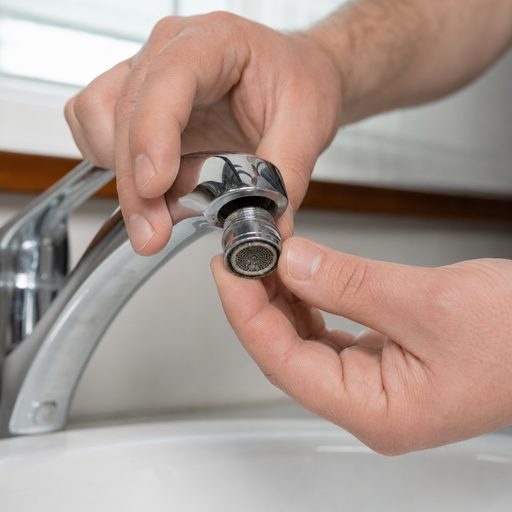
The aerator is the small screen-and-cap fitting on the very tip of the spout, and a clogged one is by far the most common reason a single faucet loses pressure. Over time, mineral deposits and tiny bits of debris collect in that screen and choke the flow. You can usually unscrew the aerator by hand or with a cloth for grip, rinse it out, and gently clear the screen of grit and scale before screwing it back on. If the flow jumps back to normal with the aerator removed, you have found your culprit. This is a safe homeowner task, though it is wise to close the faucet first so nothing splashes.
- Unscrew the aerator from the spout tip and check whether flow improves with it removed.
- Rinse the screen, clear away mineral buildup and debris, and reseat it snugly without forcing it.
- Check whether the problem affects only hot, only cold, or both, since one temperature pointing to a single supply line narrows the cause.
- On a pull-out or sprayer faucet, inspect the spray head and hose, which can clog or kink just like an aerator.
- Confirm the shutoff valves under the sink are turned fully open, since a valve left partly closed throttles the flow.
Check the Shutoff Valves and Supply Lines
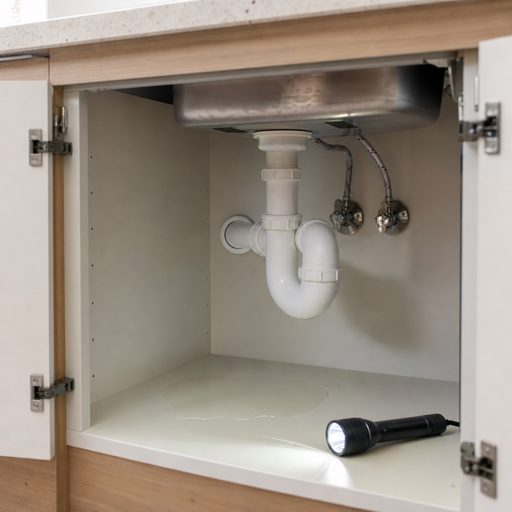
If cleaning the aerator does not help, look under the sink at the two shutoff valves where the supply lines meet the wall. A valve that was bumped or never fully reopened after past work can quietly restrict flow, so make sure each is turned all the way open. If only the hot or only the cold side is weak, the matching valve or supply line is a likely suspect. The flexible supply hoses themselves can also kink behind the cabinet or, on older homes, narrow internally with corrosion or sediment. These are safe to look at and gently straighten, but stop short of dismantling a valve or line, which can introduce a leak under pressure.
Weak flow at one fixture is usually local
If the low pressure affects only one faucet, the cause is almost certainly at that fixture, the aerator, the valves, or the faucet cartridge, not your whole system. But if pressure has dropped at several fixtures at once, the issue is more likely systemwide and points to something beyond a single faucet. Always close the shutoff valves under the sink before taking any part of the faucet apart.
When the Faucet Itself Is the Problem
If the aerator is clean and the valves are fully open but the flow is still weak, the restriction may be inside the faucet, most often a cartridge clogged with scale or worn enough to throttle the water. Replacing a cartridge means matching the exact part to your faucet model and reassembling the fixture without creating a leak, which is more involved than cleaning an aerator. If you are comfortable with that, fine, but it is a reasonable point to bring in a pro, especially on an older or unfamiliar faucet.
When to Call a Professional
If a clean aerator and fully open valves do not restore the flow, or if the weak pressure shows up at several fixtures rather than one, it is time for a professional. Faucet and sink repair can clear a clogged cartridge or replace a failing valve and confirm the fixture is sound, while a broader plumbing repair service can investigate when low pressure points to corroded supply lines or a systemwide issue. If you also notice moisture in the cabinet below, our guide on why a sink leaks under the cabinet can help you spot a related problem, and if the faucet is old and troublesome, our guide on whether to repair or replace a faucet can help you decide the next step.
Sources and further reading
These references support material safety, technical, consumer, or planning guidance in this article. Confirm property-specific requirements with the applicable authority and professional.