 Plumbing Advisors Editorial TeamEditorial StandardsUpdated June 13, 2026Source-Checked
Choosing a new faucet sounds simple until you stand in front of dozens of options and realize they are not all interchangeable. The right choice comes down to three things: making sure the faucet fits your sink, picking the features and style you actually want, and choosing a fixture built to last. Get the fit right and the rest is mostly preference, but a mismatch on mounting holes or sink type can turn a quick swap into a headache. Working through the points below before you buy helps you pick a faucet that drops in cleanly and serves you for years.
Start With Fit and Mounting
Before anything else, figure out how your current faucet mounts, because that determines what will fit. Sinks and countertops are drilled for a specific number of holes, and a new faucet has to match or cover them. Look under the sink and on the deck to count the holes and note the spacing, and check whether the faucet mounts to the sink itself or to the countertop. A faucet designed for a single hole will not cover a three-hole sink without a base plate, and a widespread set will not fit a single drilled hole. Measuring first saves you a return trip.
- Count the mounting holes in your sink or countertop, since faucets are made for one, three, or four holes.
- Note the spacing between holes, as widespread, centerset, and single-hole faucets are sized differently.
- Check the clearance around and behind the sink so the spout height and handle swing actually fit your space.
- For kitchens, measure spout reach and height to clear large pots and your basin, and decide if you want a pull-down or pull-out sprayer.
- Confirm whether a base plate, also called a deck plate, is included or needed to cover extra holes.
- Make sure the supply connections match your existing shutoff valves, or plan for adapters.
Style, Finish, and Features
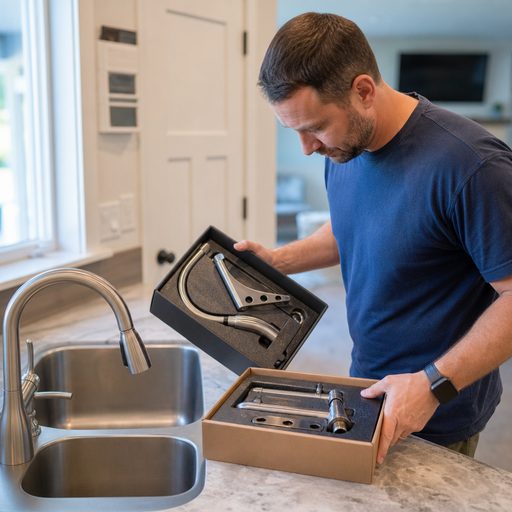
Once you know what fits, the fun part is choosing how it looks and works. Finish is the most visible decision, and it helps to match or complement other fixtures in the room, from cabinet hardware to the drain. Beyond looks, think about how you use the sink: a tall, high-arc spout makes filling pots easier in a kitchen, while a pull-down sprayer adds reach for rinsing. Single-handle faucets are simple to operate one-handed, while two-handle styles offer a classic look and separate temperature control. Touchless and other convenience features exist too, though they add cost and complexity. Choose the features you will genuinely use rather than paying for ones you will not.
Take a photo of your sink setup before you shop
Before heading to the store or ordering online, take clear photos of the sink from above and of the connections underneath, and jot down the hole count and spacing. Having that information on hand makes it far easier to confirm a faucet will fit. While you are under there, you can safely note the condition of the shutoff valves and supply lines, since worn ones are worth replacing during the install.
Don't Overlook Quality
A faucet gets used every day, so build quality matters more than the lowest price tag. Solid metal bodies generally hold up better than lightweight plastic ones, and ceramic-disc valves tend to be durable and drip-resistant. A reputable brand with readily available replacement parts is worth favoring, because it means a future drip can be fixed with a simple cartridge rather than a whole new faucet. A clear warranty is another good sign of a fixture meant to last. Spending a little more on a well-made faucet often costs less over time than replacing a cheap one that fails early.
When to Call a Professional
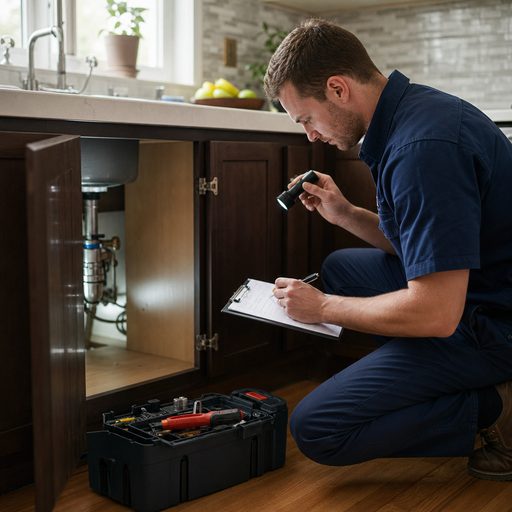
Once you have chosen a faucet, professional faucet installation makes the swap clean and leak-free, and a plumber can replace aged shutoff valves or brittle supply lines while the area is open so your new fixture starts on sound connections. If the old faucet is being removed because it failed, faucet and sink repair can also advise whether the surrounding parts need attention. Still deciding whether to replace at all? Our guide on whether you should repair or replace a faucet helps you weigh it, and our guide on what faucet and sink repair costs explains how the related work is priced.
Sources and further reading
These references support material safety, technical, consumer, or planning guidance in this article. Confirm property-specific requirements with the applicable authority and professional.