
Faucet Installation
Faucet Installation in New York
A clear faucet installation request in New York identifies whether the faucet is a direct replacement or changes holes, controls, sprayer, filtration, or sink use. The professional can then inspect the system, explain the options, and confirm which state or local requirements apply to the address and scope.
Plumbing Advisors provides guidance and connection assistance. Independent providers perform the plumbing work and confirm availability, pricing, timing, and credentials.
On this pageOverview
 Plumbing Advisors Editorial TeamEditorial StandardsSource-Checked
Faucet Installation across New York
A clear faucet installation request in New York identifies whether the faucet is a direct replacement or changes holes, controls, sprayer, filtration, or sink use. The professional can then inspect the system, explain the options, and confirm which state or local requirements apply to the address and scope.
Installation should correct unsafe shutoffs, damaged supplies, poor drainage, or incompatible mounting rather than hiding them.
When faucet installation may fit
- You are upgrading an old or worn-out faucet
- A new sink or countertop needs a faucet fitted
- You want a pull-down sprayer, touchless, or filtered model
- The current faucet leaks at the base and is not worth repairing
Causes or scope drivers to inspect
- An aging faucet at the end of its lifespan
- A kitchen or bath remodel changing the fixtures
- A new sink with a different hole layout
- Wanting added features like a sprayer or filtered water
- A leak where the faucet meets the sink that repair will not fix
Comparing a faucet installation quote
For faucet installation in New York, compare itemized quotes for the same inspected scope. Access, testing, equipment or parts, permits, restoration, and urgency can affect the final price.
Typical faucet installation costs
| Project | Typical cost range |
|---|---|
| Shutoff / supply valve replacement | $80–$280 |
Labor-only project costs
| Labor | Typical cost range |
|---|---|
| Faucet installation labor | $135–$360 |
Labor costs
| Labor | Typical cost range |
|---|---|
| Faucet installed, fixture plus labor | $240–$730 per unit |
Per-item costs
| Item or service | Typical cost range |
|---|---|
| Kitchen faucet (fixture) | $85–$430 per unit |
| Bathroom faucet (fixture) | $55–$330 per unit |
Additional project costs
| Additional work | Typical cost range |
|---|---|
| Add a pull-down or side sprayer | $65–$250 |
| Under-sink water filter add-on | $165–$600 |
Cost ranges are estimates developed from standardized project scopes and reviewed pricing inputs. Government labor and regional cost data are used where applicable. See our Pricing Methodology for the exact sources, calculations, and review date. Actual prices vary by property, scope, materials or equipment, location, and provider.
What affects the cost
- Whether it is a simple swap or also involves new shutoffs and supply lines
- Fixture type and quality, from basic single-handle to pull-down or touchless
- Kitchen versus bathroom, since kitchen faucets and sprayers add steps
- Accessibility under the sink and the condition of existing valves and lines
- Whether a filtration system or extra features are added at the same time
- Regional labor rates, which vary by area
State guidance for New York
For faucet installation in New York, prepare cabinet access, shutoffs, hole spacing, countertop thickness, supply size, and drain clearance. Confirm the inspected scope, credentials, permits, inspections, exclusions, and restoration responsibility before authorizing work.
Credential verification
Unlike many states, New York does not issue one statewide plumbing license. Plumbers are licensed locally by individual cities and counties, so requirements vary by municipality and you should confirm what your specific city or county requires before hiring.
Within New York City, a Licensed Master Plumber (LMP) is licensed by the NYC Department of Buildings (DOB), which sets the experience, examination, and insurance requirements. Other localities — such as Nassau County, Suffolk County, and Buffalo — license separately, and a license from one New York jurisdiction is not automatically valid in another.
Permits and inspections
Permit and inspection requirements are set locally and vary by city and county, and New York City is among the strictest. In NYC, plumbing permits are issued only to a Licensed Master Plumber, who must pull the permit and arrange the inspections the Department of Buildings requires before final sign-off. Always check your local building department first.
Relevant water context
Water quality varies widely across New York. New York City's supply, drawn largely from the Catskill/Delaware reservoir system, is soft to only slightly hard — the city reports a citywide average around 1.8 grains per gallon, with Croton-watershed water moderately hard. By contrast, Long Island relies on groundwater that is typically moderately hard to hard, so scale buildup is more of a concern there.
What to expect
- 1Confirm the sink's hole configuration and pick a compatible faucet
- 2Shut off the supply valves and disconnect the old faucet
- 3Connect with a plumbing professional that services your area
- 4Remove the old faucet and clean the mounting surface
- 5Mount the new faucet and connect the supply lines and any sprayer or filter
- 6Turn the water back on and check every connection for leaks
Safe checks before the visit
- Count the mounting holes in the sink or counter (one, three, or four)
- Measure the spacing between the outer holes for bath faucets
- Check that the under-sink shutoff valves turn and hold
- Note whether the supply lines reach and are in good shape
Faucet Installation by city in New York
Faucet Installation in New York: FAQs
How do I prepare for faucet installation in New York?
Document whether the faucet is a direct replacement or changes holes, controls, sprayer, filtration, or sink use and prepare cabinet access, shutoffs, hole spacing, countertop thickness, supply size, and drain clearance. Ask the professional to confirm the inspected scope, credential, permit responsibility, and exclusions in writing.
Does New York guidance diagnose my faucet installation problem?
No. State information helps with credential, permit, and planning questions. The cause, responsibility, and repair or project scope still need to be confirmed for the specific property.
How do I know if a new faucet will fit my sink?
It comes down to the mounting holes. Count how many holes your sink or countertop has, usually one, three, or four, and for bathroom faucets measure the spacing between the outer holes. A single-hole faucet often includes a deck plate so it can cover three holes, but a widespread faucet needs the holes spaced to match.
Should the shutoff valves be replaced when installing a faucet?
Not always, but it is often a good idea. The under-sink shutoffs are right there during the job, and old valves that are stiff, corroded, or will not seal are far easier to replace then than after a leak starts. New supply lines are inexpensive and worth installing at the same time.
Can I add a sprayer or water filter during installation?
Often, yes. Many kitchen faucets come with a pull-down or side sprayer built in, and an under-sink filter or a separate filtered-water tap can be added if there is an open hole or room to drill one. It is worth deciding on these features before the install so the right fittings are on hand.
What is the difference between a centerset and a widespread bathroom faucet?
A centerset faucet combines the spout and handles on one base, typically for holes four inches apart, while a widespread faucet has separate pieces for holes spaced eight inches or more. The sink's hole spacing determines which style fits, so it is the first thing to check before buying.
Sources
These public and primary references support the state, safety, credential, permit, equipment, or efficiency guidance used here. They do not diagnose a specific property.
Faucet Installation guides
Learn before planning faucet installation in New York.
Read related problem, scope, cost, and planning guidance before comparing options.
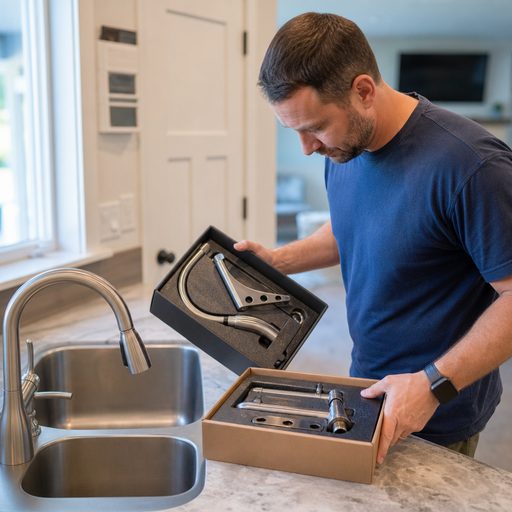
How to Choose a New Kitchen or Bathroom Faucet
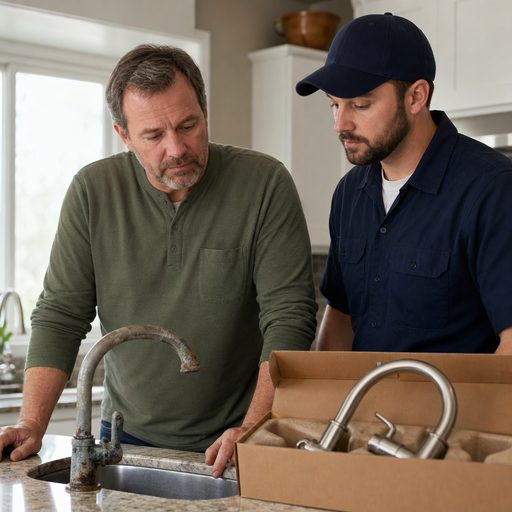
Should You Repair or Replace a Faucet?
How Often Should Your Home's Plumbing Be Inspected?
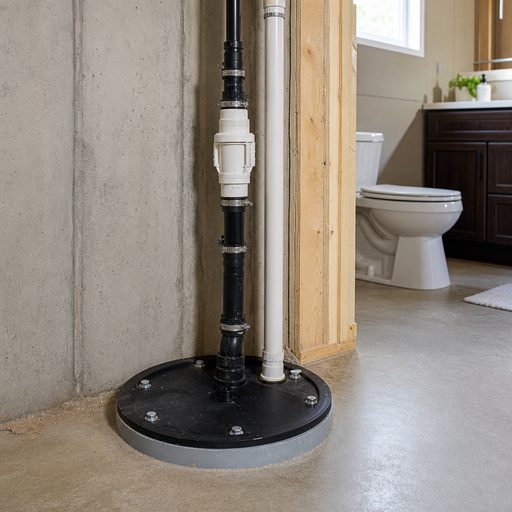
What Does a Sewer Ejector Pump Do (and When Do You Need One)?
What Is Polybutylene Pipe and Should You Replace It?
Is PEX Safe for Drinking Water?
How Long Does PEX Plumbing Last?
Why Is My Sump Pump Running When It's Not Raining?
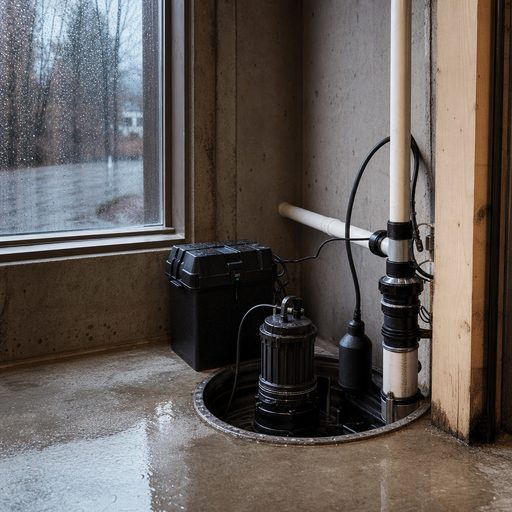
Do I Need a Battery Backup Sump Pump?
Need Plumbing Help Now?
Call Plumbing Advisors to connect with help for leaks, drains, water heaters, sewer lines, burst pipes, toilets, faucets, and more.
No-obligation request · Availability varies by location and provider