 Plumbing Advisors Editorial TeamEditorial StandardsSource review July 31, 2026Source-Checked
Start with the evidence before choosing the scope
Cleaning, inspection, or repair?
A Houston sewer camera inspection should follow the responsibility check and answer a specific private-line question. Use the safely visible street-cleanout condition to route the first call, then require a full recording, measured location, and written finding before discussing repair.
This framework helps organize the request; it does not diagnose a buried line. Stop household water use and avoid contact when wastewater is entering the home.
What the sewer pattern or finding may mean
Recurring symptoms can justify wider assessment, but a repair or replacement decision should be tied to a located condition and documented findings.
| What you notice | What it may indicate | What to do next |
|---|---|---|
| Several fixtures back up and the street cleanout holds sewer water | Houston guidance points toward a possible public-side condition | Contact Houston 311 before assuming a private camera inspection or repair is the answer. |
| The street cleanout is clear while indoor fixtures back up | The restriction may be on the private side | Request assessment and ask whether clearing is needed before the camera can view the line. |
| The same shared line clogs again after clearing | A remaining obstruction or visible line condition may be contributing | Define the recurrence question and request a complete recorded inspection. |
| The camera shows one possible defect | A visible condition may need location and interpretation | Ask for distance, orientation, narration, and a written condition summary. |
| A repair quote follows a still image | The evidence may not show the full condition or affected extent | Review the complete video and measured finding before comparing repair scopes. |
Route the Houston backup before defining the camera request
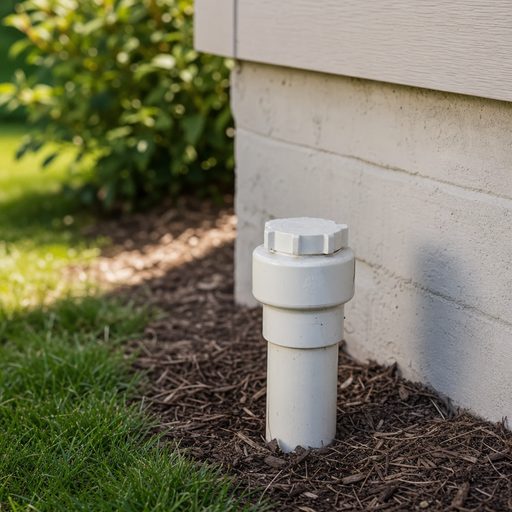
Houston Public Works uses the safely visible street-cleanout condition, when one is present, to help distinguish a possible public-side issue from private-line assessment.
Sewer water stands at the street cleanout
Contact Houston 311 and document the observation before ordering private repair work.
The street cleanout is clear during an indoor backup
Request private assessment and identify the line and access point a camera would use.
Flow must be restored before viewing
Keep clearing and inspection as separate line items and ask what happens if the camera cannot pass.
The camera reaches the suspected area
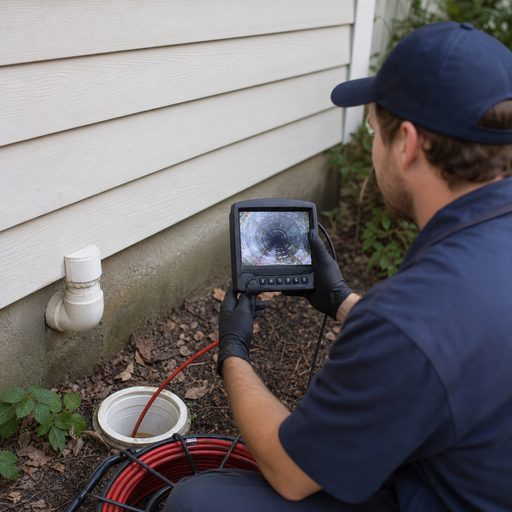
Request the full video, measured location, orientation, and written observed-condition summary.
The cleanout helps route responsibility, and the camera documents accessible pipe interior. Neither alone proves the cause of every backup or the need for repair.
Sources: Protect Our Pipes, Wastewater Operations, Sewer Pipe Assessment
Get help with a sewer camera inspection problem in Houston
Describe the affected fixtures, recurrence history, and any camera video or written findings already available.
No-obligation request · Availability varies by location and provider
What professional sewer camera inspection service does
A sewer camera inspection lets a plumbing professional see inside your line and find the real cause of a problem before any work begins. Plumbing Advisors helps you understand when an inspection makes sense and connect with help near you.
Sewer service begins by defining the affected line and the question the visit needs to answer. Restoring flow, documenting pipe condition, repairing one defect, and replacing a run are different scopes.
A camera can show visible conditions inside an accessible line, but the recording still needs interpretation and a known location. It does not by itself prove the cause of every symptom or authorize a particular repair.
Why sewer symptoms can return after clearing
A remaining or recurring obstruction
Grease, wipes, debris, and other material can restrict a line again when the original obstruction was only partly opened or the contributing use continues.
Roots entering an opening or defect
Roots can enter a sewer line through an opening and catch debris. Nearby trees alone do not prove root intrusion; the line needs supporting findings.
A structural or alignment condition
Cracks, displaced joints, deformation, or another visible condition may affect flow. The finding, location, and extent matter when comparing a spot repair with replacement.
Sources: Sewer Pipe Assessment
A capacity or public-system condition
Wet weather, infiltration, power loss, or a public-system problem can contribute to a backup. Private repair should not be presented as the answer until the responsibility and line condition are understood.
Sources: Sanitary Sewer Overflows, Sanitary Sewer Overflow Frequent Questions
What you can safely document first
- List every affected fixture and identify the lowest drain involved.
- Note whether the problem occurs in dry weather, during rain, or under normal household use.
- Save prior camera video, service notes, invoices, and written condition findings.
- Stop using fixtures when another drain rises or wastewater enters the home.
- Do not enter wastewater, open an unsafe cleanout, excavate a line, or reach into a sewer opening.
Keep sewer wastewater and openings off limits
Untreated sewage can threaten health and damage property. Keep people and pets away, avoid direct contact, and leave cleanout opening, excavation, and pressurized work to qualified professionals with safe access.
Sources: Sanitary Sewer Overflows, Sanitary Sewer Overflow Frequent Questions
When a sewer problem is urgent
Do not wait for camera scheduling when wastewater is entering the home or normal water use raises another drain. Stop adding water, keep away from contamination, and address the active backup first.
- Raw wastewater is visible at a low drain or fixture.
- Several fixtures cannot be used without another overflow.
- The backup is spreading toward occupied space or electrical equipment.
- A cleanout is overflowing or cannot be approached safely.
How inspection, cleaning, repair, and replacement differ
The next method should answer the unresolved question. A recurring blockage can justify inspection, but repair extent should follow a located condition rather than the service name alone.
| Method | Where it may fit | Important limitation |
|---|---|---|
| Camera inspection | Locating visible conditions after recurrence or shared-line symptoms | The recording needs orientation and interpretation and may not show every external condition. |
| Mechanical or water-based cleaning | Removing an accessible obstruction or buildup when pipe condition supports the method | Restored flow does not prove the line is structurally sound. |
| Targeted repair | A defined defect with a repairable location and limited extent | The estimate should identify the defect, access route, repair limits, and testing. |
| Line replacement | Widespread failure or conditions that cannot be reasonably addressed with a limited repair | Replacement should not be inferred from age, city, roots, or one camera still image alone. |
Sources: Sewer Pipe Assessment
What genuinely changes the sewer decision in Houston
Houston's cleanout guidance determines the first contact
Public Works directs residents to use the safely visible cleanout condition when routing a backup. That check can avoid treating a possible public-side event as an automatic private inspection or repair.
Sources: Protect Our Pipes, Wastewater Operations
Inspection findings need a location and full record
EPA condition-assessment material describes roots, offsets, cracks, debris, and other visible conditions. Ask for the complete recording and measurement so a finding can be distinguished from a general symptom.
Sources: Report on Condition Assessment Technology of Wastewater Collection Systems, Sewer Pipe Assessment
Texas hiring checks still apply to diagnostic work
The Texas plumbing regulator tells consumers to verify the Responsible Master Plumber and insurance information and to obtain written terms. Those checks support hiring but do not change what the camera can prove.
Comparing a sewer camera inspection estimate
A Houston inspection estimate should identify the line, access point, clearing prerequisite, locating work, and delivered records. A repair quote should remain separate until the findings support it.
Scope factors
- The selected access point and length of line
- Whether clearing is required before inspection
- Video, narration, measurement, and written-report deliverables
- Whether electronic locating is included
- Whether the visit includes only inspection or a separate repair estimate
Questions for the estimate
- Which line and access point are included?
- What happens if the camera cannot pass the obstruction?
- Will I receive the complete recording and written findings?
- How will any visible condition be measured and located?
What to tell Plumbing Advisors
A useful sewer request includes the symptom pattern and any existing evidence without turning either into a remote diagnosis.
- List every affected fixture and the timing of the backup.
- Share the safely visible street-cleanout condition when applicable.
- Identify prior clearing, inspection, or repair work on the line.
- Ask which line and access point the camera will use.
- Request the full video, measured locations, narration, and written findings.
Plumbing Advisors does not dispatch its own local technicians. The independent professional is responsible for confirming availability, credentials, diagnosis, price, warranty terms, and work performance.
Sewer Camera Inspection in Houston: frequently asked questions
Should I call Houston 311 before a sewer camera inspection?
When sewer water is standing at a safely visible street cleanout, Houston guidance points residents toward 311. A clear cleanout with indoor backup can support private assessment.
What should a Houston sewer camera report include?
Ask for the inspected line and access point, complete video, orientation, measured locations, narration, and a written distinction between observed conditions and recommendations.
Can the camera prove that my Houston sewer needs replacement?
A recording can support a condition assessment, but replacement also depends on the location, extent, access, and whether cleaning or a targeted repair is reasonable.
What Texas provider information should I verify?
The state regulator advises consumers to verify the Responsible Master Plumber and insurance information and to review written estimates and warranty terms.
Sources and editorial methodology
Sources are included when they substantively support a local, safety, technical, or consumer decision on this page.
- Houston cleanout facts are used only to route the first call, not to diagnose the private line.
- Camera claims are limited to accessible visual findings with location and interpretation.
- Provider-verification guidance comes from the Texas plumbing regulator.
City of Houston - Houston Public Works
Protect Our PipesCity of Houston - Houston Public Works
Wastewater OperationsU.S. Environmental Protection Agency
Sanitary Sewer Overflow Frequent QuestionsU.S. Environmental Protection Agency
Smart Sewer TechnologiesU.S. Environmental Protection Agency
Report on Condition Assessment Technology of Wastewater Collection SystemsTexas State Board of Plumbing Examiners
Consumer InformationTexas State Board of Plumbing Examiners
Responsible Master PlumberNational Association of Sewer Service Companies
Sewer Pipe AssessmentU.S. Environmental Protection Agency
Sanitary Sewer Overflows