 Plumbing Advisors Editorial TeamEditorial StandardsUpdated July 5, 2026Source-Checked
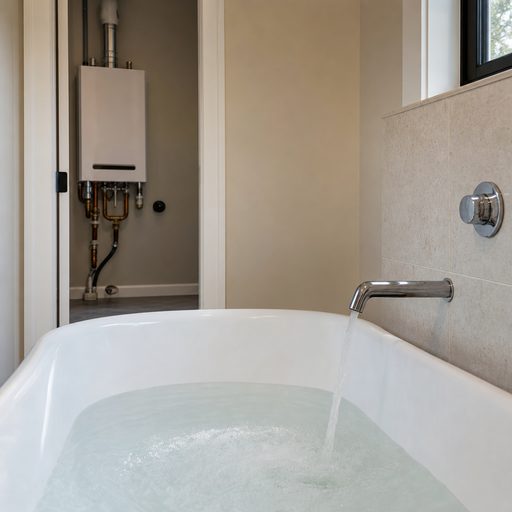
Yes, a tankless water heater can fill a bathtub if the unit is sized to deliver enough hot water flow for the tub and your local temperature rise. Unlike a tank, it does not “run out” of stored hot water, but it can only heat a fixed number of gallons per minute, so large soaking tubs and simultaneous use elsewhere in the house can still lead to a slow fill or lukewarm water.
What determines whether a tankless water heater can fill a tub?
The key issue is flow rate, not storage. A tankless water heater heats water as it passes through the unit, so it can keep producing hot water as long as the burner or heating elements can keep up. If your bathtub faucet flows faster than the heater can deliver hot water at the needed temperature, the tub may fill slowly or the water may need to be mixed cooler than you want.
Temperature rise matters just as much. The colder the incoming groundwater, the harder the heater has to work to raise it to bathing temperature. That is why the same model may perform very differently in different regions. In warmer climates, a unit may supply a tub comfortably. In colder climates, that same unit may struggle with a big tub unless it was selected with enough capacity.
Why do some tubs work fine while others take too long?
Not all bathtubs are alike. A standard alcove tub usually needs less water than a deep soaking tub, oversized drop-in tub, or jetted bathtub. The larger the tub, the longer it takes to fill, and the more noticeable any flow limitation becomes. If you like a very full, very hot bath, the demand on the water heater is even higher.
The plumbing fixtures also matter. Some tub fillers are designed for higher flow than ordinary bathroom faucets. A tub with a wide-spout filler may empty a lot of water into the basin quickly, but that does not mean the tankless heater can heat that full flow at your desired temperature. In homes where a bathtub fill seems weak or cool, the issue is often a mismatch between the fixture demand and the heater’s output, not necessarily a defect.
- A standard tub is usually easier for tankless units to handle than a deep soaking tub.
- Colder incoming water reduces the heater’s effective hot water output.
- A high-flow tub filler can outpace an undersized tankless unit.
- Running a shower, dishwasher, or washing machine at the same time cuts into available hot water for the tub.
- Long pipe runs to a distant bathroom can make the fill feel slower because hot water takes longer to arrive.
Can you run out of hot water with a tankless unit?
In the usual sense, no. A properly working tankless water heater does not deplete a stored tank of hot water, so it can keep heating water continuously. That is the main advantage for homes where baths, showers, and daily hot water use happen back to back. But “endless hot water” is not the same as unlimited hot water volume all at once.
If several fixtures call for hot water at the same time, the heater must divide its capacity. That can show up as a slower tub fill, a lower outlet temperature, or temperature fluctuation if demand changes while the tub is running. This is one reason homeowners comparing systems often read Tankless vs. Tank Water Heater: Which Is Right for You? before deciding whether tankless performance matches the way their household actually uses hot water.
Endless does not mean unlimited
A tankless water heater keeps making hot water without a storage tank, but only up to its rated capacity under current conditions. If you have a large tub and frequent simultaneous hot water use, sizing is critical.
How do you know if a tankless heater is big enough for your bathtub?
Start with the size of the tub, the likely tub filler flow, and whether you expect to use other hot water fixtures at the same time. Then factor in local groundwater temperature. A home in a colder region may need a larger unit or a different setup than a similar home in a warmer region. This is where professional sizing matters most, especially for primary bathrooms with large tubs.
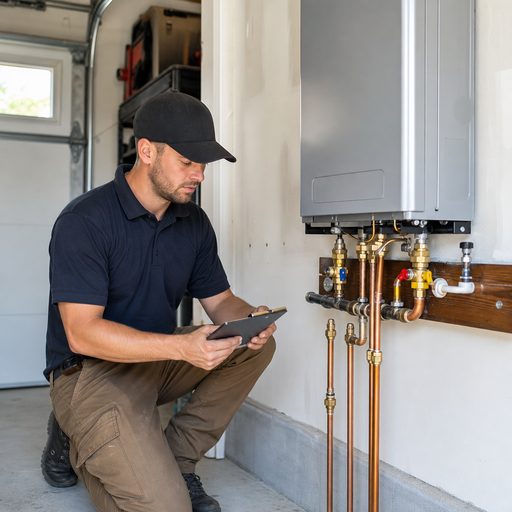
A plumber can compare the tub’s expected demand with the heater’s real-world output and evaluate the gas line, venting, electrical requirements, and pipe layout. If you are planning a new unit, Tankless Water Heater Installation is the service to ask about. If you are still deciding between options, Water Heater Installation may be the broader place to start, especially when replacing an older tank system or upgrading a bathroom.
When cost becomes part of the decision, the right next step is How Much Does Tankless Water Heater Installation Cost? That guide helps explain why sizing, venting, fuel type, and installation complexity can change the overall project scope even when two homes seem similar on the surface.
What are the signs your current tankless setup is undersized for the tub?
Common signs include a bathtub that fills with warm rather than hot water, a very slow fill when you try to keep the water hot, or noticeable temperature swings when someone uses another fixture. You may also find that the tub is acceptable in summer but disappointing in winter, when incoming water is colder and the unit has less effective capacity at the same target temperature.
Sometimes the heater itself is not the only issue. Mineral scale inside the heat exchanger can reduce performance, and long pipe runs can delay hot water delivery to the tub. In some homes, the better solution is not a larger heater but a more accurate load calculation, maintenance, or a layout change. A local plumber can test the system and tell you whether the problem is sizing, condition, or fixture demand.
Is a tankless water heater better than a tank for a large soaking tub?
It depends on how large the tub is and how the household uses hot water. A tankless unit offers continuous heating, which helps for repeated baths or long usage. A tank model may still work well if the stored volume and recovery rate match your needs. The better choice comes down to real demand, not just heater type.
Why does my tub water get cooler when someone starts a shower?
That usually means the water heater is sharing a limited hot water output between two demands. When a shower starts, the tankless unit has to split capacity, and the tub may see reduced temperature or flow. In some homes, the issue can also be pressure balance or fixture mixing behavior, but limited heater capacity is a common cause.
Can a recirculation system help a tankless unit fill a bathtub faster?
A recirculation setup can reduce the wait for hot water to reach a distant bathroom, so the tub gets hot water sooner at the start. It does not increase the heater’s actual heating capacity, though. If the core problem is that the tub filler demands more hot water than the unit can produce, recirculation alone will not solve it.
Does maintenance affect tankless bathtub performance?
Yes. Scale buildup inside the heat exchanger can reduce heat transfer and lower performance, especially in hard water areas. Regular maintenance helps the unit operate closer to its intended output. If a tub that once filled normally now seems slower or less hot, service may be worthwhile before assuming the heater is too small.
Sources and further reading
These references support material safety, technical, consumer, or planning guidance in this article. Confirm property-specific requirements with the applicable authority and professional.
- U.S. Department of Energy - Water heating
- U.S. Department of Energy - Water-heater selection guide
- U.S. Geological Survey - Hardness of water
- U.S. Geological Survey - Water corrosivity
- FEMA - Urban flooding guidance for homeowners and renters
- Ready.gov - Flood safety
- Federal Trade Commission - Avoiding home-improvement scams