 Plumbing Advisors Editorial TeamEditorial StandardsUpdated July 5, 2026Source-Checked
If your water heater keeps tripping the breaker, the most common causes are a shorted heating element, a failed thermostat, moisture around electrical parts, or a weak breaker. Stop resetting it repeatedly. A breaker that trips more than once is warning that something in the circuit or the heater needs professional diagnosis and repair.
What usually makes a water heater trip the breaker?
On a standard electric tank water heater, the classic cause is a bad heating element. Elements sit directly in the tank and heat the water. As they age, the sheath can crack or mineral buildup can damage the element until electricity leaks to ground. When that happens, the breaker trips to prevent overheating and electrical hazards. This is a common repair during Water Heater Repair visits, and it is often more straightforward than replacing the full unit.
A failed thermostat is another frequent culprit. Electric tank heaters typically have upper and lower thermostats that control the elements. If a thermostat sticks on, shorts internally, or overheats, it can create an unsafe draw and trip the breaker. In other cases, the breaker itself is the problem. Breakers weaken with age and repeated heat cycles, so an older breaker may trip even when the heater is not fully at fault.
Could water or tank problems be causing it?
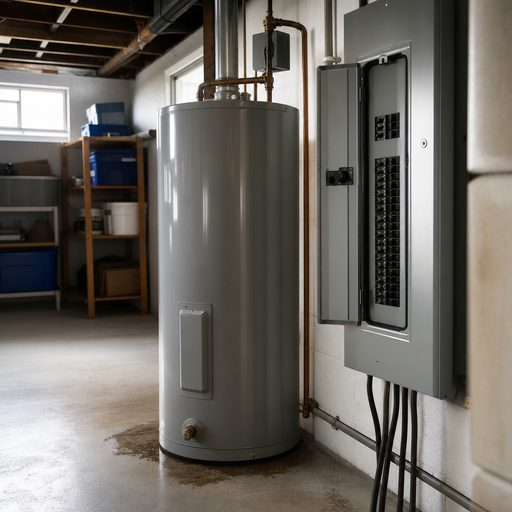
Yes. Moisture around wiring compartments, insulation, or electrical connections can cause a ground fault and trip the breaker. Water may come from a leaking tank, a loose connection at the hot or cold water lines, condensation, or a seep around a heating element gasket. Even a small leak matters when electricity is involved. A tripping breaker combined with dampness around the heater should be treated as a serious warning sign.
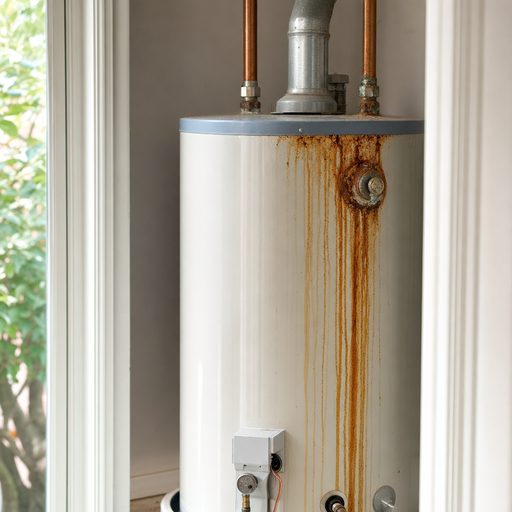
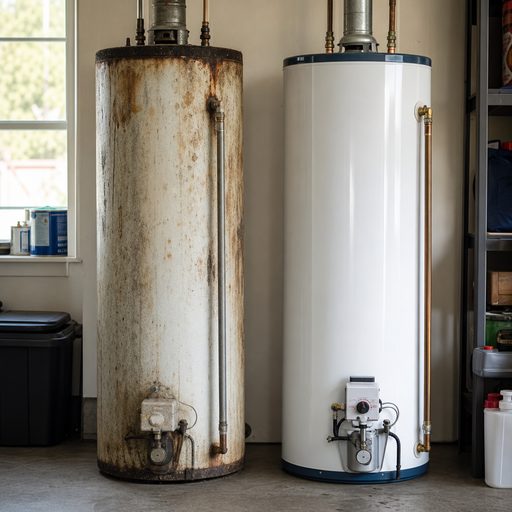
Tank condition matters too. An older tank can develop internal rust or sediment problems that overwork the heating system. Heavy sediment can cause elements to run hotter and fail sooner. If your unit is older, leaking, or showing other symptoms, compare what you are seeing with Signs Your Water Heater Needs Repair. In some cases, repeated electrical problems are part of a bigger end-of-life pattern rather than a one-time part failure.
What should you do right away?
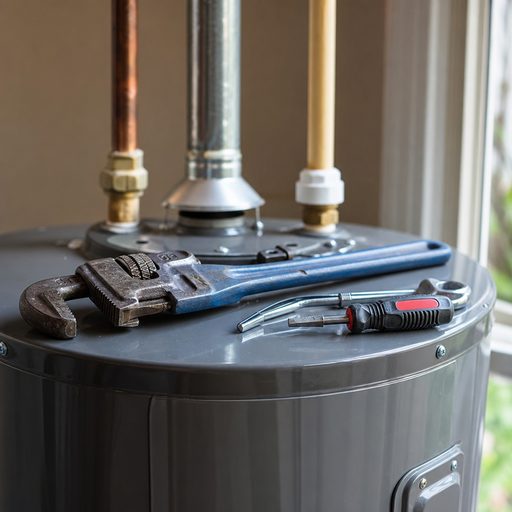
The safest first step is to leave the breaker off and avoid using the heater until it is checked. Repeatedly resetting a breaker can worsen damage and increases fire and shock risk. Diagnosing the likely causes is helpful for understanding the issue, but electrical testing and repair on a water heater should be left to a licensed pro. This is not a safe DIY project for opening panels or handling wiring.
- Turn the breaker off and do not keep resetting it.
- Look for obvious signs around the heater, such as water on the floor, rust streaks, or a burnt smell nearby.
- Note whether the breaker trips immediately or only after the heater has been running for a while.
- If the tank is leaking, treat that as urgent because electrical and water problems together can become hazardous.
- Schedule professional Water Heater Repair to check the elements, thermostats, wiring, and breaker condition.
Do not keep flipping the breaker back on
A breaker that trips repeatedly is a safety device doing its job. Leaving it on long enough to “see if it works” can damage the water heater further and may create shock or fire risk, especially if moisture is present.
How does a plumber or electrician pinpoint the cause?
A licensed pro will usually start by separating heater problems from circuit problems. That means checking whether the breaker is properly sized, whether connections show heat damage, and whether the circuit has signs of wear. On the heater itself, the most likely suspects are the upper or lower heating element and the thermostats. Professionals can test for a short to ground, element failure, and thermostat malfunction without guesswork.
They will also look for leaks or condensation around access panels and wiring areas. If moisture is involved, the repair may include fixing the water source as well as replacing damaged electrical parts. If the tank itself is deteriorating, repair may not make sense. That is when it helps to review When to Repair vs. Replace a Water Heater so you can weigh age, condition, and reliability instead of focusing on the breaker alone.
Is repair usually worth it, or is replacement smarter?
If the issue is a single failed heating element, thermostat, or breaker, repair is often the sensible path. Those parts are common failure points, and the rest of the heater may still have useful life left. But if the tank is older, leaking, rusting, or failing in multiple ways, replacement may be the better long-term move. Electric problems do not always happen in isolation.
When cost becomes part of the decision, use How Much Does Water Heater Repair Cost? for a repair overview, then compare that with the age and overall condition of your unit. A professional can tell you whether the breaker problem is a contained electrical fault or a sign that the water heater is nearing the end of its service life. That context matters more than the tripping breaker by itself.
Why does the breaker sometimes trip only after hot water has been running for a while?
That timing often points to a component that fails under load rather than instantly. A heating element may begin leaking current to ground as it heats up, or a thermostat may stick after warming. It can also happen when a weak breaker trips once the circuit has been hot long enough. The pattern is useful information to give a licensed pro.
Can a bad breaker be the only problem?
Yes, it can be, especially in older panels where breakers have been through years of normal heat cycles. A weak breaker may nuisance-trip even if the water heater is mostly fine. Still, that should never be assumed without proper testing, because a failing element or thermostat can look similar from the homeowner side. Both the heater and the circuit need to be checked.
Is this more common with electric or gas water heaters?
Breaker-tripping is mainly an electric water heater issue because electric tank heaters use dedicated high-amperage circuits, heating elements, and thermostats. Gas water heaters can have their own problems, but they do not usually trip a breaker in the same way. If your unit is electric, the focus is typically on the elements, thermostats, wiring condition, moisture, and the breaker itself.
Should I replace both heating elements if one has failed?
Not always, but it is a common discussion on older electric tank heaters. If one element has failed from age and sediment stress, the other may not be far behind. A licensed pro can advise based on the heater’s age, condition, and test results. If the tank is otherwise sound, replacing worn components can restore reliability without replacing the whole water heater.
Sources and further reading
These references support material safety, technical, consumer, or planning guidance in this article. Confirm property-specific requirements with the applicable authority and professional.
- U.S. EPA WaterSense - Home maintenance
- U.S. EPA WaterSense - Fix a Leak Week
- U.S. Department of Energy - Water heating
- U.S. Department of Energy - Water-heater selection guide
- U.S. Geological Survey - Hardness of water
- U.S. Geological Survey - Water corrosivity
- Federal Trade Commission - Avoiding home-improvement scams