 Plumbing Advisors Editorial TeamEditorial StandardsUpdated March 22, 2026Source-Checked
A slab leak can feel like bad luck, but these leaks almost always have a root cause that has been at work quietly for a long time. The water lines under your foundation live in a demanding environment, surrounded by concrete and soil that move, settle, and react with the metal over the years. Understanding what causes a slab leak helps you make sense of why it happened, why it may not be the last one, and what a professional will consider when deciding how best to repair it.
Abrasion Against Concrete and Gravel
One of the most common causes is simple friction. The pipes beneath your slab are not perfectly still; they expand and contract slightly as hot and cold water flows through them, and they can vibrate under pressure. Where a pipe rubs against the rough concrete around it, against a piece of gravel, or against a metal hanger, that constant motion slowly wears a thin spot into the pipe wall until it finally springs a leak. This kind of wear is gradual and invisible, which is why an abrasion leak often shows up years after the home was built, long after anyone would think to blame the original plumbing.
Corrosion From the Inside and Out
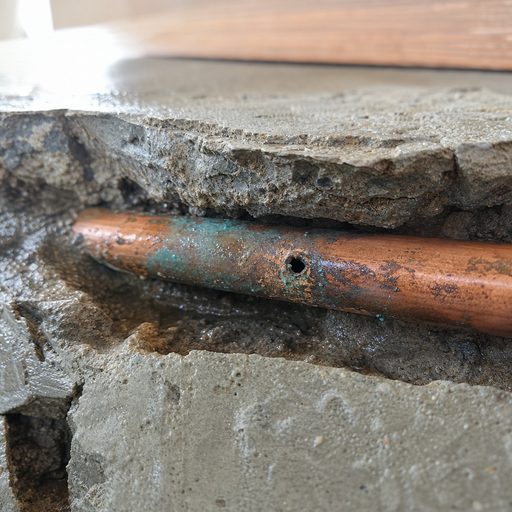
Corrosion is the other major culprit, and it can attack a pipe from either direction. On the outside, the chemistry of the surrounding soil can react with metal piping over time, eating away at it until a pinhole forms. On the inside, water with certain mineral characteristics can corrode pipe walls as it flows through year after year. Hot water lines tend to suffer first, since heat speeds up these reactions, which is one reason warm-floor leaks are so common. Corrosion is rarely confined to a single spot, so a corrosion-related slab leak can be a sign that other sections of the same plumbing are aging too.
Soil Movement and Water Pressure
Finally, the ground itself plays a large role. Many homes sit on soil that swells when it is wet and shrinks when it is dry, and that seasonal movement shifts the slab and stresses the rigid pipes locked inside it. Over enough cycles, a joint can loosen or a line can crack. Water pressure adds to the strain: a system that runs at consistently high pressure puts more stress on every pipe, joint, and fitting, accelerating all of the wear described above. The factors below are the ones plumbers see most often behind a slab leak.
- Abrasion, where a pipe rubs against concrete, gravel, or a hanger until it wears through.
- External corrosion driven by the chemistry of the surrounding soil.
- Internal corrosion from water that is hard on pipe walls, especially on hot lines.
- Expansive soil that swells and shrinks with moisture, shifting the slab and the pipes within it.
- Excessive water pressure that magnifies stress on every joint and fitting.
- Original installation issues, such as kinks or poorly supported runs, that create weak points.
Ask about water pressure and pipe condition
If you have had one slab leak, it is reasonable to ask the plumber to check your home's water pressure and assess the overall condition of the plumbing. Pressure that runs too high can often be eased with a regulator, and understanding the state of your pipes helps you weigh a single repair against a longer-term plan.
When to Call a Professional
Pinpointing the cause of a slab leak, and deciding what to do about it, is firmly professional work. Slab leak repair specialists can identify why a line failed and recommend whether a targeted fix or a more comprehensive approach makes sense, while pipe repair services can address related weak spots before they become the next leak. If corrosion or soil movement has affected more than one section, a professional can help you weigh your options realistically. To recognize the problem early next time, see our guide on the early warning signs of a slab leak, and to understand the fixes available, our overview of slab leak repair options covers spot repair, rerouting, and lining.
Sources and further reading
These references support material safety, technical, consumer, or planning guidance in this article. Confirm property-specific requirements with the applicable authority and professional.