 Plumbing Advisors Editorial TeamEditorial StandardsUpdated March 30, 2026Source-Checked
Clearing a clog feels like a victory until the same drain slows down again a few weeks later. When a blockage keeps returning to the same spot, the problem is rarely just bad luck. Something about that drain, the way it is used, or the pipe itself is letting buildup gather faster than it should, and the only way to break the cycle is to understand what is feeding it. Recognizing the usual culprits helps you change the habits you can control and know when the cause is something only a professional can address.
Everyday Buildup That Comes Back
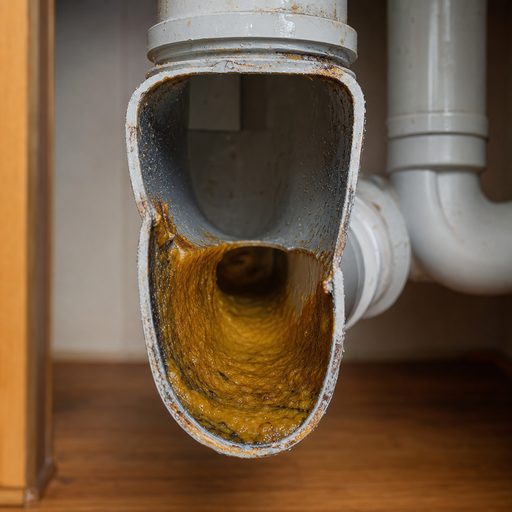
Most recurring clogs start with the same materials that caused the first one, simply accumulating again over time. Kitchen drains gather grease and food, bathroom drains collect hair and soap, and both can narrow steadily until water slows to a trickle. If a previous clearing only punched a hole through the blockage rather than cleaning the pipe wall, the leftover residue gives new debris something to cling to, and the drain clogs again faster each time.
- Grease and cooking oil that cool and harden inside kitchen drains.
- Hair and soap scum binding together in bathroom sink, tub, and shower drains.
- Food scraps, coffee grounds, and starchy waste that swell and stick.
- Mineral scale from hard water gradually narrowing the pipe.
- Residue left behind when a past clog was only partially cleared.
Deeper Causes Inside the Pipes
When clogs keep returning despite careful habits, the cause often lies in the pipe itself rather than what goes down it. Tree roots can work their way into small cracks and joints in underground lines, catching debris and reforming a blockage soon after it is cleared. Older pipes can sag, corrode, or develop rough spots that trap material, and a section of line that has bellied or shifted will collect waste no matter how careful you are. These structural issues are a common reason a drain that was just cleaned clogs again within weeks.
- Tree roots intruding through joints or cracks in buried lines.
- A sagging or bellied section of pipe where waste collects and settles.
- Corrosion or rough interior walls that snag debris and slow flow.
- Improper pipe slope that keeps water from carrying waste away.
- A partial main-line blockage that affects more than one fixture.
Repeated chemical cleaners make it worse
Reaching for chemical drain cleaners every time a drain slows down treats only the symptom and can corrode already-weakened pipes while leaving the underlying cause untouched. Avoid them. If a drain clogs again and again, the better move is a professional diagnosis that finds out why.
Breaking the Cycle
Stopping a recurring clog for good means addressing the cause, not just the latest blockage. Simple habits help on the surface, like keeping grease out of the kitchen sink, using drain screens to catch hair and food, and running hot water after use. But when a clog keeps coming back, a thorough professional cleaning that scours the pipe wall, paired with a camera inspection to look for roots or damage, is what finally reveals and resolves the real problem. A drain that is genuinely clean inside resists the next clog far longer than one that was only opened in the middle.
When to Call a Professional
If you have cleared the same drain more than once and it keeps slowing down, it is worth having a professional find out why. Drain cleaning service can scour the line properly and, when needed, use a camera to spot roots, sagging, or a deeper clogged drain that a plunger or cable will never permanently fix. To gauge whether your situation has reached that point, our guide on the signs you need professional drain cleaning lays out the warning signs, and reading how often drains should be professionally cleaned can help you set up a routine that keeps the clogs from coming back.
Sources and further reading
These references support material safety, technical, consumer, or planning guidance in this article. Confirm property-specific requirements with the applicable authority and professional.