 Plumbing Advisors Editorial TeamEditorial StandardsUpdated April 27, 2026Source-Checked
On a gas water heater, the pilot light is a small, steady flame that ignites the main burner whenever your home needs hot water. When that flame keeps going out, the burner cannot fire, and you are left with cold or lukewarm water until the pilot is lit again. A pilot that will not stay lit usually traces back to one of a handful of common causes, some of which are simple and some of which call for a professional. Understanding what is happening behind that little flame helps you know what is safe to check on your own and when it is time to hand the job over to someone qualified.
A Failing Thermocouple Is the Usual Suspect
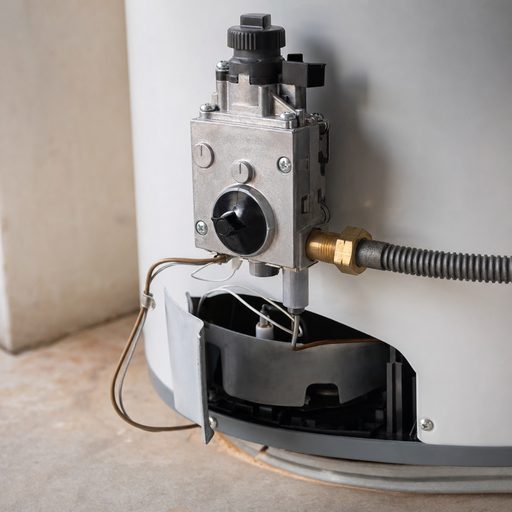
The single most common reason a pilot light keeps going out is a worn or misaligned thermocouple. The thermocouple is a small safety sensor that sits in the pilot flame. As long as it senses heat, it tells the gas valve to keep the gas flowing; if the flame goes out, it shuts the gas off so unburned gas cannot escape. Over time the thermocouple can wear out, become coated with residue, or drift slightly out of position, so that it no longer senses the flame correctly. When that happens, the valve assumes the pilot is out and cuts the gas, snuffing the pilot even though it was burning a moment ago. A thermocouple that needs cleaning, adjustment, or replacement is a job for a professional, because it sits right at the gas valve and burner assembly.
Other Common Causes
- A dirty pilot orifice, where dust or residue partly blocks the tiny opening and starves the flame, leaving it too weak to stay lit.
- A draft from a nearby door, window, vent, or fan that physically blows the small flame out.
- A gas-supply issue, such as low pressure or a temporary interruption from the utility, that keeps the flame from holding.
- A flame that burns weak, yellow, or flickering rather than strong and blue, which often points back to a dirty pilot or an air-supply problem.
- An older unit nearing the end of its life, where several small problems start adding up at once.
If you smell gas, leave and call for help
If you ever smell gas near the heater, a rotten-egg or sulfur odor, do not try to relight the pilot or touch anything. Leave the house right away with everyone inside, including pets, and do not flip switches or use your phone indoors. Once you are safely outside and well away from the home, call your gas utility's emergency line. Never attempt any work on the gas line, gas valve, or burner yourself.
What Is Safe to Check Yourself
There is a narrow set of things a homeowner can safely look into, as long as you smell no gas. You can check whether a draft from an open window, an HVAC vent, or a fan is reaching the unit and blocking it from that source. You can confirm that other gas appliances in the home are working, which tells you whether the gas supply itself is the problem. And you can attempt to relight the pilot, but only by following the lighting instructions printed on the heater's own label, exactly as written, and only if you do not smell gas. If the printed steps do not bring the pilot back, or if it lights and then goes right back out, stop there. Do not disassemble the burner, adjust the gas valve, or do any work on the gas line; those tasks are never safe to do yourself and belong to a qualified professional.
When to Call a Professional
If the pilot will not stay lit after a careful relight following the unit's printed instructions, it is time to call a professional. Water heater repair service can clean or replace a faulty thermocouple, clear a dirty pilot orifice, diagnose a gas-supply problem, and check the burner and venting safely, all without putting you near the gas line. A repeatedly failing pilot can also be one of the broader signs your water heater needs repair, so it is worth having the whole unit looked at rather than chasing one symptom. If you are mainly noticing that the water is not getting hot in the first place, our guide on why your water heater is not getting hot can help you sort out the likely cause before the technician arrives.
Sources and further reading
These references support material safety, technical, consumer, or planning guidance in this article. Confirm property-specific requirements with the applicable authority and professional.