 Plumbing Advisors Editorial TeamEditorial StandardsUpdated January 7, 2026Source-Checked
Outdoor faucets and sprinkler lines are some of the first plumbing to freeze when temperatures drop, because they sit closest to the cold and often still hold water after the season ends. When that trapped water freezes and expands, it can crack a spigot or split a buried line, and the damage may not show until spring when you turn the water back on. The good news is that winterizing these outdoor lines is straightforward, mostly do-it-yourself work, and taking an hour to do it before the first hard freeze can spare you a costly repair later.
Disconnect and Drain Garden Hoses
Start with the simplest and most important step, because a connected hose is one of the leading causes of a burst outdoor faucet. A hose left attached traps water against the spigot and inside the wall behind it, where it can freeze and crack the pipe even on a faucet that would otherwise drain fine. Disconnect every hose, drain it completely, and store it somewhere it will not be damaged by the cold.
- Unscrew and remove every garden hose from its spigot.
- Drain each hose fully by stretching it out or coiling it from one end.
- Store hoses indoors or in a shed so they do not crack in freezing weather.
- Set aside any splitters, timers, or quick-connect fittings and drain them too.
Shut Off and Drain Hose Bibs
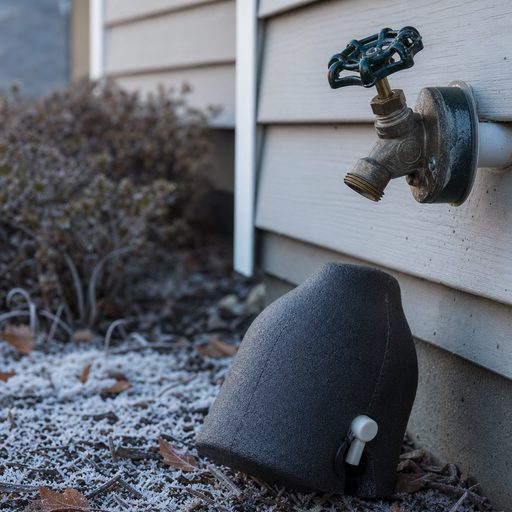
Many homes have a separate indoor shutoff valve for each outdoor faucet, often located on the pipe just inside the wall in a basement, crawl space, or utility area. Closing that valve and then draining the remaining water from the spigot is the most reliable way to protect a standard hose bib. If you have frost-free spigots, which are designed to keep their shutoff point deeper inside the warm wall, you still need to remove the hose so they can drain properly, since a connected hose defeats their protection.
- Find and close the interior shutoff valve for each outdoor faucet, if your home has them.
- Open the outdoor spigot to let the water between the valve and the faucet drain out, then leave it open through the winter.
- For frost-free spigots, always disconnect the hose so the faucet can drain toward the outside.
- Add an inexpensive insulated faucet cover over each spigot for an extra layer of protection.
Winterize Sprinkler and Irrigation Lines
Underground sprinkler systems hold water in long runs of buried pipe that cannot drain on their own, so they need extra attention. Begin by shutting off the water supply to the system and turning off the irrigation controller for the season. Some systems have manual or automatic drain valves that release water from the low points of the lines. Many systems, though, must be cleared with compressed air in a process called blowing out the lines, which pushes the remaining water out of the pipes and sprinkler heads.
Blowing out sprinkler lines often needs a pro
Clearing irrigation lines with compressed air is easy to get wrong. Too much pressure can rupture pipes or send sprinkler heads flying, which is a real injury risk. Unless your system is simple and you have the right equipment and settings, this step is best left to an irrigation or plumbing professional with the proper compressor.
When to Call a Professional
If you cannot locate your interior shutoff valves, if a spigot still drips after you have closed the valve, or if your sprinkler system needs to be blown out, professional help is the safe choice. Pipe repair services can correct a faucet or supply line that will not drain or shut off properly, and if a line does freeze and split, burst pipe repair can address the damage before it floods a wall or basement. Timing matters, so aim to complete this work before the first hard freeze of the season. For the rest of your plumbing, our guide on how to prevent frozen pipes covers the indoor lines that also need protecting, and our guide on what to do when a pipe bursts walks you through the immediate steps if a freeze gets the better of a line.
Sources and further reading
These references support material safety, technical, consumer, or planning guidance in this article. Confirm property-specific requirements with the applicable authority and professional.