 Plumbing Advisors Editorial TeamEditorial StandardsUpdated June 10, 2026Source-Checked
Most sewer line problems do not appear overnight. They build up gradually, as grease hardens inside the pipe, roots work their way through old joints, or the wrong things get flushed and lodge along the way. The encouraging part is that a good share of these problems are preventable with a few simple habits. You cannot control everything about a buried line, but you can do a lot to keep waste flowing freely and to catch trouble early. A little routine care goes a long way toward avoiding the mess and expense of a backup.
Be Careful What Goes Down the Drain
The single most effective thing you can do is control what enters your pipes in the first place. Many sewer blockages trace back to a handful of everyday items that do not belong in a drain. Keeping them out of the system spares your line the buildup and obstructions that lead to backups.
- Keep cooking grease, fats, and oils out of the sink; let them cool and throw them away instead.
- Flush only toilet paper and human waste, never wipes, even those labeled flushable, or other non-flushable items.
- Use drain strainers to catch food scraps, hair, and debris before they reach the pipe.
- Scrape plates into the trash rather than rinsing heavy food residue down the drain.
- Avoid chemical drain cleaners, which can damage pipes over time without solving the underlying problem.
Mind the Trees Near Your Line
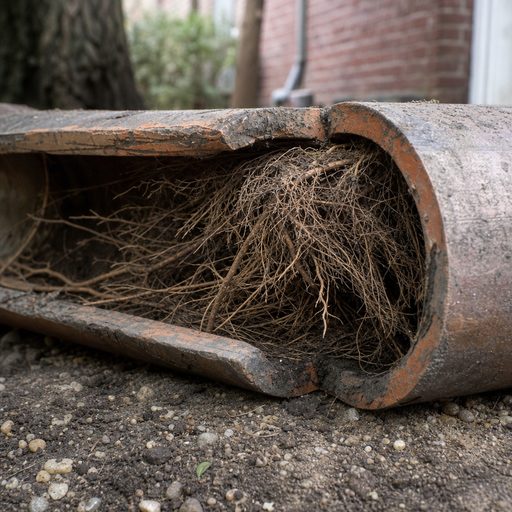
Tree roots are one of the most common causes of sewer trouble, and a little foresight in the yard pays off. Roots are drawn to the moisture inside a pipe and will find their way through the smallest crack or loose joint. If you have mature trees or large shrubs near the path of your sewer line, it is worth being aware of where that line runs and keeping new plantings at a sensible distance. You cannot move an established tree, but you can avoid adding new ones directly over the line and stay alert to the early signs of intrusion so it can be addressed before it becomes a full blockage.
A periodic inspection catches problems early
For an older home, a line with a history of backups, or a property with large trees nearby, a periodic camera inspection can reveal roots, buildup, or early damage long before they cause a backup. Catching a small issue early almost always means a smaller, simpler repair than waiting for the line to fail.
Watch for Early Warning Signs
Prevention is not only about habits; it is also about paying attention so a developing problem does not catch you off guard. A sewer line usually gives hints before it backs up in earnest. Slow drains, occasional gurgling, or a single fixture that clogs more often than it should can all be early signals. The sooner you notice and act on them, the more options you tend to have and the less disruptive the fix is likely to be. Treat a recurring pattern as a reason to have the line looked at rather than something to keep clearing and ignoring.
When to Call a Professional
Even with good habits, some maintenance is best left to a professional, and any work on the line itself should never involve digging or opening it yourself. Professional drain cleaning can clear buildup before it hardens into a blockage, and a periodic camera inspection can catch roots or damage early. If an inspection turns up a problem, sewer line repair service can address it while it is still small and manageable. To recognize the signs that the main line needs attention, see our guide on whether your sewer line is backing up, and because roots are such a frequent culprit, our guide on tree roots in your sewer line explains what to watch for and how they are handled.
Sources and further reading
These references support material safety, technical, consumer, or planning guidance in this article. Confirm property-specific requirements with the applicable authority and professional.