 Plumbing Advisors Editorial TeamEditorial StandardsUpdated May 12, 2026Source-Checked
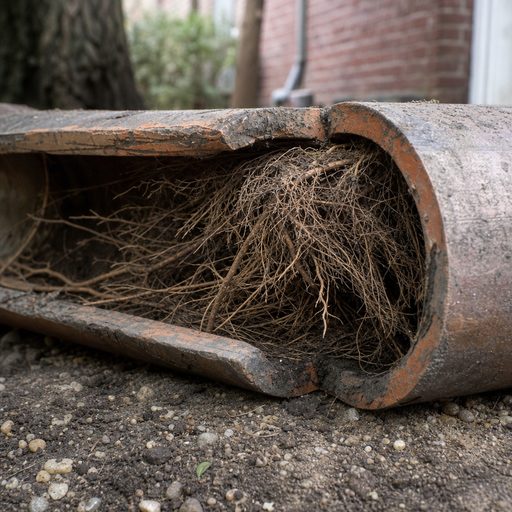
Tree roots are one of the most common reasons a sewer line keeps backing up, especially in older homes with mature trees nearby. Roots are naturally drawn to the moisture, warmth, and nutrients inside a sewer pipe, and even a tiny crack or loose joint is enough of an opening for them to find their way in. Once inside, they grow into a dense mass that snags waste and slowly chokes the flow. Understanding why this happens, how to recognize it, and what is safe to do about it helps you address the problem at its source rather than fighting the same backup again and again.
Why Roots Invade Sewer Pipes
A sewer line is a steady source of exactly what a tree wants, so roots will travel a surprising distance to reach one. They do not break into sound, sealed pipe out of nowhere; instead they exploit existing weak points. Tiny cracks, aging joints, and the small amount of vapor that escapes from a line all act like a beacon, guiding fine root hairs toward the opening. Once a single root finds its way in, it thickens and branches, and the problem grows from there.
Signs Roots May Be the Culprit
Root intrusion tends to announce itself through a recurring, slowly worsening pattern rather than a sudden blockage. The signs below are typical, and they often overlap with other main-line problems, which is why confirming the cause matters before deciding on a fix.
- Slow drains and backups that return weeks or months after the line is cleared.
- Gurgling sounds from toilets or drains as water struggles past an obstruction.
- Multiple fixtures draining poorly at once, pointing to the shared main line.
- Backups that are worse after heavy rain, when roots in the soil are most active.
- Mature trees or large shrubs growing near the path of the sewer line.
- An older clay or jointed pipe, which gives roots more seams to exploit.
Skip the chemical and store-bought root products
Chemical drain cleaners and pour-in root killers rarely solve a real root intrusion and can damage your pipes or create a hazard for whoever works on the line. They may clear a little of the symptom while the root mass keeps growing. A professional has safe, effective ways to address roots, so leave this one to them rather than reaching for a bottle.
What a Professional Can Do
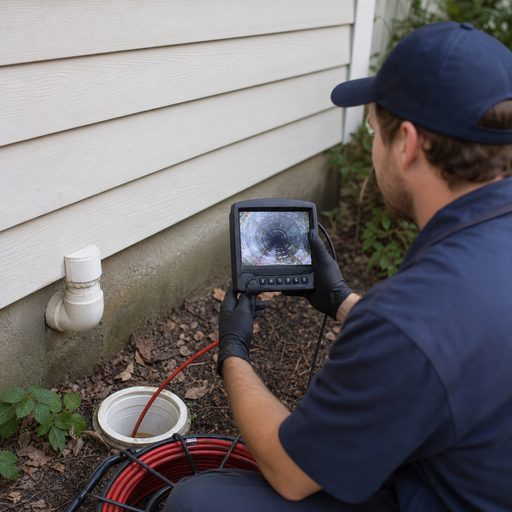
Addressing roots properly means both clearing what is there and dealing with the opening that let them in. A professional typically starts with a camera inspection to confirm that roots are the cause, see how far the intrusion extends, and check the condition of the pipe around it. From there, the line can be cleared mechanically to remove the root mass, and the underlying damage that invited the roots, such as a cracked section or a failing joint, can be repaired so the problem does not simply return. In some cases a trenchless repair can renew the affected section and seal out future intrusion with minimal digging. The right combination depends on what the inspection shows, which is why a clear diagnosis comes first.
When to Call a Professional
Root intrusion is not something to tackle on your own, and it should never involve digging up or opening the line yourself. Professional drain cleaning can remove the root mass and restore flow, while sewer line repair service can fix the cracks or joints that let the roots in so the fix actually lasts. Because roots tend to come back when the opening is left unaddressed, treating the cause matters as much as clearing the symptom. To recognize the broader pattern of a main-line issue, see our guide on whether your sewer line is backing up, and to understand the diagnostic step that confirms roots, read what a sewer camera inspection reveals before repair.
Sources and further reading
These references support material safety, technical, consumer, or planning guidance in this article. Confirm property-specific requirements with the applicable authority and professional.