 Plumbing Advisors Editorial TeamEditorial StandardsUpdated May 19, 2026Source-Checked
Flushing your water heater is one of the simplest and most worthwhile pieces of plumbing maintenance you can do, and on most units it is well within reach of a homeowner who is comfortable with a few basic steps. Over time, minerals and debris settle to the bottom of the tank as sediment, where they reduce the heater's efficiency, eat into its hot water capacity, and can shorten its working life. Periodically draining and flushing the tank clears that sediment out. This guide walks through why and how often to flush, the safe steps to follow, and the situations where you are better off calling a professional.
Why and How Often to Flush
Turn off the heat source and beware of scalding water
Before you begin, turn off the heat to the unit: set the gas control to off or pilot on a gas heater, or turn off the breaker for an electric one. The water inside is hot enough to cause serious burns, so let it cool before draining, drain into a safe location, and handle the hose carefully. Never attempt any gas-line or electrical wiring work yourself; if you are unsure about shutting off the unit safely, stop and call a professional.
Safe Step-by-Step Flush
If you are comfortable with the steps below and have safely shut off the heat source, you can flush most standard tank water heaters yourself. Work patiently and keep the scalding-water warning above in mind throughout.
- Set the gas control to off or pilot, or switch off the breaker for an electric unit, following the manufacturer's instructions on the label.
- Close the cold water supply valve at the top of the heater so no new water enters the tank.
- Let the water in the tank cool for a couple of hours to reduce the risk of scalding burns.
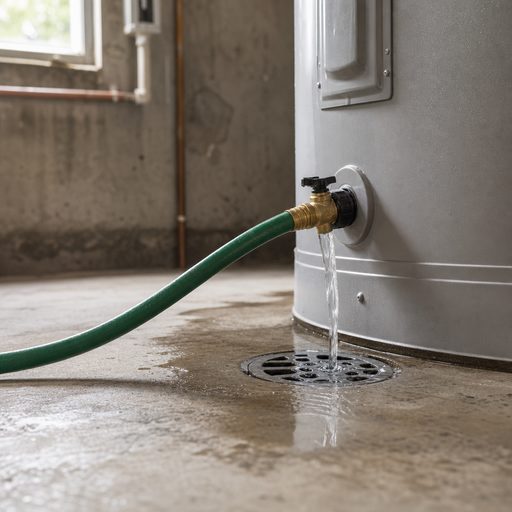
- Connect a garden hose to the drain valve near the bottom of the tank and run the other end to a floor drain, a large bucket, or outside where hot water can drain safely.
- Open a hot water faucet somewhere in the house to let air in and help the tank drain smoothly.
- Open the drain valve and let the tank empty completely, watching for sediment in the draining water.
- Briefly reopen the cold water supply to stir up and rinse out remaining sediment, repeating until the water runs clear.
- Close the drain valve, remove the hose, and reopen the cold water supply to refill the tank fully.
- Once water flows steadily from the open hot faucet with no sputtering, the tank is full, and you can restore the heat source per the manufacturer's instructions.
Refilling the tank completely before restoring power or gas is important, because heating an empty or partly filled tank can damage the unit. Take your time on that final step and make sure water is running smoothly from the open faucet before you turn the heat back on.
When to Call a Professional
Some situations call for a professional rather than a do-it-yourself flush. If the drain valve is stuck, leaking, or will not close again, if very little comes out despite obvious buildup, or if you are not confident about safely shutting off a gas or electric unit, it is best to call for help. Water heater repair service can flush a heavily clogged tank, replace a faulty drain valve, and check for related wear, all without risk to you or the unit. If flushing reveals that the tank is corroded or leaking, water heater installation may be the more sensible path, and our guide on when to repair versus replace a water heater can help you decide. Because hard water speeds up sediment buildup, our guide on the signs of hard water in your home is also worth a look if you find yourself flushing more often than expected.
Sources and further reading
These references support material safety, technical, consumer, or planning guidance in this article. Confirm property-specific requirements with the applicable authority and professional.