 Plumbing Advisors Editorial TeamEditorial StandardsUpdated May 20, 2026Source-Checked
The Common Sewer Pipe Materials
Most residential sewer lines fall into one of a few materials, and the age of your home is often a good clue to which you have. Each has its own strengths and its own characteristic ways of failing as the years add up. The points below describe the materials you are most likely to encounter and how they tend to age.
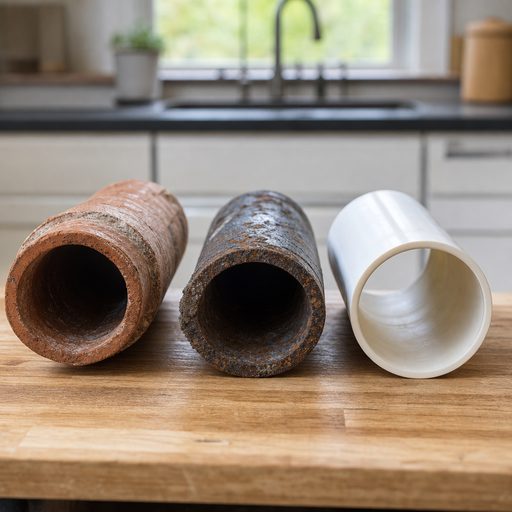
- Clay pipe, common in older homes, is durable against corrosion but has joints that tree roots readily invade and can become brittle with age.
- Cast-iron pipe is strong but corrodes from the inside over many decades, which roughens the walls and eventually weakens the pipe.
- Modern plastic pipe, such as PVC, resists corrosion and root intrusion well and is the typical choice in newer construction.
- Orangeburg, a tar-and-fiber pipe used in some mid-century homes, is the least durable and tends to deform and fail relatively early.
- Knowing which material you have helps set realistic expectations for how much life the line has left.
Why Material Alone Does Not Decide It
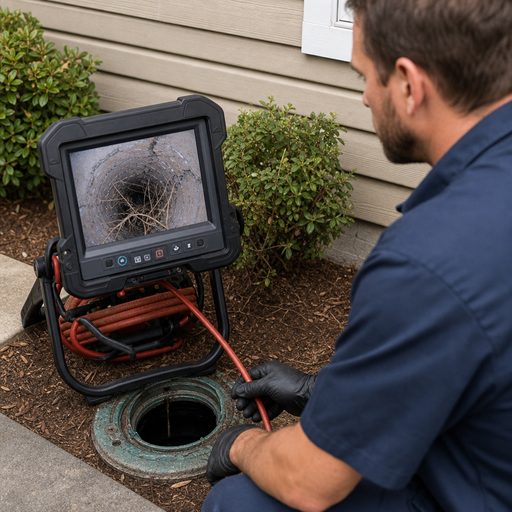
Material sets the general expectation, but the conditions a line lives in can stretch or shorten its life considerably. Two pipes of the same material can age very differently depending on the soil around them, the trees nearby, and how the line was installed. Because of this, the age of a pipe is a useful starting point but never the whole story, and a camera inspection is what reveals the line's actual condition. The factors below tend to accelerate wear regardless of material.
- Tree roots seeking moisture, which exploit joints and small cracks over time.
- Soil movement and shifting ground that stress the pipe and its joints.
- Improper slope or installation that lets waste pool and accelerates trouble.
- Ground above the line, such as heavy traffic over a driveway, that adds load.
- Years of buildup and prior damage that compound as the pipe ages.
An inspection beats guessing from age alone
Material and age give you a rough sense of where a line stands, but only a camera inspection shows its true condition. If your home is older or you are buying a property with an unknown sewer history, a professional inspection tells you far more than estimating from the pipe's age, and it can catch trouble before it becomes a backup.
Reading the Signs of an Aging Line
Beyond knowing the material, certain patterns suggest a line is nearing the end of its service life. Recurring backups, slow drains throughout the house, or repairs that keep cropping up in new spots often point to a pipe that is wearing out as a whole rather than failing in one place. When an older line starts showing these patterns, it is usually time to have it inspected so you can plan ahead rather than react to an emergency. To understand when those patterns tip toward replacing the whole line, our guide on when a sewer line needs full replacement walks through the signs.
When to Call a Professional
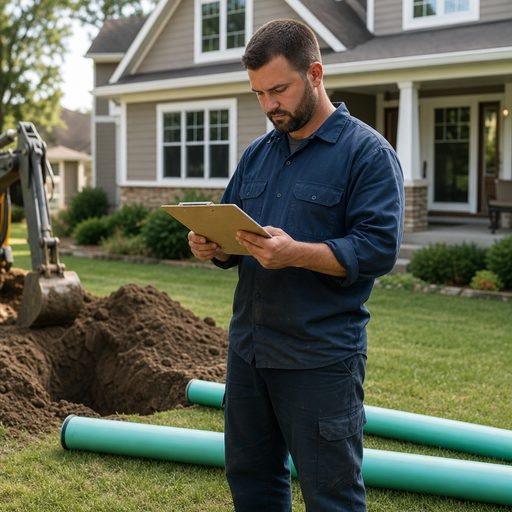
Judging the real condition and remaining life of a sewer line takes a professional with a camera, not a guess based on age, and any work that follows is never a do-it-yourself project involving digging or a slab. Sewer line repair can extend the life of a sound pipe with isolated damage, while sewer line replacement becomes the sensible choice when the material and condition show the line is worn out throughout. To understand the signs that point toward replacing the whole run, see our guide on when a sewer line needs full replacement, and to plan for what that involves financially, read how much sewer line replacement costs.
Sources and further reading
These references support material safety, technical, consumer, or planning guidance in this article. Confirm property-specific requirements with the applicable authority and professional.