 Plumbing Advisors Editorial TeamEditorial StandardsUpdated May 28, 2026Source-Checked
If you live in Texas, hard water is almost certainly part of your daily life, even if you have never named it. Much of the state ranks among the hardest water in the country, and while it is perfectly safe to drink, the dissolved minerals it carries leave a steady trail of chalky residue, spotty dishes, and appliances that wear out sooner than they should. Understanding why Texas water is so hard, and what the buildup does over time, makes it much easier to decide how to protect your plumbing and how to recognize when scale is the real culprit behind a problem.
Why Texas Water Is So Hard
Water hardness comes from the calcium and magnesium that water picks up as it passes through rock and soil on its way to your home. Much of Texas sits on limestone, which is rich in exactly those minerals, so the water arrives carrying a heavy mineral load. Supplies drawn from limestone aquifers, such as the Edwards Aquifer that serves San Antonio and the Hill Country, tend to be especially hard, and major metros like Houston and Dallas have hard water as well. Because the source rock is the reason, hardness is widespread across the state rather than a problem limited to one city or neighborhood.
Signs Hard Water Is Affecting Your Home
Hard water rarely announces itself directly. Instead, you notice the scale it leaves behind and the way it interferes with everyday tasks. The effects tend to show up first wherever water is heated or left to dry, so those are the places to look if several of the clues below sound familiar.
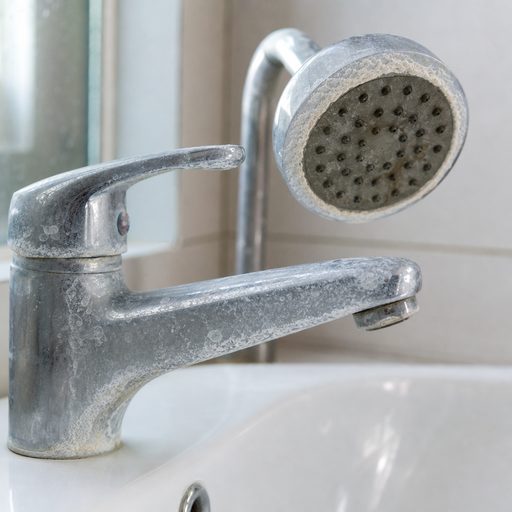
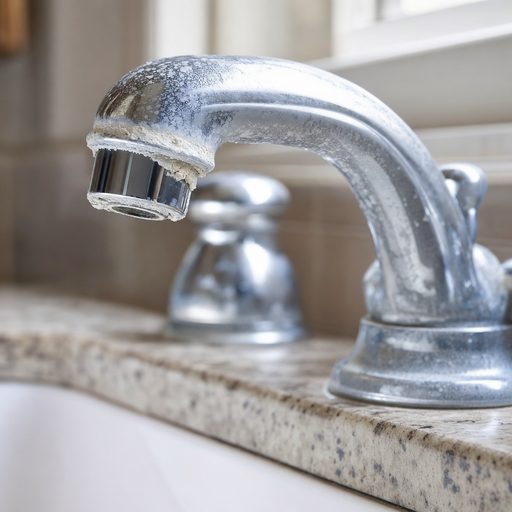
- Chalky white or greenish scale crusting on faucets, showerheads, and around drains.
- Spots and a cloudy film on glasses and dishes even after the dishwasher finishes.
- Soap and shampoo that will not lather well and leave a sticky film on skin and hair.
- Reduced flow from fixtures as scale slowly narrows aerators and showerhead openings.
- A water heater that grows noisier or less efficient as sediment collects inside the tank.
- Stiff, scratchy laundry and faucets that drip or stick as mineral buildup reaches the valves.
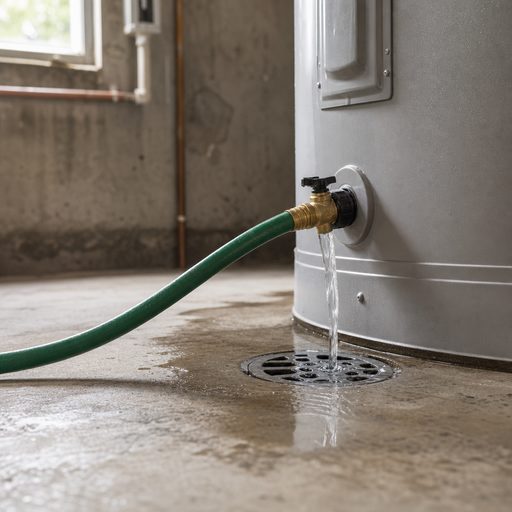
Flush your water heater to fight Texas scale
Because Texas water is so mineral-rich, sediment settles in the bottom of a water heater faster than in much of the country, where it insulates the water from the burner or element and makes the unit work harder. Periodically flushing the tank clears that buildup and helps the heater last longer. See our guide on how to flush your water heater for safe, step-by-step instructions.
What You Can Do About It
Some effects of hard water are easy to manage yourself. Soaking a clogged aerator or showerhead in white vinegar dissolves much of the mineral buildup and restores flow, and wiping fixtures dry slows the return of scale. For the underlying problem, many Texas households treat the water at its source. A whole-home water softener removes the calcium and magnesium before the water reaches your fixtures, which protects appliances, improves lathering, and cuts scale throughout the house. Because the right choice depends on how hard your particular supply is and on how your home is plumbed, this is an area where a professional can test your water and recommend whether a softener or another treatment makes sense for you.
When to Call a Professional
If the signs of hard water are stacking up and routine cleaning is not keeping pace, a professional can confirm how hard your water is and recommend the right approach for your home. A plumber can advise on and install a whole-home water softener, while general plumbing repair can address scale that has already affected pipes and valves. When mineral buildup has taken a toll on individual fixtures, faucet and sink repair can resolve the persistent flow problems it causes. For more on spotting the symptoms, see our guide on the signs of hard water in your home, and to keep Texas scale from shortening your water heater's life, our guide on how to flush your water heater walks through the process safely.
Sources and further reading
These references support material safety, technical, consumer, or planning guidance in this article. Confirm property-specific requirements with the applicable authority and professional.
- U.S. Department of Energy - Water heating
- U.S. Department of Energy - Water-heater selection guide
- U.S. Geological Survey - Hardness of water
- U.S. Geological Survey - Water corrosivity
- Federal Trade Commission - Avoiding home-improvement scams
- Texas State Board of Plumbing Examiners — licensing
- Houston Permitting Center — homeowner plumbing permit