 Plumbing Advisors Editorial TeamEditorial StandardsUpdated May 20, 2026Source-Checked
When a pipe bursts or a fixture starts pouring water, the single most valuable thing you can do is stop the water at its source, and that means knowing exactly where your shutoff valves are and how to use them. The trouble is that most people never look for these valves until water is already spreading across the floor, and those lost minutes can be the difference between a quick mop-up and a flooded room. The good news is that turning off your water is one of the safest and simplest plumbing skills to learn, and a few minutes of preparation now can save you a great deal of stress and damage later.
Why Knowing Your Shutoff Matters
A typical home is full of pressurized water lines, and any one of them can fail without warning because of freezing weather, corrosion, a worn supply hose, or simple age. When that happens, water keeps flowing until something stops it, and a single broken line can release dozens of gallons in just a few minutes. Being able to shut off the water quickly gives you control in a moment that otherwise feels chaotic. It also helps with everyday tasks, since you will need to turn off the supply before replacing a faucet, fixing a running toilet, or leaving for an extended trip.
Finding and Using the Main Shutoff Valve
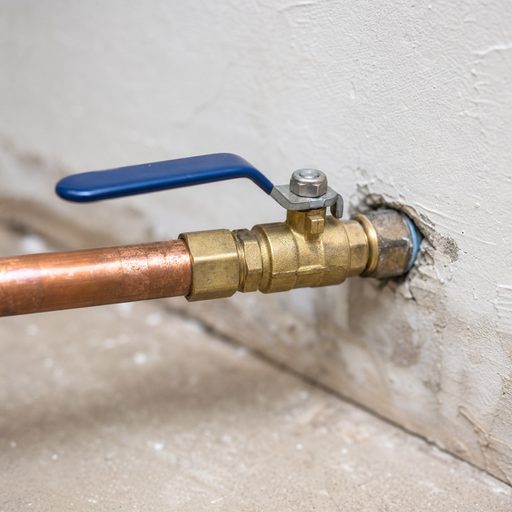
Your home's main shutoff valve stops water to the entire house, and it is usually located where the water line enters the building. In colder climates this is often in a basement or utility room on an interior wall; in warmer regions it may be in a garage, a crawl space, or outside near an exterior wall or the meter. Once you find it, take note of which of the two common valve types you have, because they turn off differently. Knowing this in advance means you will not be puzzling over the mechanism while water is running.
- Gate valve: a round, wheel-shaped handle that you turn clockwise, often several full turns, until it stops and the water shuts off.
- Ball valve: a straight lever handle that you rotate a quarter turn until it sits perpendicular, or crosswise, to the pipe.
- Turn gate valves gently, since older ones can be stiff or fragile and may break if you force them.
- After shutting off the main, open a few faucets on the lowest level to drain the remaining water and relieve pressure in the lines.
- Once the repair is done, reopen the valve slowly to avoid a sudden pressure surge through the system.
Label your main shutoff before you need it
Find your main valve today, make sure it turns freely, and tie a bright tag to it so anyone in the household can spot it fast. Show family members where it is and how it works, because an emergency may happen when you are not home. A few minutes of preparation now can save hours of cleanup later.
Individual Fixture Shutoffs
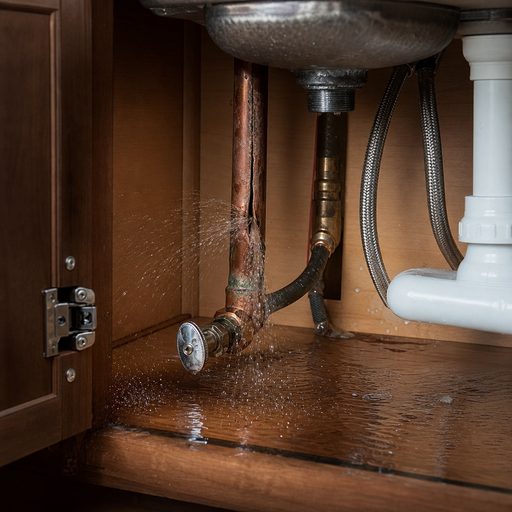
Most sinks, toilets, and many appliances have their own local shutoff valves, often small oval or football-shaped handles on the supply lines beneath or behind the fixture. These let you stop the water to just that one fixture without cutting off the whole house, which is convenient when only one spot is leaking or when you are making a small repair. If a single faucet or toilet is the problem, reach for its local valve first. If you cannot find one, or it is stuck or also leaking, fall back on the main shutoff to be safe.
The Street and Meter Valve
There is another valve out at the water meter, sometimes called the curb or street valve, which the water utility uses to control service to your property. This valve often sits inside an underground box near the street and may require a special tool to operate. In most cases you should leave this one alone and rely on your interior main shutoff instead, both because it can be difficult to reach and because it belongs to the utility's side of the system. If your interior shutoff fails or you cannot locate one at all, contact your water utility or a professional rather than forcing the street valve yourself.
When to Call a Professional
Shutting off your water is a safe first step, but the underlying problem usually still needs a real repair. If water is actively flowing and you cannot stop it, or you cannot find a working shutoff while damage is spreading, an emergency plumber can help right away. A burst or broken line calls for burst pipe repair, and many other failures fall under general plumbing repair, where a professional can fix the cause and check that the rest of the system is sound. If you discover a leak after shutting off the water, our guide on what to do when a pipe bursts walks through limiting the damage, and our guide on how to find a hidden plumbing leak can help you track down a less obvious source.
Sources and further reading
These references support material safety, technical, consumer, or planning guidance in this article. Confirm property-specific requirements with the applicable authority and professional.